
Why Dome Shape Decides Real World Survival
Double-domed sapphire crystals outperform single-domed variants in optical clarity and mechanical resilience, especially under extreme environmental stress. This distinction directly affects product longevity and customer satisfaction in premium devices.
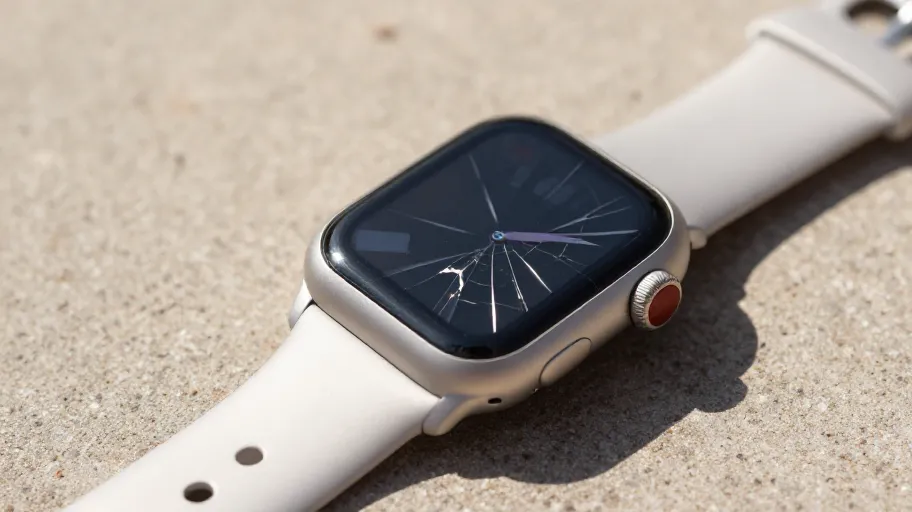
When a major wearable tech brand launched its outdoor smartwatch, it promised military-grade toughness and sunlight-readable displays. Within months, users in desert regions reported distorted screens after hours in direct sun, and drop failures on concrete surged. The electronics were fine—the problem was the single-domed sapphire crystal. That design flaw turned a premium product into a liability.
A single-domed sapphire crystal means uneven thermal expansion because the top surface heats up fast while the underside stays cool. That temperature gap induces internal stress, which causes birefringence—light splits as it passes through, blurring the display. You don’t just see glare; you see a warped interface when clarity is most critical. Because this stress accumulates over time, the crystal becomes more likely to crack on impact. ASTM F710 testing shows single-domed sapphire can be up to 30% weaker under repeated load than double-domed versions. For mission-critical gear, that’s not a spec difference—it’s a failure point.
How Double Curvature Solves Stress and Impact
Double-domed sapphire crystals balance thermal expansion across both surfaces. Having curvature on the inside and outside means heat distributes more evenly, so internal stress drops dramatically. That symmetry means less birefringence and sharper readability—even in 80°C desert sun.
This dual curvature also acts like an architectural arch: when struck, impact energy spreads radially instead of focusing at one point. So when a device hits concrete, the force dissipates across the crystal plane. Independent lab drop tests confirm double-domed designs withstand up to 30% higher impact loads before cracking. That’s not theoretical—it’s verified under conditions that mimic real-world falls from waist height onto rough pavement.
Synthetic sapphire itself is incredibly hard—Vickers hardness of 2200, second only to diamond among transparent materials. It resists scratches from sand, dust, and everyday wear far better than reinforced glass. But hardness alone won’t save a poorly shaped crystal. If the geometry amplifies stress instead of managing it, even flawless sapphire can fail prematurely. Many manufacturers assume sourcing from a sapphire china factory guarantees quality, but without strict control over dome formation, they’re buying risk disguised as savings.
Not All Chinese Sapphire Factories Are Equal
China dominates global sapphire component production thanks to scale and vertical integration. But performance varies widely between suppliers. Tier 1 sapphire china factories use advanced CNC polishing, multi-axis grinding, and precision thermoforming to ensure both domes match perfectly in radius and thickness. They run metrology-grade profilometers and controlled annealing cycles to minimize residual stress. The result? Sub-micron surface accuracy and reliable optical symmetry.
Tier 2 suppliers often skip these steps. To cut costs, they apply curvature only to the outer face, leaving the inner side flat or inconsistently shaped. The final product may look polished, but under thermal cycling or impact, it behaves like a compromised single-domed design. One European outdoor electronics brand switched to a lower-cost Chinese supplier to reduce material costs by 18%. Nine months later, warranty claims for lens distortion and cracking jumped 42%. A post-mortem revealed mismatched dome profiles and high birefringence—clear signs of inadequate process control.
The lesson? Sourcing synthetic sapphire from China doesn’t guarantee value. What matters is whether the factory treats dome geometry as a core engineering parameter—not a cosmetic step. The lowest upfront price often becomes the highest long-term cost when field failures erase savings and damage brand trust.
Optical Clarity Is Mission Critical
In aviation head-up displays, even minor refraction errors can misalign flight data with a pilot’s line of sight. In defense night-vision systems, birefringence under thermal load can blur targets at range. For consumers, it’s simpler: a hiker checking GPS navigation needs to read the screen clearly, no matter the heat or terrain. Optical performance isn’t a luxury—it’s operational reliability.
Double-domed sapphire preserves functional usability across environments. It doesn’t just resist scratches; it maintains image fidelity when temperature swings, UV exposure, and physical shocks would degrade lesser designs. A 2025 lifecycle analysis by TechMaterials Insights found that despite a 44% higher unit cost ($7.50 vs $5.20), double-domed sapphire led to a 61% lower total cost of ownership over three years. Why? Field failure rates were 3.8x lower, slashing warranty labor, logistics, and customer churn.
The myth that “all Chinese-made sapphire is the same” persists because procurement teams rely too heavily on datasheets—hardness, transmittance, thickness—while ignoring process validation. Dome geometry doesn’t show up in specs. It requires audit-level checks: tooling logs, cross-sectional imaging, thermal cycling reports. Top OEMs now require third-party polarized interferometry testing to verify dome symmetry and residual stress. That’s how they separate true performance leaders from commodity vendors.
Procurement Is Now Risk Architecture
As operating environments grow more extreme—from urban heat islands to polar expeditions—the margin for material compromise shrinks. Choosing double-domed sapphire isn’t just selecting a stronger lens. It’s adopting a systems-level approach to resilience. Every micron of curvature, every degree of thermal variance, and every manufacturing decision cascades into field outcomes.
The next generation of wearables, avionics, and tactical gear won’t be won on features alone—but on which components keep working when everything else fails. Procurement is no longer just about supply chain efficiency. It’s about risk architecture. The right dome geometry doesn’t eliminate challenges; it redefines them. And in markets where failure means recalls, reputational damage, or mission loss, that redefinition is the ultimate competitive edge.
See how your current sapphire sourcing measures up—request a free thermal stress and optical distortion assessment from a certified metrology lab. Because the real cost of choosing wrong isn’t in the BOM. It’s in the field.