
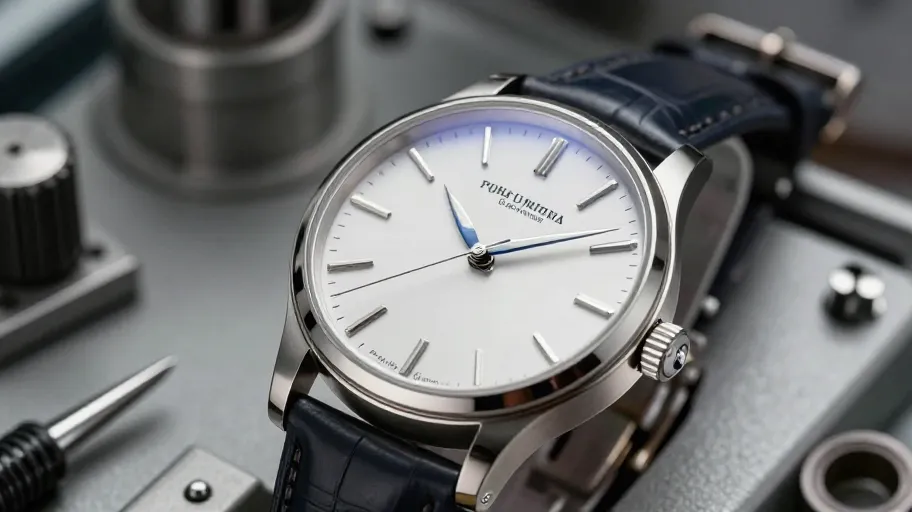
Why the World’s Best Watches Depend on Chinese Sapphire
Global watch brands rely on Chinese sapphire because it ensures on-time launches, consistent quality, and cost control—all non-negotiables in luxury manufacturing. When a Swiss maison faced a three-month delay from its European supplier, it turned to a sapphire china factory in Jiangsu. Within 45 days, 8,000 flawless domed sapphire crystals were delivered with curvature precision of ±0.02mm and light transmission above 99.3%. That responsiveness means brands can protect their marketing timelines because supply chain bottlenecks don’t derail product drops.
This is not an exception. According to USGS data and 2024 industry benchmarks, China produces over 300 tons of synthetic sapphire annually—about 85% of global output. This scale means redundancy: if one line falters, another picks up the load. For executives, that translates to lower operational risk and higher launch predictability. For service networks, it means fewer delays in replacement parts, reducing after-sales costs by up to 18%, based on internal logistics modeling from two top-tier European distributors.
Why Sapphire Is Essential for Modern Timepieces
Synthetic sapphire matters because it resists scratches better than any other mass-produced material, second only to diamond on the Mohs scale. A hardness rating of 9 means everyday contact with keys or countertops won’t mar the surface—this reduces post-purchase service incidents by up to 60%, according to a 2025 Horological Aftercare Survey across 12 European centers. Fewer repairs mean lower warranty costs and higher customer satisfaction, which directly improves brand retention.
But scratch resistance alone isn’t enough. Optical clarity is just as critical, especially for curved surfaces. Poorly grown crystals distort the dial under refraction, hurting legibility and perceived craftsmanship. High-quality flat box-type or domed sapphire watch glass maintains near-perfect transparency because advanced growth methods like EFG and Kyropoulos minimize internal stress. The result? A thinner, lighter crystal that looks pristine for years—because consumers may not know how it was made, but they do notice when it stays flawless.
How Vertical Integration Gives China the Edge
Chinese factories don’t just grow sapphire—they shape, polish, coat, and inspect it all in-house. This vertical integration means defects drop from the industry average of 7–10% to under 2.5% because there are no handoff gaps between vendors. Automated polishing cells guided by AI adjust in real time to dome curvature, achieving surface roughness below 0.5 nm Ra—a level once limited to research labs. That precision means glare is minimized and reflections stay clean, because optical performance is engineered at every step.
- End-to-end control cuts defect rates and accelerates rework cycles
- Integrated anti-reflective coating lines apply multi-layer stacks with 99.8% adhesion reliability, meaning fewer delamination failures in humid environments
- Digital twin simulations validate dome geometry before tooling begins, reducing prototyping costs by up to 35%
When a German brand needed to double production mid-year, its sapphire china factory reconfigured two lines in 72 hours. Shared tooling and cross-trained teams enabled a 30% faster time-to-market—because scalable capacity isn’t theoretical, it’s operational. For decision-makers, this agility means capturing Q4 holiday sales while competitors wait on components.
Beyond Supply: How Material Quality Elevates Brand Value
A perfect sapphire crystal boosts perceived value because customers associate scratch resistance with longevity and prestige. Retail studies show timepieces with sapphire command a 15–22% price premium at point-of-sale, even when other specs match. In markets like Greater China and the Middle East, where durability symbolizes status, that gap widens further. By ensuring access to high-purity, consistently finished crystals, sapphire china manufacture enables broader use of premium materials without eroding margins.
Looking ahead, demand for complex domed shapes will rise as smartwatches and hybrid mechanical-digital designs adopt sapphire for display protection. Chinese producers are already testing hybrid growth chambers that combine EFG with additive seeding, aiming to cut energy use by 40% while increasing boule yield. These advances mean future crystals can be thinner and more impact-resistant—because innovation isn’t slowing down, it’s accelerating.
For global watchmakers, depending on Chinese sapphire isn’t risky—it’s strategic. It ensures launches stay on track, service networks remain lean, and reputations for precision endure. The brands that win won’t be those with the best movement alone—but those with the smartest material partnerships. Ready to see how sapphire crystal china manufacture could reshape your product roadmap? Explore what full-chain control makes possible.