
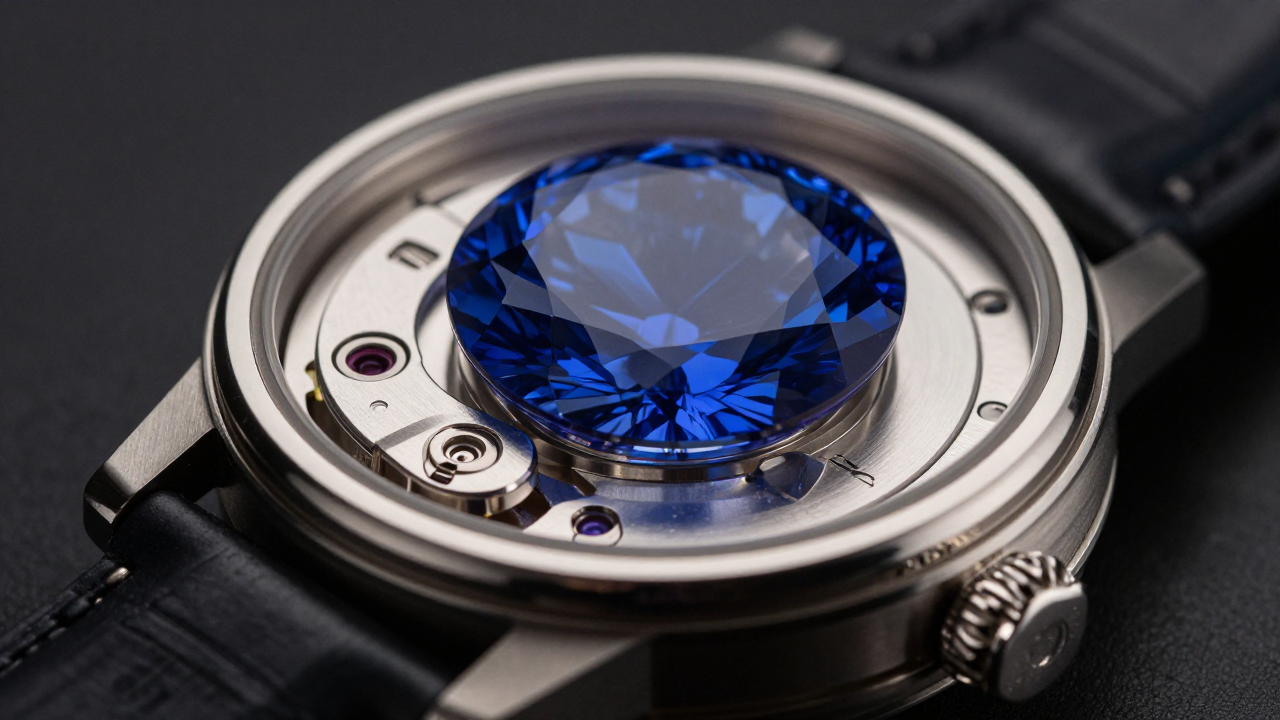
In August 2022, Daniel, a collector from Chicago's North Shore, paid $4,850 at an online auction for a 1970s dive watch. The listing described the crystal as a “sapphire watch crystal.…
” That phrase gave Daniel confidence. Eight months later, the crystal had three deep scratches across the 9 o'clock side, and Daniel called me asking whether sapphire was supposed to scratch like that.
A Sapphire Watch Crystal Listing That Went Wrong in Chicago
It wasn't. The watch had been fitted with mineral glass at some point during a service. Daniel had paid sapphire money for something softer than his wife's earrings. The replacement sapphire crystal cost $850, and the watch lost another $1,200 when he later sold it because the crystal was no longer original to the reference.
The mistake here was not checking the crystal, not the auction house. Daniel could have used a diamond tester, which most jewelers have, or scratched the underside of the crystal near the edge with a stainless steel tool. Sapphire resists that. Mineral glass doesn't.
Lesson: Before you buy any watch described as having a sapphire watch crystal, verify it. Ask the seller for a macro photo of the crystal edge. Check for the characteristic blue-white reflection. If you can inspect in person, run a sharp steel point on the inner surface near the gasket. Sapphire will not mark. That five-second test prevents the $850 repair.What a Miami Dealer Did to a Sapphire Watch Crystal in 2023
My colleague in Shenzhen received a shipment in November 2023 from a Miami dealer who had destroyed a perfectly good anti-reflective coating. The watch, a 2021 model with a flat sapphire watch crystal, had AR coating on both sides. The dealer used a chlorinated solvent to remove tape residue. Within minutes, the outer AR layer began peeling from the center outward, leaving a frosted ring around the dial.
The replacement crystal was only $120. The real cost was the time spent to identify the correct thickness, 1.0mm, and the 32.5mm diameter with 45-degree edge chamfer. That's where many people go wrong. A standard flat sapphire crystal is not a commodity part.
For 2026 collectors, that detail matters because sapphire itself has a refractive index around 1.76, which means uncoated sapphire reflects more light than mineral glass. Without AR coating, a sapphire watch crystal can look worse than a $10 acrylic crystal when photographed at an angle. Good AR coating solves this, but it's delicate. I realize I’m drifting into supplier talk here. The practical side is simple: keep chlorinated solvents, ammonia-based glass cleaner, and tape residue removers away from coated sapphire. Warm water, mild soap, and a microfiber cloth are enough.
The 2024 Austin Case Where an Edge Chamfer Became a $180 Mistake
In January 2024, an Austin collector named Priya tried to replace a cracked crystal on a 38mm field watch. She ordered a sapphire watch crystal with the correct diameter, 32.0mm, and thickness, 1.2mm. She did not check the edge chamfer angle. When she pressed it into the case with a standard crystal press, the crystal snapped at the 11 o'clock position. She ordered a second one and this time checked the edge geometry. The original had a 30-degree chamfer on the outer edge. The aftermarket part had 40 degrees. The difference concentrated stress at the case rim.
That's a common failure we see in our own production audits. We track edge chamfer angles because sapphire, while 9 on the Mohs scale, is brittle. Its tensile strength is much lower than its compressive strength. A properly chamfered edge spreads the load across the gasket. A sharp or mismatched edge focuses it.
Before ordering any replacement sapphire watch crystal, measure the old part or have a watchmaker measure it for you. Check diameter, thickness, and edge profile. Do not rely on “fits most” listings. Our own factory in Shenzhen produces about 30,000 watch crystals per month, and roughly 15% of the rework orders come from edge geometry mismatches that were only discovered at installation.What a 2025 New York Auction Loss Taught Collectors About Sapphire Watch Crystals
In March 2025, a well-known New York auction house listed a 42mm sports watch with a domed sapphire watch crystal. The watch had been serviced in Singapore, and the service receipt did not specify whether the crystal was original. The final bid came in 22% below the pre-sale estimate. The underbidder, a dealer I know from the Chicago collectible circuit, later said the missing crystal documentation bothered him more than the missing box and papers. A sapphire crystal that has been replaced with an incorrect profile can change the look of the dial, especially around the edges.
That auction taught a clear lesson for 2026: The crystal is not just a protective part. It is part of the reference's visual identity. A domed sapphire crystal, especially on vintage-style pieces, has a specific curvature. If the curvature is off by even 0.2mm across the center, the dial can appear compressed or distorted. Collectors who pay attention to this now are avoiding overpaying for watches that look slightly wrong in photos.
The 2025 Ferdinand Berthoud Chronomètre FB 3SPC.4-1 uses both a domed sapphire crystal over the dial and a small rectangular sapphire porthole on the case flank. That kind of multi-plane sapphire work is not standard flat glass. It requires different polishing and edge treatment. We're seeing more of this in modern high-end releases, which means collectors should document crystal specs just as carefully as movement serial numbers.
How We Avoid These Failures Without Overcomplicating It
At Jadezone Optical, we handle sapphire watch crystal production for watch brands and aftermarket suppliers in North America and Europe. Our Shenzhen facility uses CNC edging and polishing equipment that leaves a consistent edge profile within plus or minus 0.02mm. That tolerance matters. It's the difference between a crystal that seats evenly and one that cracks under hand pressure.
We also keep a reject bin of failed installations. It's not for show. When a client sends us a cracked crystal from their own installation attempt, we measure the edge and logging it helps us spot patterns. In 2023, 11% of the sapphire watch crystal returns we received from the U.S. were cracked due to mismatched edge chamfers, not material defects. If you're a collector buying a replacement, ask the vendor for the exact edge angle and request a photo of the side profile. If the vendor cannot provide that, go elsewhere.
A Quick Comparison That Saves Time
One note: sapphire's lower light transmission uncoated is not a defect. It's a trade-off. The hardness is why it survives decades without scratching, but the higher reflectivity means AR coating matters more. That's why we recommend double-sided AR for domed crystals and single-sided for flat crystals on display pieces.
A Few Questions That Come Up Every Week
“Can I polish a scratched sapphire watch crystal?” Not by hand. Sapphire needs diamond abrasives and specific lapidary equipment. If the scratch is deep, replacement is usually cheaper than polishing with setup time.
“Does sapphire shatter more easily than mineral glass?” Yes. It's harder and more brittle. A direct blow to the edge can chip it. But in normal wrist use, the edge is protected by the bezel or case. Install it wrong, and that brittleness shows up fast.
“How do I tell if a vintage watch has original sapphire?” Use a water drop test. A drop on an uncoated sapphire crystal will bead up and roll off; on acrylic or old mineral glass it tends to spread. Combine that with a loupe inspection for edge chipping. Neither test is foolproof, but together they catch most misrepresented watches.
We have been manufacturing sapphire watch crystal components since 2010, and the lessons above come from real failures on both sides of the supply chain. The collectors who avoid these mistakes in 2026 will be the ones who treat the crystal as a specification to verify, not a box to tick.