
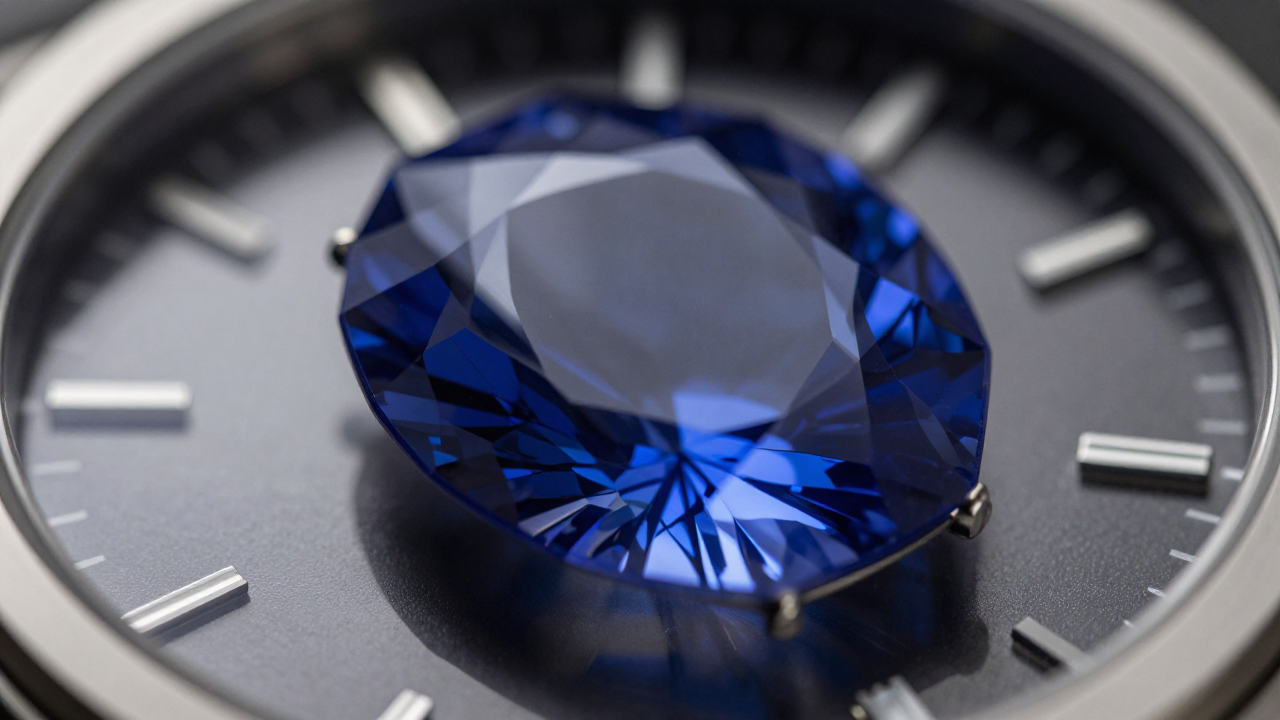
By the time the crate of 47 sapphire watch crystals reached our Shenzhen floor in June 2024, Marcus in Chicago had already cut ties with two suppliers. The first shipped crystals with edge chips.…
The second shipped flat profiles when the CAD file called for a 3.2mm dome. Marcus’s launch date was fixed for August 11. He had 2,000 dials, 2,000 NH35 movements, and a storage unit near O’Hare stacked with straps. The crystal was the last part he expected to fail.
The Unboxing That Almost Killed a Launch
Our team at Jadezone Optical (HK) Ltd. has produced sapphire watch crystals since 2010. We don’t sell to retail. We cut, grind, polish, and coat blanks for brands in Chicago, Austin, Portland, and other US markets. When Marcus called, the fix was not about finding a harder material. It was about edge geometry and coating tolerance.
What Sapphire Actually Is Under the Loupe
Sapphire in a watch is not mined from the earth. It is aluminum oxide powder melted at roughly 2,040°C and grown into a synthetic boule. The boule gets sliced, ground, and polished into round or shaped windows. The result rates 9 on the Mohs hardness scale. Diamond is 10. Mineral glass sits at 5–6. Acrylic is 3–4. That gap is why sapphire shrugs off sand, coins, car keys, and concrete.
But hardness does not equal toughness. Sapphire is brittle. A hard blow to the edge can crack it. I’ve seen a 2mm-thick sapphire crystal shatter after slipping off a kitchen counter onto a tile floor. The owner thought it was fake. It wasn’t. The edge had failed, not the face.
Sapphire, Mineral, and Acrylic Compared
The glare issue catches first-time buyers off guard. Sapphire has a refractive index around 1.76 to 1.77. That high index creates more surface reflection than acrylic or mineral glass. Without AR coating, light transmission is roughly 85%. A multi-layer AR coat on the underside can raise that to 92–95% and drop surface reflection to 0.5–1.5%. Top-side AR coatings look good on dress watches, but they scratch more easily. Our standard recommendation for tool watches is underside-only AR.
Why Sapphire Watch Crystals Fail at the Edge
In September 2018, we ran a 5,000-piece batch for a dive watch brand in Florida. We got lazy with the edge bevel. It measured 0.18mm instead of the specified 0.35mm. After case fitting, 12% of the crystals developed micro-cracks along the chamfer. We caught it during water resistance testing. That failure cost us more than the order was worth.
For a 1.2mm-thick crystal, we now keep the edge bevel between 0.3mm and 0.5mm. The gasket contact point sits 0.2mm inward from the outer edge. That spreads the load across a wider area when a watchmaker presses the crystal into the case. It also reduces chipping during shipping. We ship crystals in individual trays, not stacked, because sapphire edges can abrade each other.
How a Boule Becomes a Watch Crystal
A synthetic sapphire boule can weigh 30 to 60 kg and take several days to grow. The most common production route for watch windows is the Kyropoulos method, where a seed crystal rotates in molten aluminum oxide and grows outward. Watch blanks are then cut with diamond tools.
At our Shenzhen facility, CNC edge grinders hold flatness to within 0.03mm before polishing. After polishing, each crystal goes through a laser interferometer check. That catches waviness the naked eye would miss. The AR coating goes on last. Underside coating is tougher to apply than top-side because the crystal has to be flipped and masked. A coating with poor adhesion can peel after exposure to sweat, salt water, or repeated cleaning.
In February 2025, a microbrand in Seattle sent us photos of an 800-unit batch where the coating delaminated in a fog pattern after three months. The cause was residual polishing residue on the underside before coating. We replaced all 800 crystals. That’s the part buyers never see: sapphire itself is not the weak link. The surface prep is.
What Watchmakers Say Behind the Bench
In May 2025, I called Greg, a Portland watchmaker with 22 years on the bench. He rejects about 15% of aftermarket sapphire crystals that cross his desk. “The edge chamfer is too sharp, or the gasket folds, or the case press cracks the crystal,” he told me. That number is not a lab test. It’s a parts drawer.
He also said he tests every sapphire crystal with a tungsten carbide scriber on a scrap area near the edge. Glass leaves a mark. Sapphire does not.
Honestly, sapphire is not always the right answer. A vintage chronograph that lives on a boat deck might be better off with acrylic, because acrylic flexes instead of fracturing. A sapphire crystal on a 1960s case with a thin bezel can crack if the gasket is too stiff. Choose the whole system, not just the material.
How to Inspect a Sapphire Watch Crystal Before You Buy
Look at the edge first. Under a 10x loupe, the bevel should be uniform. White stress marks near the edge mean the crystal was ground too hot or clamped too hard.
Check the dome type. Single-dome crystals curve on one side only and can distort at the edge. Double-dome curves on both sides and reads flatter. Ask about AR coating placement. If the seller cannot tell you whether the coating is underside-only or top-side, walk away.
Brands That Stopped Treating Sapphire as an Upgrade
Rolex moved Submariner production to sapphire in the 1980s, and that set a standard. But the more interesting shift is at the microbrand level. In January 2024, Chris P., an Austin-based owner of a three-person watch brand, ordered 300 flat sapphire crystals for a 39mm titanium field watch. Cost per crystal was $9.40 at that volume, with underside AR and a 0.4mm chamfer. By October 2024, he told me crystal-related warranty claims had fallen to 2% of units sold, down from 8% on the previous mineral-glass run. That is not a marketing slide. It’s a warranty spreadsheet.
Frederique Constant’s 2026 Classics Moneta Handwinding is another example. The watch keeps the coin-edged bezel and places the sapphire beneath that outer profile. The sapphire does not shout. It disappears visually. That is the direction for 2026: sapphire as a default, not a bragging point.
Christopher Ward, Zelos, and Traska made sapphire standard on sub-$1,000 models years ago. US buyers now ask for it at $400. The retail math is simple: a brand spends roughly $10 to $30 more per unit on sapphire compared to mineral glass. In return, it gets fewer returns, cleaner product photos, and a stronger spec sheet. Sapphire is not magic. It is material selection.
Questions We Hear Every Week
Can anything scratch sapphire?Only material around 9 or harder on Mohs. Diamond, some ceramics, and certain abrasive papers can. Keys, coins, knife blades, and sand are all softer and will not leave a mark under normal pressure.
Why does sapphire glare more than acrylic?The refractive index is 1.76–1.77. More light reflects at the surface. Underside AR coating is the best fix. Top-side AR reduces glare further but can scratch.
Does sapphire crack on impact?Yes. It is hard, not tough. Edge impacts are worse than face impacts. A wider chamfer and a well-specified gasket reduce the risk but do not eliminate it.
How can I tell if a crystal is real sapphire?Do not trust the water drop test alone. Look for a brand that says “sapphire” in writing and specifies the AR coating. A watchmaker can test a hidden edge with a tungsten carbide scriber. On our production line, we use a laser interferometer to verify flatness, but that is not practical at a counter.
Does AR coating need special care?Avoid acetone and ultrasonic cleaners if the crystal has chips. Warm water, mild dish soap, and a microfiber cloth are enough. If the coating starts to peel in a fog pattern, do not wait. It will spread.
The question for 2026 is not whether sapphire watch crystals are worth it. That argument was settled years ago. The real question is whether brands will spec the hidden details—chamfer width, gasket contact, AR coating placement, surface prep—that turn a hard window into a reliable part. Marcus in Chicago got his launch out on August 11. The 47 replacement crystals were not special. They just had edges that held up when the case press closed. That’s the part you don’t see until it fails.