
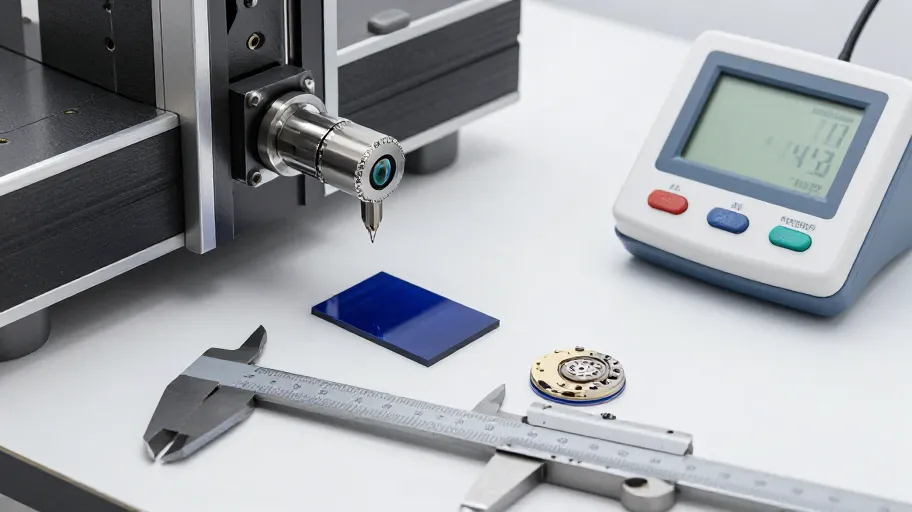
Before committing to a sapphire crystal machining partner, document your dimensions, tolerances, optical finishes, and coating requirements alongside commercial questions such as MOQ, pricing, and lead times. Structuring this information before production mitigates miscommunication, ensures technical alignment, and creates a verifiable record for quality assurance. This preparation is essential for watch brands sourcing custom OEM components.
When sourcing custom sapphire crystals for watch assembly, the specification phase determines the success of the entire production run. Sapphire is an exceptionally hard material, and machining it requires precision equipment and rigorous process control. For watch brands, product developers, and sourcing managers, the transition from a concept design to a machined component hinges on one critical activity: documentation. By documenting every technical and commercial parameter before you commit to production, you protect your timeline, your budget, and your final product quality.
The CRYSTAL framework for sapphire procurement
To structure your preparation, apply the CRYSTAL Framework. This model outlines the exact parameters you must define and verify before initiating a machining project with any supplier.
- Confirm case geometry and crystal fit. Define whether the crystal press fits, snaps, or glues into the watch case. Document the exact mounting type and share the corresponding case drawings with your machining partner.
- Record optical requirements. Specify the anti-reflective coating layers, whether the coating applies to one side or both, and the desired light transmission rates.
- Yield the raw sapphire boule specifications. Clarify the orientation of the sapphire crystal (C-plane, A-plane, or R-plane) as this impacts optical clarity and structural integrity.
- Specify edge finishes. Detail whether the edge requires polishing, beveling, or a specific surface treatment to interact correctly with the watch case.
- Tolerances and dimensional boundaries. Outline the acceptable variance for diameter, thickness, and bevel angles without relying on assumed defaults, ensuring the supplier confirms they can meet your specific parameters.
- Assurance of quality control. Document the inspection methods, optical defect standards, and batch acceptance criteria the supplier will use prior to shipment.
- Logistics and commercial terms. Ask the supplier to confirm their current policies on minimum order quantities, per-unit pricing, sample availability, and production schedules in writing.
Sapphire specification decision table
When documenting your requirements, use this decision table to align your product needs with the correct machining parameters. Every choice impacts how the supplier must approach the sapphire crystal machining process.
| Specification choice | Machining implication | Documentation required before commitment |
|---|---|---|
| Flat versus domed profile | Determines the complexity of the surface grinding and polishing steps. | Specify the exact curvature radius and profile drawings. |
| Single-sided versus double-sided coating | Affects the handling process and the risk of scratching during coating application. | Define the coating layers and required light transmission percentage. |
| Step versus bevelled edge | Changes the tooling setup and the sequence of edge finishing operations. | Provide detailed edge geometry cross-sections and angle dimensions. |
| Printed versus non-printed logo or marker | Introduces a secondary process requiring different inks and curing methods. | Confirm ink specifications, placement coordinates, and colour codes. |
Concrete approval questions for your machining partner
Before you approve a production run, present these questions to your supplier. Require documented responses rather than verbal assumptions.
Technical capability questions:
- What equipment do you use for sapphire crystal machining, and how do you calibrate it for the specific dimensions of our watch crystals?
- How do you document and verify dimensional tolerances during the inspection phase?
- What is your process for applying and inspecting anti-reflective coatings, and how do you measure adhesion?
- Can you machine custom edge geometries, and what cross-section diagrams do you require from our engineering team?
- How do you handle and pack sapphire crystals to prevent edge chipping during transit?
Commercial and operational questions:
- What is your current minimum order quantity for custom sapphire crystals?
- Can you confirm your current sample policy, including whether samples incur a fee and how shipping costs are handled?
- What is your estimated production lead time for a first-time custom order, and how does that differ from a repeat order?
- What certifications or quality documentation do you provide with each shipped batch?
- How do you structure pricing for prototype phases versus full production runs?
Frequently asked questions
What technical drawings should I prepare before requesting a sapphire crystal machining quote? Prepare a detailed 2D engineering drawing with exact dimensions, material specification (sapphire grade and orientation), edge geometry cross-sections, tolerance parameters, and any coating or printing requirements. The more explicit your documentation, the more accurate the supplier's capability assessment and quote will be.
How do I verify a supplier's capability for complex sapphire geometries? Ask the supplier to provide documented case studies or process flows for machining similar geometries. Request information on their specific machining equipment and inspection tools. You must confirm their current capability to meet your specific dimensional and tolerance requirements directly.
What should I document regarding anti-reflective coatings? Document the required number of coating layers, which sides of the crystal require coating, and the target light transmission percentage. Ask the supplier to confirm their coating application method and how they verify coating durability and adhesion.
How are commercial terms like MOQ and lead times confirmed? You must ask the supplier to provide their current policies on minimum order quantities, pricing structures, sample policies, and production schedules in writing. Do not assume any terms; document the supplier's exact current policies before committing to an order.
What happens if the machined sapphire crystals do not meet the agreed tolerances? Before production begins, document the quality assurance criteria, inspection methods, and batch acceptance rates with the supplier. You must confirm their current policy regarding out-of-tolerance batches directly to ensure you have a documented resolution process.
Prepare your sapphire sourcing documentation
Thorough documentation prevents misaligned expectations and ensures your supplier can execute the sapphire crystal machining process to your exact standards. Do not move forward with a production commitment until you have documented and verified every technical and commercial parameter.
Quick pre-sourcing checklist
Before you contact a machining partner, ensure you have these foundational elements documented:
- Complete 2D technical drawing with dimensions.
- Material orientation and grade specified.
- Edge geometry and cross-section defined.
- Tolerance boundaries documented.
- Optical and coating requirements outlined.
- Quality assurance and inspection criteria established.
- Commercial questions regarding MOQ, pricing, and lead times prepared.