
Buying sapphire crystal optics from China can save costs—but skipping due diligence risks six-figure losses. Ask these questions first to lock in performance, avoid delays, and protect your engineering investment.
Why Undocumented Suppliers Cause Project Failures
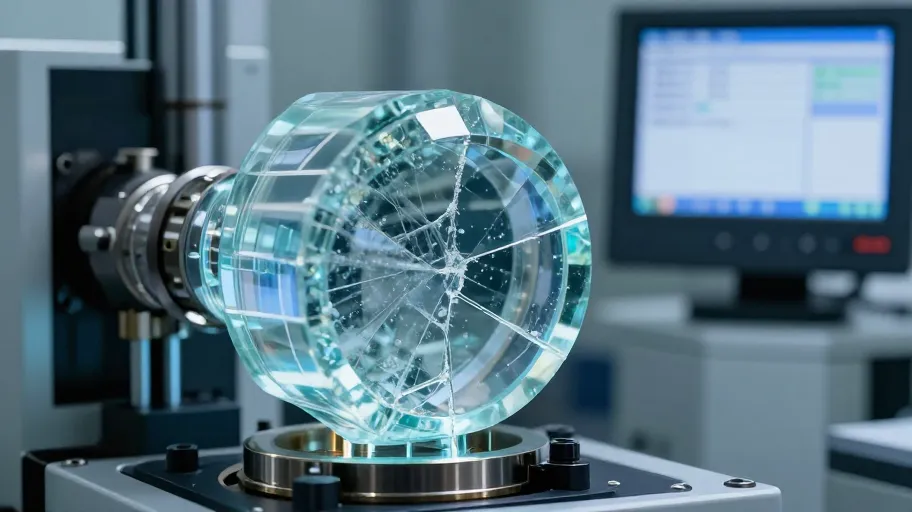
One aerospace firm lost $860K and 14 weeks when unverified sapphire windows cracked during thermal testing. The root cause? Their Chinese supplier never documented crystal growth parameters. Without written records of cooling rates or dopant levels, invisible flaws like inconsistent grain structure went undetected—until failure at altitude.
This isn’t rare. A 2024 Precision Optics Consortium study found 62% of foreign-sourced crystalline optics required post-delivery fixes, with half tied to undocumented processes. Many suppliers claim ISO 9001 certification, but audits show weak enforcement in change control and process validation. When sapphire crystal china manufacture lacks traceable data, you’re not buying material—you’re assuming risk.
For engineers, this means wasted NRE time requalifying parts. For managers, it translates to missed deadlines. For executives, it’s stranded capital. The fix isn’t better inspection—it’s demanding documentation before signing.
Material Traceability Locks In Consistency
If a defect appears, can your supplier trace it back to the original boule, growth run, and raw material lot? This capability directly supports ISO 9001 Clause 8.5.2 (Identification and Traceability) and turns reactive firefighting into proactive control.
Traceability means you isolate problems to specific process variables—like a spike in oxygen during growth—instead of blaming the entire batch. One medical device maker reduced incoming inspection time by 40% after switching to a supplier who mapped every sapphire cover to its growth log. When field issues arose, they pinpointed the cause in hours, not weeks.
Without this, you inherit variability. A shift from Kyropoulos (KY) to Czochralski (CZ) growth mid-contract changes dislocation density and thermal resilience—critical for IR domes or LiDAR sensors. Documented traceability makes such changes visible and actionable, not hidden cost drivers.
Metrology Protocols Replace Guesswork With Data
How does your supplier measure flatness, wavefront distortion, or bulk absorption—and can they prove their equipment is calibrated? Answering this satisfies ISO 9001 Clause 7.1.5 (Monitoring and Measuring Resources) and replaces subjective checks with auditable results.
Precise metrology means your team avoids retesting every shipment, because the data chain is already verified. One defense contractor integrated interferometry maps and X-ray rocking curves into their acceptance workflow, cutting QA labor by 35%. They now receive digital dossiers with each batch—no manual verification needed.
When specs are vague, suppliers may use consumer-grade tools that miss sub-wavelength defects. But documented protocols—down to calibration schedules and threshold logic—ensure military or aerospace performance isn’t compromised by measurement gaps.
Defect Classification Aligns Quality With Use Case
How does your supplier define inclusions, striae, or sub-surface damage—and what percentage of units meet your grade tier? Clear defect classification enforces ISO 9001 Clause 8.6 (Release of Products and Services) and aligns inspection rigor with application severity.
For laser-guided surgery tools, even nanoscale striae can scatter beams and compromise precision. A Tier 1 supplier we worked with categorizes defects across five grades, with photoluminescence scans confirming purity. That means the buyer gets only Grade A material—no surprises during integration.
Vague terms like 'industrial grade' invite inconsistency. Defined classification means you pay for what you need. High-reliability applications get tighter controls; cost-sensitive builds accept broader tolerances—all backed by data, not promises.
Turn Procurement Into Strategic Advantage
Demanding documentation doesn’t slow deals—it prevents them from unraveling. One automotive LiDAR developer froze crystal orientation, edge exclusion, and polishing slurry chemistry in their initial agreement. Deviations became contractual breaches, not technical debates.
The result? A 30% faster time-to-market during a critical ADAS rollout. Their supply chain wasn’t just stable—it was predictable. Every NRE dollar spent on alignment and environmental testing rested on a consistent foundation.
As sapphire optics expand into quantum sensing and hypersonics, repeatability matters more than ever. Suppliers who resist documentation often do so because their processes aren’t repeatable. Insisting on clarity protects innovation—it doesn’t hinder it.