
Why adhesion testing stops mass failure
Anti-reflective sapphire crystal coating means nothing if it peels off in humid climates—because even nanoscale delamination distorts AR optics and triggers field failures. We’ve seen consumer electronics brands face 15% warranty returns from coating defects alone, all traceable to skipped environmental stress tests during adhesion validation.
Most sapphire china factories pass basic tape peel tests at room temperature but skip preconditioning like thermal cycling (-55°C to +85°C) or 95% humidity exposure for 48 hours—requirements under MIL-C-48497. Without these, you’re not testing real-world durability. One audit of five sapphire crystal china facilities found only two ran full environmental conditioning. The others relied on cleanroom-only testing, creating false confidence that collapsed in tropical markets.
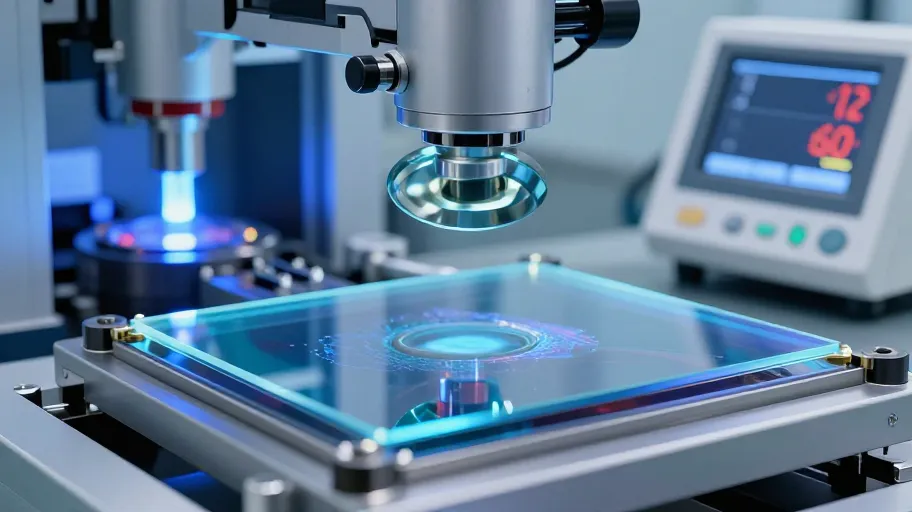
Plasma-activated surface pretreatment is non-negotiable because untreated sapphire resists molecular bonding. Oxygen or argon plasma cleans residues and boosts surface energy, enabling covalent bonds between coating and substrate. Independent labs show this increases bond strength from 0.7 MPa to 3.2 MPa—a 360% gain. But plasma only works with tight process control: power, gas mix, pressure, and electrode condition must be logged and monitored. A tier-one supplier cut pilot batch defects from 12% to under 3% just by enforcing recalibration after discovering degraded electrodes.
Tape peel test compliance isn’t about ritual—it’s traceability. Using calibrated 3M 600/610 tape, consistent roller pressure, and 10x magnification catches micro-delaminations. More importantly, linking each test result to a specific plasma run ID creates closed-loop feedback. One North American OEM reduced rework by 41% in three months simply by correlating peel outcomes with process logs—turning quality data into predictive tuning.
From risk to strategic speed
Rigorous adhesion validation means faster time-to-market because skipping environmental tests might save two days per batch—but costs millions if field failures emerge post-launch. Warranty logistics, emergency R&D, and reputational damage from a flawed AR device can exceed $20 million. In contrast, full MIL-C-48497 alignment costs about $18,000 monthly on a 10,000-unit weekly line. That investment prevents 7–15% field failure rates documented in recent optoelectronics recalls.
Flawless optics mean stronger customer retention and channel partner confidence—because dealers won’t push a product they know could fail. One European OEM captured Q4 holiday demand ahead of competitors by nailing first-pass yield, thanks to auditable plasma logs and stress-conditioned peel records from their sapphire china factory. Their ability to scale from pilot to volume wasn’t luck; it was proof their supplier operated with traceable precision from raw boule to coated wafer.
Adhesion testing isn’t a final checkpoint—it’s the foundation of scalable quality. When integrated into a closed-loop system, plasma pretreatment and compliant peel testing become levers for lower total cost of ownership. You’re not adding cost; you’re preventing waste, delays, and brand erosion. As you evaluate sapphire crystal china manufacture partners, the real question isn’t whether you can afford strict standards. It’s whether your launch can survive without them.