
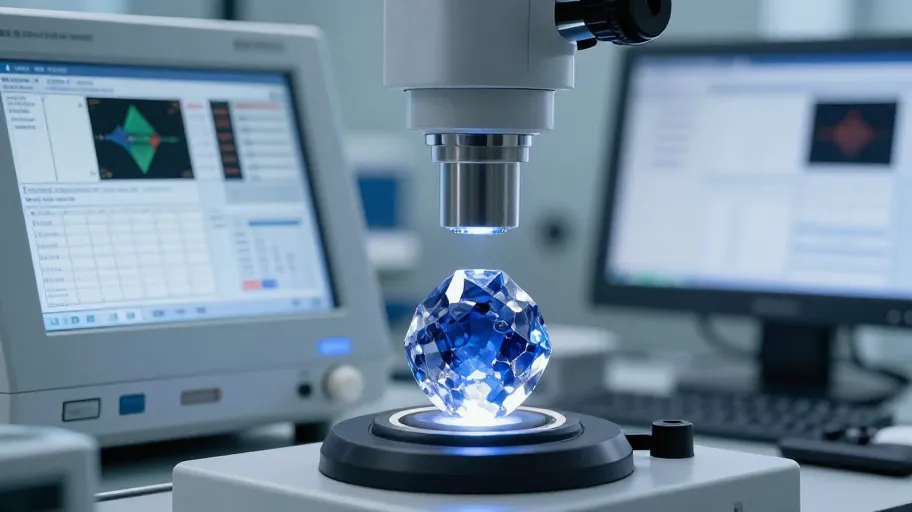
The real cost of a 'small' material change
Switching raw materials may promise an 18% drop in component cost, but if it slashes machining yield by 32%, you’re losing money. One luxury watch brand learned this the hard way when their Fuzhou supplier swapped to an unverified domestic sapphire source. The new ingots looked identical—but under stress testing, edge chipping spiked and anti-reflective coatings failed. The holiday launch was scrapped. A $1,200 validation test would have prevented a $2.1 million setback.
Cutting corners on verification means trading short-term savings for long-term risk. Lower polish yield means more rejected parts. Inconsistent hardness increases tool wear. Refractive shifts force rework on optical stacks. These aren’t hypotheticals—they’re documented outcomes from real post-change failures. When a supplier says ‘it’s still sapphire,’ what they often mean is ‘it meets the chemical definition’—not that it performs the same. And in precision optics, performance is everything.
Crystal structure isn’t just science—it’s your warranty shield
Sapphire (Al₂O₃) ranks 9 on the Mohs scale, but its real-world toughness depends on microscopic perfection. Even 50 ppm of iron or titanium can create internal stress points that reduce fracture resistance by up to 15%, according to a 2024 study in the Journal of Advanced Ceramics. These impurities don’t affect bulk composition, but they do nucleate cracks under impact—exactly what you don’t want in a watch crystal.
Trace contaminants also distort light transmission. In domed crystals, refractive index shifts cause ghosting in sunlight—something customers notice instantly. GDMS testing detects these elements down to 1 ppb, so you know what’s really in the material. Knowing means you can stand behind your warranty claims with confidence, not hope nothing fails in humid climates.
Growth method matters more than most buyers think
Most Chinese sapphire factories use Edge-defined Film-Fed Growth (EFG) because it’s fast and scalable. But EFG introduces thermal gradients and grain boundary irregularities that aren’t present in Verneuil or Czochralski-grown crystals. These flaws don’t show up in visual QA—but they do accelerate diamond tool wear during CNC shaping.
One Swiss assembler saw a 40% jump in bit consumption after switching to an unvetted EFG batch. That erased any material savings and added unplanned downtime. EFG-grown sapphire means faster production—if your process is tuned for it. If not, you’re paying hidden machining costs. Always confirm growth method and validate tool life projections before approving a change.
Crystal orientation changes everything
High-end applications require C-plane (0001) oriented sapphire because it behaves predictably under laser cutting and polishing. But some suppliers default to A-plane (11-20) material—it grows faster in EFG crucibles and boosts ingot output. While still chemically sapphire, A-plane crystals are mechanically anisotropic: they resist scratching differently depending on direction.
This leads to uneven polish rates, micro-hazing in off-axis light, and 22% more sub-surface cracking during ultrasonic drilling. A 2023 European audit found that unapproved orientation switches caused nearly half of all defect escalations from Asian vendors. XRD mapping confirms orientation within ±0.5°—a simple check that prevents cascading failures downstream.
Transparency turns vendors into partners
Demanding documentation doesn’t make you difficult—it makes you serious. When one Hong Kong OEM mandated full crystallographic reporting, their suppliers didn’t push back. Instead, lead times for change notifications improved by 45%, and proactive innovation proposals rose 30%. Why? Because they knew they were dealing with a partner who valued precision, not just price.
This shift builds supply chain resilience. You get earlier warnings, better collaboration, and fewer fire drills. More importantly, you gain leverage. Vetted data gives you the power to say no—and the credibility to demand better.
Certified provenance becomes your market edge
Consumers today care about authenticity. Being able to state not just ‘sapphire crystal’ but ‘C-plane, Fe/Ti-controlled, EFG-grown, hardness-verified sapphire with full chain-of-custody’ turns a commodity part into a story. It proves you’ve done the work others skip.
That kind of transparency resonates in premium markets. It supports pricing power, reduces returns, and strengthens brand equity. Third-party validation isn’t overhead—it’s branding. And with field failure rates dropping 68% among brands that enforce pre-change testing, it’s also smart economics. The next time a supplier calls a material switch a win-win, ask for the XRD report first. Your brand’s reputation depends on it.