
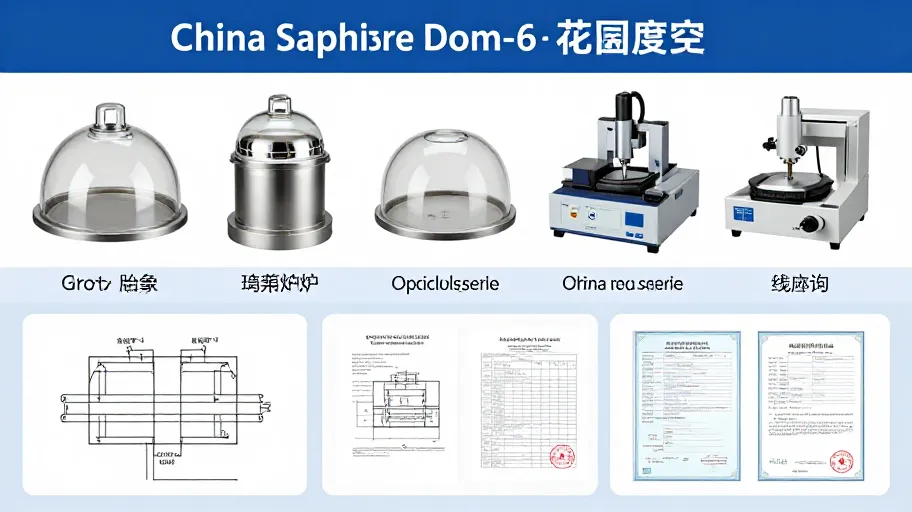
Before you shortlist a china sapphire dome supplier, compare six verifiable things side by side: documentation of the growth and cutting process, the optical method used for the dome, the manufacturing steps the supplier actually performs in-house, the quality of the engineering dialogue, and the evidence trail behind every quality claim. Turn each item into a written question, request documents, and approve nothing until you have compared answers across at least three candidates. That comparison discipline, more than any single claim, is what protects your project.
Why pre-sourcing comparison decides the outcome
When a watch brand sources a custom sapphire dome, the costliest mistakes happen before the first purchase order. A supplier may present polished marketing images and confident capability statements, but none of that tells you whether your specific dome geometry, coating choice, clarity requirement and volume fit what that factory can verify today. Buyers who skip structured comparison end up discovering gaps after tooling, after sampling, or after the first production batch — when changing suppliers is expensive.
The purpose of this article is not to rank suppliers or endorse any factory, including ours. It is to give you a repeatable framework so that every candidate — including JadeZone Sapphire — is measured against the same questions, and every claim is converted into a document you can review.
The DOME Filter: a six-check comparison framework
Use the DOME Filter when evaluating any China sapphire dome supplier. Each letter is a check you can run from your desk, before any visit or payment.
D — Documentation of material and process
Ask each supplier to state in writing:
- The source and form of the sapphire material (for example, grown boule versus purchased blank) and what they verify about it.
- Which process steps — growth orientation, cutting, grinding, polishing, coating, inspection — they perform in-house versus subcontract.
- How they document material orientation relative to your crystal axis, since orientation affects hardness behaviour and optical performance in a dome.
A supplier who cannot describe their own process chain clearly is asking you to approve a black box.
O — Optical method and specification alignment
A dome is an optical component as much as a mechanical one. Ask:
- What anti-reflective coating options (if any) they offer, and how coating performance is specified and tested — without assuming any performance level until they provide current test evidence.
- How they measure clarity, surface finish and light transmission, and what measurement reports they issue per batch.
- How they handle the dome's optical geometry — the relationship between crown height, base diameter and thickness — and what they need from your drawings to confirm manufacturability.
M — Manufacturing fit for your project
No two sapphire dome projects have the same requirements. Before shortlisting, confirm:
- Whether their equipment and fixtures suit your specific dome geometry and the quantities you plan to order. Ask directly what project sizes they accept — do not assume a minimum or maximum.
- What their sample and prototyping policy is, including any fees and terms. Confirm the current policy in writing; do not rely on assumptions about what is included or who bears which cost.
- What their stated lead time is for your specific drawing, and what causes that estimate to change.
E — Engineering dialogue quality
Judge suppliers by the questions they ask you. A capable engineering team will probe your drawing: dome profile tolerances, coating specification, case fit and gasket interface, and environmental expectations. A supplier who only asks about quantity and price is not yet engaged with your product. Treat the quality of their counter-questions as a shortlisting signal in itself.
E — Evidence trail
Every capability claim should be backed by something you can inspect:
- Dimensional inspection reports and the measuring equipment used.
- Coating and surface measurement methods, where applicable.
- Batch traceability and how they handle non-conforming parts — ask them to describe their corrective-action process rather than accepting a promise of "high quality."
The comparison decision table
Score each candidate supplier on the same rows before shortlisting:
| Comparison dimension | What to request | Supplier A | Supplier B | Supplier C |
|---|---|---|---|---|
| Process chain clarity | Written in-house vs subcontracted steps | ☐ | ☐ | ☐ |
| Dome geometry fit | Manufacturability feedback on your drawing | ☐ | ☐ | ☐ |
| Coating specification | Current spec and test method, if offered | ☐ | ☐ | ☐ |
| Measurement capability | Inspection reports and equipment list | ☐ | ☐ | ☐ |
| Sample policy | Written current policy and terms | ☐ | ☐ | ☐ |
| MOQ and volume fit | Direct written answer for your project | ☐ | ☐ | ☐ |
| Lead time | Written estimate for your drawing, with assumptions | ☐ | ☐ | ☐ |
| Communication quality | Specificity of engineering counter-questions | ☐ | ☐ | ☐ |
| Traceability | Batch records and corrective-action description | ☐ | ☐ | ☐ |
| References and evidence | Verifiable project evidence, no unnamed claims | ☐ | ☐ | ☐ |
Fill the boxes from written answers only. Phone assurances do not survive a dispute.
Qualification questions to send before shortlisting
Send this set to every candidate, including JadeZone Sapphire, and compare the written replies:
- Which stages of sapphire dome production do you perform in-house, and which do you subcontract?
- For our attached drawing, what do you need from us to confirm manufacturability — and do you see any risk areas?
- What is your current sample policy for a new custom dome, including fees, terms and what you need from us to quote?
- What quantity range do you accept for a project like ours, and how does that change pricing and scheduling?
- What dimensional and optical inspections do you perform, and what documentation do you provide per shipment?
- How do you trace batches, and what is your process when a part fails inspection?
- What is your stated lead time for our drawing, and what factors would change it?
- Can you share verifiable evidence of comparable past work — without expecting you to disclose confidential client details?
Any question a supplier declines to answer in writing is itself an answer. Log it in your comparison table and weigh it against the others.
Documentation to request in writing
Convert your shortlist into a document review:
- Process flow description for your specific dome
- In-house versus subcontracted step list
- Inspection plan and measuring equipment list
- Sample policy and fee terms, as currently in effect
- Written lead-time estimate referencing your drawing
- Batch traceability and corrective-action description
- Coating specification and test method, where applicable
- Contact point for engineering questions
Approve a supplier only after the documents match the verbal story. Where they diverge, the document is what you will be holding at goods receipt.
FAQ
How many China sapphire dome suppliers should I compare before shortlisting? Three is a workable floor for a meaningful comparison; more adds review time with diminishing insight. What matters more than count is that every candidate answers the same written questions, so your decision table compares like with like.
Should I visit the factory before placing an order? A visit adds value once you have a shortlist, because you can verify the process chain and inspection setup in person or through a third-party audit. The DOME Filter is designed to reduce the shortlist first, so any visit is spent on realistic candidates rather than on suppliers who fail the written round.
Can a smaller watch brand work with a Shenzhen or Hong Kong sapphire supplier? That depends entirely on each supplier's project policy, which varies and must be confirmed in writing. Ask directly what project sizes, quantities and engagement terms each candidate accepts, and compare the answers rather than assuming a threshold exists.
How do I verify coating and clarity claims for a sapphire dome? Ask for the current specification and the measurement method behind it — what equipment is used, what is reported, and how results are tied to your batch. If a supplier cannot describe the test, treat the claim as unverified until they provide the documentation.
What if suppliers refuse to share details before I commit? Limited disclosure before an NDA is reasonable; refusal to answer process, inspection and policy questions is not. Offer a mutual NDA to unlock deeper documentation, and compare which suppliers engage constructively with that step.
Your next step
Run the DOME Filter across your candidate list before you commit engineering time to any single factory. To make that easier, we have assembled a pre-sourcing checklist containing every approval question and document request from this article, formatted so you can score multiple suppliers side by side.
Download the checklist (下载核对清单) and start your comparison today.
If you would like JadeZone Sapphire to answer the same qualification questions for your project, send your drawing and we will respond in writing — so our answers sit in your comparison table alongside every other candidate, and you can verify us the same way.