
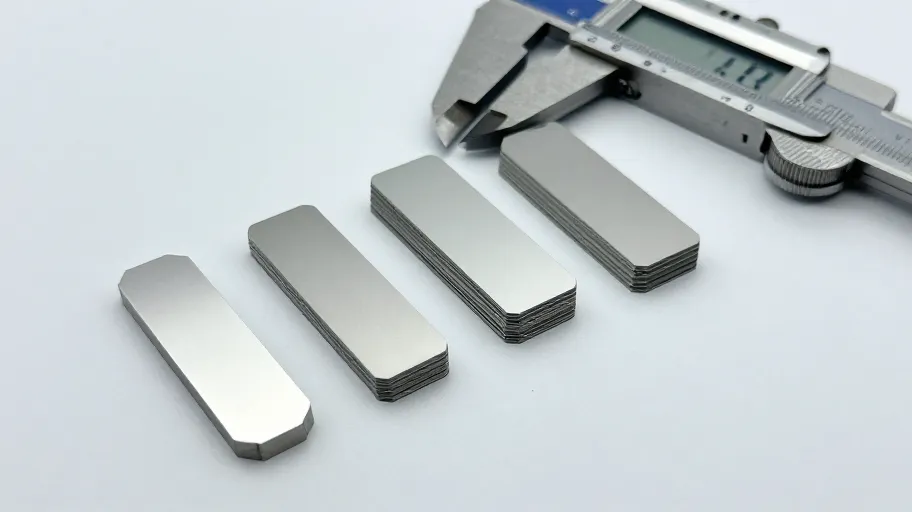
A clear custom sapphire watch crystal RFQ contains five things: complete geometry (including any curve profile and thickness), a defined edge and gasket-seat form, the finish and any coating intent, the quantity range you are evaluating, and your inspection expectation. Everything else is a question to resolve with the supplier before approval.
That last sentence matters more than most buyers expect. When a crystal quotation disappoints, the root cause is rarely pricing. It is a mismatch between what the buyer assumed and what the supplier was actually asked to deliver. This article gives you a repeatable way to close that gap.
The D-S-R-A gate framework
Use four gates, each producing a documented artefact. Do not advance until the artefact exists in writing.
Gate 1 — Define. Artefact: a one-page design intent note. Record the case reference, the movement and hand clearance envelope, the intended sealing method (gasket, adhesive, compression fit), and the visual role of the crystal (flat, domed, box, stepped). If the crystal shape interacts with a bezel or rehaut, note that too. This note is internal; it anchors every later decision.
Gate 2 — Specify. Artefact: a drawing plus a dimension sheet. The drawing communicates form; the dimension sheet communicates measurable parameters. Which dimension controls the seal? Which face is the reference for height? Is the dome a spherical cap, and if so, what defines its radius? Write each item as a callout. Where you cannot yet assign a value, mark it as an open item rather than leaving it silent — a silent item becomes the supplier's assumption, and assumptions are where comparison between quotations breaks down.
Gate 3 — Request. Artefact: the RFQ pack itself. Send the drawing, the dimension sheet, the quantity range you are evaluating, your target timeline for prototyping versus production, and your inspection expectation. Ask the supplier to respond in a fixed format: geometry as understood, edge and gasket form as understood, finish and coating as understood, and a list of anything they could not interpret. A supplier who returns questions at this stage is doing exactly what you want.
Gate 4 — Approve. Artefact: a signed-off specification document that both sides reference. Before releasing tooling or production, walk the approval questions below with the supplier and record the answers. This document is what protects both parties if a design change arrives mid-project.
Drawing versus dimension sheet
Buyers ask whether a drawing alone is enough. Sometimes it is — but a dimension sheet adds value a drawing cannot. A drawing shows a dome; a dimension sheet states which measurement a gauge will actually verify. A drawing shows an edge; a dimension sheet states whether the gasket seat is a chamfer, a step or a groove, and which side is controlling. When you submit both, the supplier's review team can flag mismatches instead of guessing.
If your case design is still in flux, say so in the RFQ. Suppliers can tell you which parameters are sensitive to case revisions and which are not, which lets you sequence your design freeze intelligently. Confirm with JadeZone Sapphire how they prefer to receive in-progress designs and what they need to start a review.
Decision table: who owns each open item
| Open item | Buyer decision | Confirm with supplier | Notes |
|---|---|---|---|
| Crystal form (flat, domed, box, stepped) | Yes | Manufacturability feedback | Set in Gate 1 from case design |
| Dome geometry and thickness | Yes | Achievability and alternatives | State radius or profile reference explicitly |
| Gasket seat / edge form | Yes | Recommended form for your sealing method | Ask what they can verify dimensionally |
| Anti-reflective or other coating intent | Intent only | Availability, application method, verification | Confirm current coating options directly |
| Inspection method and acceptance criteria | Yes | What they can inspect and document | Agree on what a report contains |
| Quantity range for quoting | Yes | How quantity affects their quotation | Ask them to quote the range you give |
| Sample policy, costs, shipping | No | Confirm current policy directly | Not supplied here; must be verified |
| Lead time, tooling terms, capacity | No | Confirm directly, project-specific | Avoid assuming durations; ask for this project |
| MOQ and order terms | No | Confirm directly before approval | Document the answer in the spec pack |
The right-hand column is your agenda for the Gate 4 conversation.
Approval questions before you release an order
Ask these, and write the answers down:
- "Please restate the crystal geometry in your own words — what shape, thickness profile and edge form will you make?"
- "Which single dimension do you treat as controlling for the seal, and how will you verify it?"
- "What finish and coating options are available for this design, and how is each verified?"
- "What happens to the specification if we change the case dimension after approval — which parameters are affected and how do we re-approve?"
- "What are your current sample, tooling, MOQ, timeline and shipping policies for this project?"
- "What inspection documentation accompanies delivery, and what is the process if a delivered item does not match the approved specification?"
These questions are deliberately supplier-agnostic: use them with any manufacturer to make quotations comparable.
Pre-submission checklist
Before sending your RFQ to JadeZone Sapphire, confirm each item:
- Case reference and movement stated
- Crystal form chosen and drawn (flat / domed / box / stepped)
- Dome or profile geometry defined by an explicit parameter
- Thickness stated with reference face identified
- Gasket seat or edge form called out
- Finish and coating intent marked (or marked "open — advise options")
- Quantity range for quotation stated
- Inspection expectation stated
- Open items listed explicitly rather than omitted
- Timeline intent for prototype vs production stated as your target, to be confirmed by supplier
Frequently asked questions
Can I request a quote with an incomplete drawing? Yes — submit what you have and mark the open items. Ask the supplier to identify which gaps block quotation and which do not. What causes problems is not incompleteness; it is unstated assumptions.
How do I compare quotations from different sapphire crystal suppliers? Send every supplier the same dimension sheet and ask each to restate the geometry in their own words plus list their assumptions. Differences in their restatements reveal differences in what you would actually receive.
Should coating be decided before or after the RFQ? Decide the intent before; confirm the implementation after. State whether an anti-reflective or other coating is desired, then ask each supplier which options they offer for your geometry and how performance is verified. Do not rely on any coating performance claim without current evidence from the supplier.
What if my case design changes after the crystal is specified? Flag it immediately and ask which parameters are affected. A documented Gate 4 specification makes this a controlled revision rather than a dispute.
Do I need to know sapphire manufacturing to write a good RFQ? No. You need to know your watch. A supplier such as JadeZone Sapphire, manufacturing custom sapphire components from Shenzhen and Hong Kong, can translate your functional intent into manufacturable parameters — but only if your intent is written down.
Send your drawing or dimension sheet
Submit a drawing or dimension sheet to JadeZone Sapphire for review. Mark your open items clearly; the review exists to surface them before quotation, not after production.
Low-friction option: if your documentation is not ready, start with the pre-submission checklist above — fill in what you can, note the gaps, and send that. A partially completed checklist with honest open items is a stronger starting point than a polished drawing with silent assumptions.