
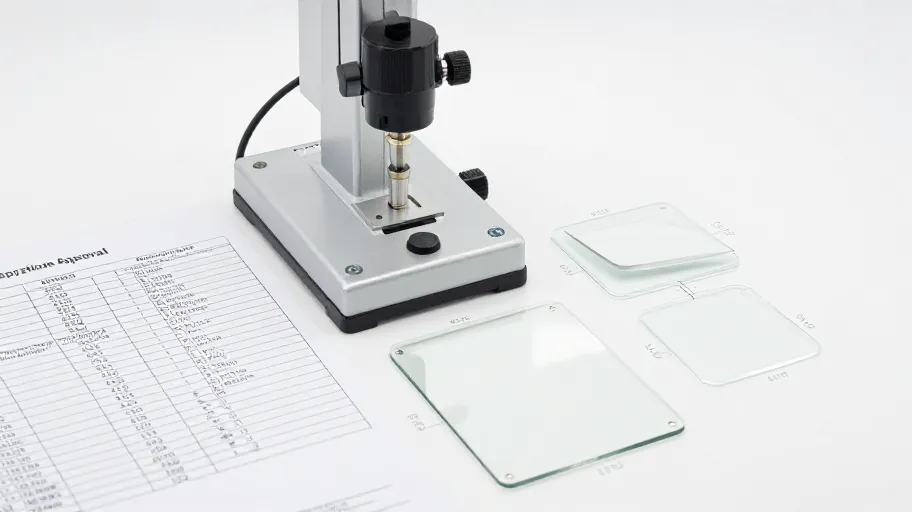
Buying sapphire optical parts as OEM glass comes down to three disciplined steps: specify the material, geometry, surface and coating requirements in writing; verify them against physical samples you approve and document; then sign off with a defined quality reference before volume production. This guide gives watch-brand buyers the framework, tables and questions to do exactly that.
Why specification discipline decides the outcome
When a sapphire crystal or precision sapphire component fails in the field, the root cause is rarely the material itself. Synthetic sapphire's hardness and optical clarity are well understood. What fails is the conversation: a drawing that omitted a coating callout, an edge treatment agreed verbally, a surface-finish expectation that never made it into the approval record.
For watch brands and component buyers, the fix is process, not persuasion. Treat every OEM sapphire glass purchase as a three-stage project: define, verify, approve. Do this before discussing volumes, and you will compare suppliers on facts rather than promises.
The SPEC–SAMPLE–SIGN-OFF framework
SPEC. Translate the product requirement into a written technical document: material grade, geometry, aperture behaviour, surface finish on each face, coating (if any), edge treatment, and marking. Anything not written down is an assumption, and assumptions are where projects drift.
SAMPLE. Request physical samples produced to that specification, then evaluate them against defined criteria — dimensional fit in your own case or fixture, visual inspection under your lighting conditions, and any functional tests relevant to your application. Document what you measured and what you approved.
SIGN-OFF. Convert the approved sample into a reference standard: a retained golden sample, a written inspection reference, and agreed acceptance criteria for production. This is what protects both buyer and manufacturer once orders scale.
Decision table: what to specify for sapphire optical parts OEM glass
| Specification element | What the buyer must define | Why it matters | Questions to confirm with the supplier |
|---|---|---|---|
| Material form | Synthetic sapphire (single crystal), orientation if your application requires it | Optical and mechanical behaviour depends on crystal orientation | Which orientations can you produce, and which do you recommend for this part? |
| Geometry | Diameter, thickness, profile (flat, domed, stepped), edge treatment | Fit, seal behaviour and final appearance | What geometry limits apply to my drawing? Can you review the drawing before quoting? |
| Surface finish | Polish level per face, any matte or textured zones | Readability and reflections in the finished watch | How is surface finish specified and inspected in your process? |
| Coating | Anti-reflective coating, one-side or two-side, band/target | Coating callouts change scope and inspection | Which coating options do you currently offer, and how is coating quality verified? |
| Marking/printing | Logo, index or scale printing, ink or deposition method | Brand identity and durability of decoration | What marking methods do you support, and what artwork format do you need? |
| Acceptance criteria | Inspection method, sampling plan, golden-sample reference | Defines pass/fail for production | How do you handle first-article inspection and production conformity? |
Note: this table deliberately avoids quoting numbers. Dimensional tolerances, coating specifications and inspection levels depend on your drawing and the supplier's confirmed process capability. Ask for each candidate supplier to state, in writing, what they can hold for your specific part — then compare those written statements.
Sampling: what to request, what to evaluate
Request samples made to your written specification, not a generic showcase piece. A display crystal tells you nothing about how your specific geometry, polish and coating will turn out.
During evaluation, use your own conditions. Fit the sample into your actual case or assembly. Inspect it under the lighting your end customer will see. If your watch has a printed dial visible through the crystal, evaluate the combination, not the crystal alone.
Two practices keep sampling honest. First, evaluate more than one sample from the batch so you see consistency, not a hand-picked best piece. Second, retain the piece you approve, label it, and make it the golden sample for the project.
Approval questions to put to any sapphire supplier
Bring these to your first technical call. Written answers become your project record.
- Can you review my drawing and confirm in writing which tolerances and features you can hold for this specific part?
- What is your first-article inspection process, and what documentation will I receive with samples?
- How do you specify and verify polish level and coating quality?
- What happens if a sample does not meet the agreed specification — what is your revision process?
- Can we agree a retained golden sample and written acceptance criteria before volume orders?
- What drawing format and technical data do you need from me to quote accurately?
- Which quality management documentation can you share for verification, and is it current?
The final question matters. Quality claims are easy to make and hard to verify. Ask for evidence, check its currency, and record what you received.
Sign-off checklist
Before releasing any production order, confirm every line:
- Written specification document exists and both parties have acknowledged it
- Drawing revision level is stated and agreed
- Physical samples evaluated under your own conditions
- Sample evaluation results documented (fit, visual, functional)
- Golden sample retained and labelled by both parties
- Acceptance criteria written and attached to the order
- Inspection documentation requirements agreed
- Sample policy, pricing, lead times and terms confirmed directly in writing
- Contact and escalation path named on both sides
Anything unchecked is a risk carried into production.
FAQ
Do I need a finished drawing before approaching a sapphire manufacturer? A finished drawing accelerates quoting, but a rough concept with your key requirements can start the conversation. Ask the supplier what drawing format and data they need, and whether they can review preliminary geometry before you finalise it.
How do I compare sapphire suppliers fairly? Compare written responses to the same technical question set. A supplier that answers with specifics about process and inspection is easier to evaluate than one that answers with adjectives. Verify every capability claim against documentation and samples.
What is the difference between a display sample and a production-intent sample? A display sample demonstrates general capability; a production-intent sample is made to your specification with your geometry, finish and coating. Only the second can support a sign-off decision.
Can one supplier handle both sapphire watch crystals and other precision sapphire components? Some can, but confirm scope for your specific part family rather than assuming it. Ask which component types and processes fall within their current confirmed capabilities, and ask for evidence.
How should I handle coating specifications? State the coating type, side configuration and the performance intent in your specification, then ask the supplier how they verify coating quality. Confirm current coating options directly — do not rely on assumptions from previous projects or other suppliers.
Next step: get the sourcing brief
If you are evaluating JadeZone Sapphire — a Shenzhen and Hong Kong B2B manufacturer of custom sapphire watch crystals and precision sapphire components — start with a documented specification and a direct conversation. 获取采购 Brief to structure your technical requirement, sampling plan and approval questions before your next supplier call.
Prefer to start smaller? Use the sign-off checklist above as your low-friction first step: run it against your current project and see which lines are still blank. Those blanks are your next questions to any supplier.