
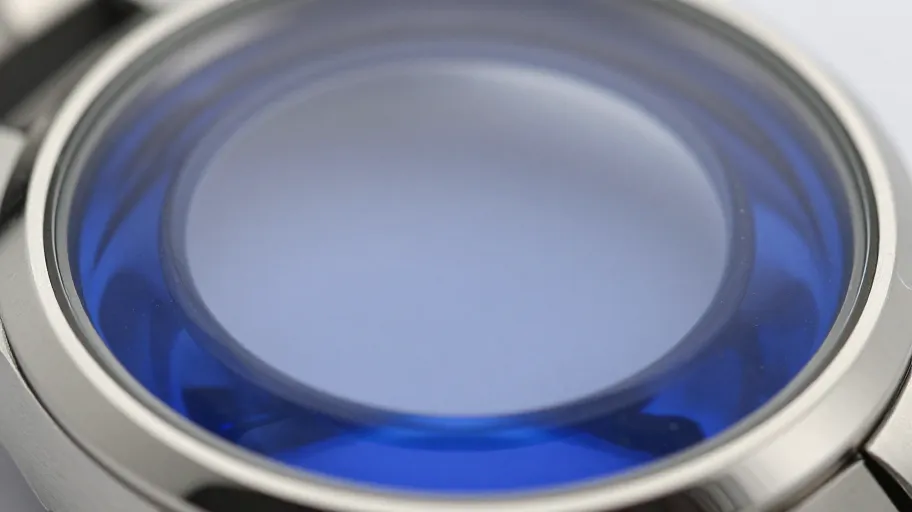
Yes — sapphire crystal watch glass can be polished, because sapphire's hardness makes it polishable to a very high optical finish rather than impossible to work. Polishing is a core manufacturing step for watch crystals. What matters for buyers is specifying finish, verifying the supplier's process, and approving samples before volume production.
What "Polishing Sapphire" Means for Component Buyers
Sapphire is an extremely hard, scratch-resistant crystalline material. That hardness is exactly why, in manufacturing, it is ground and polished with dedicated abrasive processes rather than ordinary glassworking methods. For a watch brand or component buyer, the practical question is not whether sapphire can be polished — it is what surface quality your application requires, and how you will verify it at sample approval.
Polishing touches several commercial decisions at once:
- Optical clarity of the finished crystal in the assembled watch.
- Flatness and surface geometry, which affect fit, sealing and dial visibility.
- Defect handling — whether a polished surface meets your acceptance criteria for pits, sleeks or edge chips, and how any rework is documented.
- Coating compatibility, if anti-reflective or other coatings are part of your build.
Because outcomes depend on your specific geometry, grade and finish requirements, treat polishing as a specification conversation with your supplier — not a yes/no fact to assume.
The P.O.L.I.S.H. Framework for Buying Polished Sapphire Crystals
Use this six-step framework to move from a raw question ("can it be polished?") to a documented, approvable specification.
P — Profile the part. Document diameter or shape, thickness, doming, facets, holes or date-window apertures, and edge treatment. Geometry drives polishing approach.
O — Objective finish. Define the surface quality you need in measurable terms: appearance grade, flatness class, and permissible surface defects. Ask your supplier which criteria they can commit to in writing.
L — Limits. Establish what is out of scope: which defects are rejectable, what rework is acceptable, and how dimensional and cosmetic limits will be recorded. Confirm all numerical tolerances directly with the supplier for your project.
I — Inspect method. Agree how finish will be inspected — magnification levels, lighting, sampling plan — so both sides judge the same evidence.
S — Sign-off. Approve a golden sample that becomes the reference for production. Document the approval in writing.
H — Hold to the gate. Do not release volume production until the signed-off sample exists and the inspection criteria are attached to the purchase documents.
Decision Table: When Polishing Is the Right Conversation
| Situation | Is polishing relevant? | What to do next |
|---|---|---|
| New crystal design, finish not yet specified | Yes — core process step | Define finish criteria with supplier before tooling |
| Existing design, surface quality complaints | Possibly — depends on defect type | Send defect samples; ask supplier to diagnose and propose correction |
| Coated crystal with surface damage | Use caution | Ask supplier whether polishing is compatible with the coating system before any rework |
| Supplier change or second-source qualification | Yes — qualification step | Request polished samples against your written finish spec |
| Prototype iteration on dome or facet geometry | Yes | Iterate on sample approval, keeping dated records of each revision |
| Asking whether field scratches on finished watches can be polished | Different question — aftermarket repair | This article addresses OEM sourcing; confirm repair scope separately with your supplier |
Approval Questions to Put to Any Sapphire Supplier
Bring these to your first technical call. A supplier who can answer them precisely is easier to qualify.
- What surface-finish and defect criteria can you commit to in writing for this geometry?
- What inspection method and magnification will you use, and can we witness or receive inspection evidence with samples?
- How do you handle a sample that fails our cosmetic criteria — what is your correction and resubmission process?
- What dimensional and geometric criteria will accompany the golden sample, and who signs the approval on both sides?
- If a coating is specified, how do you verify coating integrity after polishing, and what evidence is provided?
- What is your current sample policy, cost structure, lead time and MOQ for this part? (Confirm directly — do not rely on published assumptions.)
- How are production lots held to the approved sample — what documentation ships with each lot?
Sampling and Inspection Checklist
Use this checklist at each sample gate. Confirm every item directly with the supplier; none of these points should be assumed.
- Written finish specification issued, including measurable criteria
- Geometry drawing with dimensions marked "to be confirmed by supplier"
- Supplier's stated polishing and inspection method documented
- Sample inspected under agreed lighting and magnification
- Cosmetic defects compared against agreed reject criteria
- Fit and sealing checked in your own case, where applicable
- Deviations and corrective actions recorded with dates
- Golden sample physically retained and referenced in purchase documents
- Sample policy, fees, lead time and MOQ confirmed in writing for this project
- Volume production gated on signed approval
Frequently Asked Questions
Can sapphire crystal watch glass be polished to remove scratches?
In manufacturing and rework contexts, sapphire can be ground and polished because its hardness supports a fine optical finish. Whether a scratch on a finished part can be corrected depends on its depth, the part's geometry and any coatings — a diagnosis your supplier must make on the actual part.
Does polishing affect the crystal's strength?
Any material removal step can influence final part characteristics depending on how much material is removed and how. Ask your supplier to explain their process controls and what verification they can provide with samples rather than relying on general assurances.
How do I specify polish quality when ordering custom sapphire crystals?
Define appearance grade, permissible surface defects, and geometric requirements in measurable language, then attach them to the golden sample approval. Ask the supplier which criteria they will commit to in writing — that commitment is your specification baseline.
Can polished sapphire be coated afterwards?
Coating after polishing is an established sequence, but compatibility depends on surface condition, coating type and process controls. Confirm with your supplier what coating verification evidence accompanies samples for your specific build.
What should I check before approving a polished sapphire sample?
Inspect under the agreed conditions, compare against written reject criteria, verify fit in your case, and confirm that the approved sample and its documentation will govern production lots. Never approve on visual impression alone.
Get the Sourcing Brief
Turn this guidance into a working document. 获取采购 Brief and get a structured template covering finish specifications, inspection questions, sample-gate criteria and supplier confirmation items — built for custom and OEM sapphire crystal projects. Use it to compare suppliers on evidence, not promises.
Prefer to start smaller? Copy the sampling checklist above into your next supplier call as a ready-made question sheet — no download needed.