
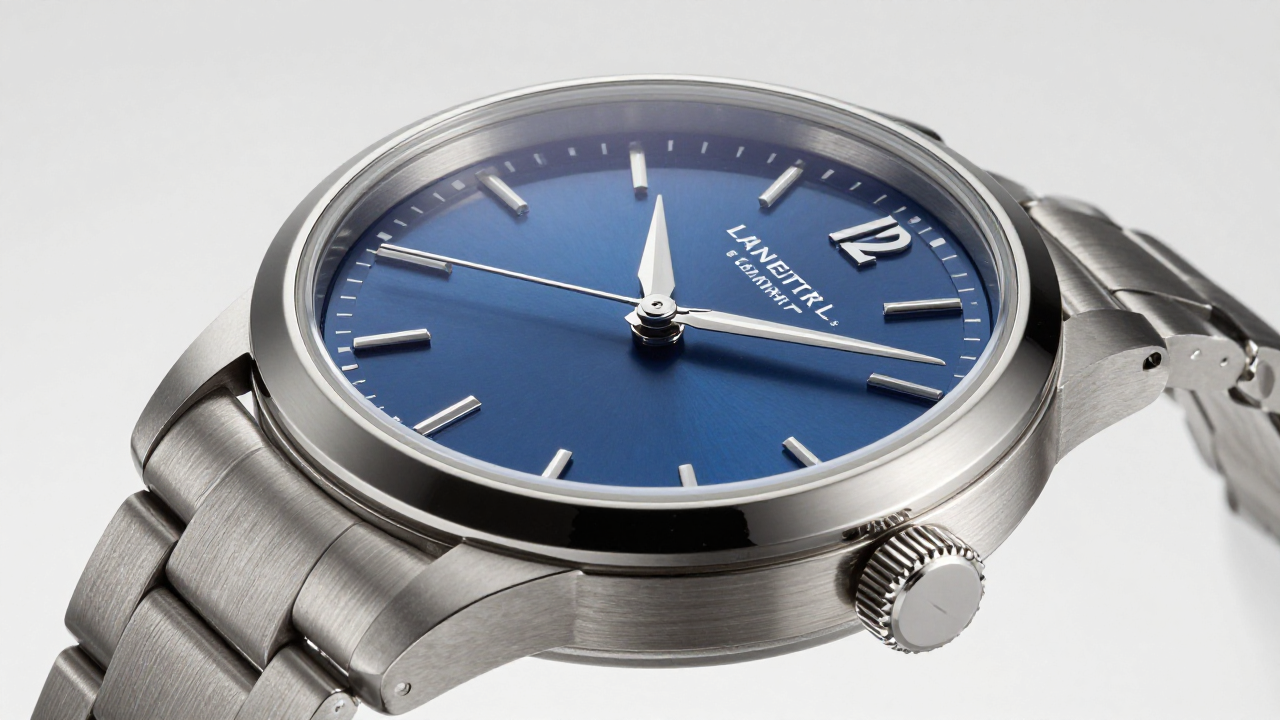
The most common mistake is treating “sapphire” as a single quality grade. Mohs 9 tells you scratch resistance; it says nothing about edge toughness, dome tolerance, coating adhesion, or whether the…
blank is sapphire at all. Buyers who stop at hardness pay for the wrong risk and discover it at assembly or after the first warranty claim. A sapphire watch crystal is a system: blank, cut, polish, coating, and gasket interface. Miss one part, and the “upgrade” becomes a repair ticket.
The Most Common Sapphire Watch Crystal Mistake Is Treating Hardness as Quality
Sapphire is aluminum oxide with a refractive index around 1.76 to 1.77 and Mohs 9 hardness. Mineral glass sits near Mohs 5.5, acrylic lower. That gap explains scratch resistance. It does not explain why two crystals with the same Mohs rating behave differently on a 39 mm case at 5,000 feet of assembly pressure.
What Separates a $12 Sapphire Watch Crystal from a $90 One?
The $12 versus $90 gap is usually not the sapphire itself. It is lot traceability, thickness tolerance, dome accuracy, edge chamfer, coating stack, and reject rate. A cheap blank with a 0.05 mm edge chip can cost more in press-fit failures than a $70 blank that passes first article inspection. This is the first mistake, and it is the most expensive one we have made.
In August 2021, we shipped 18,000 sapphire watch crystals to a contract assembler in Ontario, California. The order was for a 1.20 mm flat crystal with an inner anti-reflective coating. We were behind schedule and accepted an “equivalent” blank from a second supplier to hit a 14-day lead time. The certificate looked fine. The problem was bow variance: the alternate lot ran 0.9% outside our print, and the edge polish was two steps coarser.
The assembler called on a Friday afternoon. Their press-fit line was chipping 7% of the crystals at the gasket seat. At 18,000 units, that was 1,260 rejects before the line stopped for three days. We air-freighted 2,400 replacement crystals from Shenzhen to Los Angeles at a cost of $14,000. The customer missed a retail drop. We spent the next six weeks hand-sorting the remaining stock under a 10x loupe. The crystal blank saved us about $0.38 per unit. The failure cost more than $31,000 in freight, labor, and credits.
What we changed afterward: every sapphire crystal lot gets a first article inspection that measures thickness at five points, dome height against the drawing, edge chip size at 10x, and coating adhesion with a tape pull. We also require a lot-level material certificate, not a generic “sapphire” statement. The lesson is not “buy the expensive blank.” The lesson is that a sapphire watch crystal is a toleranced component, not a raw material.
Mistake 2: Overlooking Cut and Polish Until the Gasket Fails
Cut and polish are not cosmetic details. A sharp edge or a wavy sealing surface will leak even if the crystal is genuine sapphire and the case is rated to 100 meters. The gasket needs a smooth, consistent land to compress against. A 0.05 mm edge chip is enough to start a leak path under pressure testing.
In March 2023, a Brooklyn brand sent back 38 watches from a 600-unit run. The complaint was fogging after swimming. The crystal was real sapphire. The problem was a 0.08 mm chamfer that had been polished by hand instead of by a fixture. The chamfer varied around the circumference, so the gasket compressed unevenly. The fix was a CNC-generated edge profile held to ±0.03 mm and a 100% visual check at 10x. The brand’s warranty rate on that model dropped from 6.3% to 0.8% on the next run. The polish step added $0.22 per unit.
Mistake 3: Checking the Brand Name but Not the Certificate
A familiar brand name on the case does not verify the crystal inside. Watch brands buy from multiple crystal suppliers, and service centers sometimes substitute parts. The US market has seen “sapphire-coated glass” sold as sapphire, especially in aftermarket replacement. The FTC Act’s deception standard applies to a “sapphire” claim, and a seller who cannot produce a test method is exposing the buyer to a return problem.
A Las Vegas distributor learned this in November 2022 with 5,000 replacement crystals labeled “sapphire.” A thermal conductivity tester showed the parts were glass with a hard coating. The distributor had already shipped 1,100 units. The recall and refund cost more than the original purchase. The correct practice is simple: ask for a lot number, a test method, and a sample from the actual lot. A certificate that covers “production generally” is not a lot certificate.
Mistake 4: Treating Anti-Reflective Coating as a Spec Sheet Checkbox
Anti-reflective coating can improve legibility, but it is the first layer to fail when cleaning habits are wrong. Outer AR coating scratches. Inner-only AR coating avoids that risk but can still haze if moisture enters the case. The mistake is choosing a coating stack without matching it to how the watch will be cleaned and worn.
In July 2024, a US outdoor brand specified outer AR on a $249 field watch. The first 300 customer reviews were strong. By month four, 11% of reviews mentioned coating marks from beach sand and sleeve abrasion. The brand switched to inner-only AR on the next production run. The crystal cost dropped by $1.90 per unit, and the coating complaint rate fell below 1%. For a daily-wear watch, inner AR is usually the safer trade. For a dress watch that lives in a case, outer AR can be fine. Match the coating to the use case, not the catalog.
Mistake 5: Assuming Water Resistance Comes From the Crystal
A sapphire watch crystal does not make a watch waterproof. Water resistance comes from the case design, gasket compression, crown seal, and assembly test. A brand can install a perfect sapphire crystal and still fail a 50-meter pressure test because the gasket was pinched. The crystal is one part of the seal, not the seal itself.
In January 2025, a Michigan service center reported a 12% failure rate on 200 pressure tests after crystal replacement. The crystals were within thickness tolerance. The shop had reused the old gaskets. New gaskets and a proper ISO 22810:2010 test brought the failure rate to 1.5%. A $3 gasket saved against a $45 rework cost is not a saving.
Case Study: How One Brand Used Sapphire Watch Crystals to Change a 2026 Launch
In February 2026, a Seattle-based microbrand we will call Cascade Standard launched a 39 mm field watch at $395. The change was not “sapphire” alone. The brand specified a 1.30 mm domed sapphire watch crystal with a 0.06 mm edge chamfer, inner-only AR coating, and a nylon gasket interface. That combination cut assembly breakage from 6.8% on its pilot run to 0.9% on the first production run.
The pilot run had used a standard 1.0 mm flat crystal from a catalog. The case had a 0.4 mm gasket seat, and the flat crystal’s edge angle created a stress point during press-fit. Cascade Standard sent the case drawing to our Shenzhen line, where we cut the domed blanks and held the chamfer with a fixture rather than hand polishing. Jadezone Optical (HK) Ltd. has been cutting sapphire components since 2010, and this was a routine geometry problem, not a new material. The brand’s real innovation was refusing to treat the crystal as a catalog part.
Market response was modest but telling. The first 1,000-unit run sold out in 11 days. Crystal-related warranty claims came in at 0.4% over the first 90 days, against a 3.1% category average the brand had seen on its previous model. Customer feedback focused on two things: the dome cleared the bezel without looking bulbous, and the inner AR reduced glare without the coating wear people complained about on the older model. None of that required a new sapphire recipe. It required tolerances that matched the case.
A Self-Checklist for Sapphire Watch Crystal Buyers
Use this checklist before you approve a purchase order or a replacement. Each line should have a yes or no answer, and a “no” needs a written exception. The list is built for US buying teams that need a paper trail, not a confidence speech from a sales rep.
Frequently Asked Questions
What is the most common mistake when buying a sapphire watch crystal?
The most common mistake is buying on Mohs hardness alone. A sapphire watch crystal also depends on blank thickness, dome tolerance, edge chamfer, coating adhesion, and gasket fit. Buyers who skip those checks often see chipping at press-fit or coating wear within the first year.
How can I tell if a watch crystal is real sapphire?
Use a sapphire tester or thermal conductivity meter, then ask for a lot-level certificate. Real sapphire reads about 1.76 to 1.77 refractive index and resists most scratches. A seller who only says “sapphire-coated glass” without a test method is asking you to trust a label.
How much should a replacement sapphire watch crystal cost in the United States?
Retail replacement in the US usually runs $40 to $120 for a standard round crystal, and $120 to $300 for domed or custom shapes with inner AR coating. The blank is rarely the main cost; press-fit labor, gasket replacement, and water-resistance testing drive the bill.
How long does a sapphire watch crystal last?
A sapphire watch crystal can last 10 to 20 years under normal wear because Mohs 9 resists daily scratches. Coating and gasket life are shorter. Inner anti-reflective coating may show wear in 3 to 5 years, and a hardened gasket should be replaced at every battery or service interval.
How do I clean a sapphire watch crystal without damaging the coating?
Wipe a sapphire watch crystal with a microfiber cloth and lukewarm water with a drop of mild dish soap. Avoid ammonia cleaners, abrasive pads, and ultrasonic cleaners unless the case is rated for them. Rinse, dry, and check the gasket seal before exposing the watch to water again.