
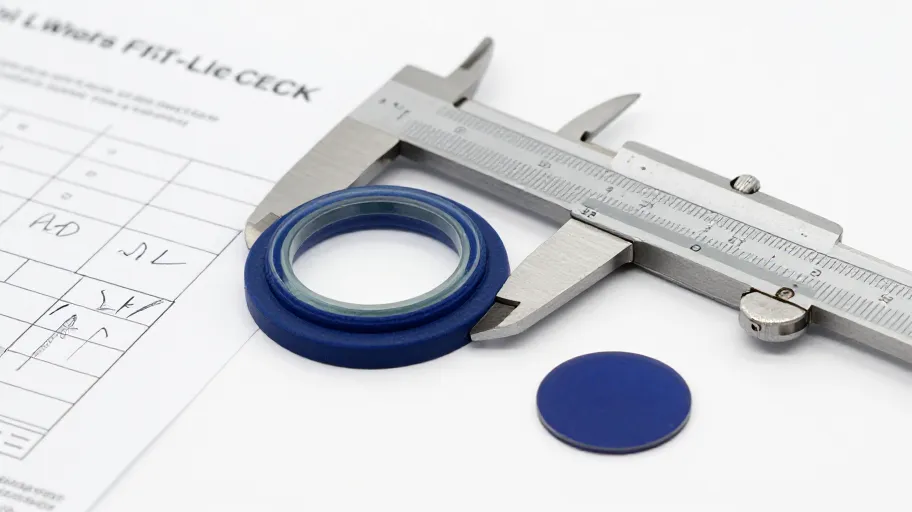
When you evaluate a sapphire watch glass supplier, the single most useful preparation step is a written fit and compatibility record: case dimensions, crystal seat geometry, gasket or adhesive interface, dial-to-crystal clearance, coating requirements and every uncertainty flagged as a question. Suppliers quote faster and more accurately when this record travels with your enquiry. Use the FIT-CHECK Record Framework below to capture each measurement once, version it, and turn gaps into explicit supplier questions rather than assumptions.
Why fit records determine quotation quality
A quotation for a custom sapphire crystal is only as good as the inputs behind it. When a sourcing team submits partial drawings without interface conditions, the supplier must guess or query. Guessing produces sample rounds that fail on fit; querying produces delay. A disciplined record of what was checked, how, and with what result converts the quotation stage from a negotiation of assumptions into a comparison of documented facts.
This matters doubly in OEM programmes, where the same crystal specification may be sent to several suppliers for comparison. If each supplier receives slightly different inputs, their quotations are not comparable. One shared, versioned fit record makes the quotes line up against the same baseline.
The FIT-CHECK Record Framework
Apply one record per crystal position. Each letter of the framework is a section of your file:
| Letter | Record element | What to capture |
|---|---|---|
| F — Fit data | Case, bezel and seat dimensions | Crystal diameter, thickness, seat depth, curvature where relevant, and the drawing revision used |
| I — Interface condition | How the crystal is retained | Gasket, adhesive, pressure-fit or clamp; material and profile of the mating part |
| T — Tolerances flagged | Which dimensions carry tolerance risk | Mark any dimension where your measurement confidence is low and note the measurement method |
| C — Compatibility evidence | Proof of interaction | Clearance to hands and dial, crown or pusher proximity, movement swap plans, bezel overlap |
| H — Handling plan | Coatings and surface decisions | Anti-reflective treatment preferences, markings, finishing — recorded as requirements, not assumptions |
| E — Errors logged | Change history | Date-stamped log of measurement corrections, drawing revisions and design changes |
| K — Confirmation points | Open questions for the supplier | Every unresolved item phrased as a direct question |
The framework's value is not the measurements themselves — most teams hold those somewhere — but their assembly into one shareable, dated document. Suppliers responding to a FIT-CHECK file can identify feasibility issues at quotation instead of at sample review.
Decision table: what to do with each check result
| Check result | Interpretation | Action for sourcing |
|---|---|---|
| All dimensions measured, method recorded, interface known | Fit is documented | Send for quotation; ask supplier to confirm receipt of the same revision |
| Dimension measured but method not recorded | Data may not be repeatable | Re-measure or note method before quoting; flag in Confirmation points |
| Interface (gasket/adhesive) not yet specified | Retention method undefined | Ask supplier what interface options they can produce for this geometry; do not assume |
| Clearance to hands or dial estimated, not measured | Compatibility risk | Request supplier guidance on minimum clearances they can accommodate; document the answer |
| Tolerance expectation exists but is not agreed | Tolerance is a negotiation, not a given | Ask the supplier what tolerances they can hold for this part; record the written reply |
| Drawing revision unclear or multiple versions in circulation | Fit record integrity risk | Freeze one revision, log it in Errors logged, and re-issue to all parties |
Concrete approval questions for your sapphire watch glass supplier
Before approving any quotation, put these questions in writing and keep the replies in the sourcing file:
- Which of the dimensions in our fit record can you confirm producing as specified, and which require modification?
- What dimensional tolerances can you hold for this specific geometry, and how will deviations be reported?
- What gasket or adhesive interfaces is this crystal design compatible with from your production perspective?
- What inspection evidence will accompany each crystal or batch so we can verify fit on receipt?
- What is your current sample policy — including any fees, shipping responsibilities and whether fees are credited against orders — and where is it documented?
- What is your current MOQ, lead-time estimate and capacity position for this part, and what would change them?
- How do you want us to report a fit deviation found at our end, and what is the resolution path?
The answers to questions five and six are supplier-specific and must be confirmed directly. Do not carry figures from one supplier conversation to another; policies differ and change.
Checklist: the quote-ready brief
Use this checklist as the low-friction next step. When every box is ticked, your brief is ready to send to any supplier, including JadeZone Sapphire.
- One frozen drawing revision, dated and numbered
- All case and seat dimensions recorded with measurement method
- Retention interface (gasket, adhesive, pressure-fit) specified or flagged as an open question
- Hand, dial and bezel clearances measured or explicitly marked as estimates
- Coating and surface requirements listed as requirements
- Tolerances recorded as questions where not yet agreed
- Errors and changes logged with dates
- Confirmation questions written and numbered
- Supplier replies filed against the same brief revision
- Named contact on both sides recorded for fit accountability
Frequently asked questions
How many measurement points should a fit record include? There is no fixed number; it depends on the crystal type and retention method. The discipline is completeness relative to your design: every dimension that affects retention, sealing or clearance should appear with its measurement method, and every gap should appear as a question.
Should we send the fit record before or after requesting a price? Before. A supplier quoting against a documented fit record can distinguish feasible specifications from problematic ones at quotation stage, which protects both parties from re-quoting later.
Can the supplier help complete our fit record? Ask them directly. Many suppliers will review a partial record and identify which items they can advise on. Treat their input as project-specific guidance to document, not as a substitute for your own measurements.
What if two suppliers return different tolerance answers? That is useful comparison data, not a problem. Record both answers in your file and discuss the discrepancy with each supplier — the reasons behind a tolerance position tell you a great deal about how a supplier works.
How do we keep the record honest across a long project? The Errors logged section. Date every correction and drawing revision. A record that pretends nothing changed is less valuable than one that shows exactly what changed and when.
Prepare a quote-ready brief
Gather your fit data into the FIT-CHECK format, complete the checklist above, and send it as your enquiry. JadeZone Sapphire — a Shenzhen and Hong Kong B2B manufacturer of custom sapphire watch crystals and precision sapphire components — can review your brief and respond to your confirmation questions so the quotation you receive reflects your documented specification. Confirm current sample, pricing and production policies directly with our team; do not rely on figures from third-party sources.
Low-friction CTA: Not ready to quote yet? Download or copy the ten-point checklist above and use it to audit your existing crystal specifications — it works as a standalone internal review tool.