
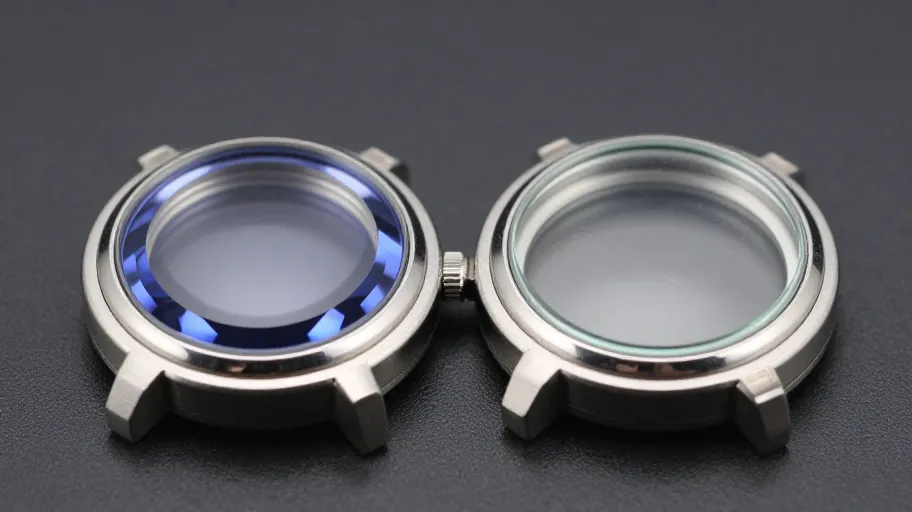
In B2B sourcing, "sapphire crystal" is the component itself — a watch crystal cut from synthetic sapphire — while "scratch resistant" describes a hardness characteristic attributed to sapphire material or to surface treatments applied to other materials. The terms answer different questions: what the part is versus how it is expected to perform. This guide turns that comparison into a verification workflow you can run with any supplier.
Why the terminology matters more than the marketing
If you search "scratch resistant sapphire vs sapphire crystal", you are really asking two questions at once. The first is technical: is the material being quoted genuinely sapphire, or is it another transparent material described as scratch resistant? The second is procedural: what evidence will you accept — and what evidence will your supplier document — before you approve the part for production?
For a watch brand or sourcing manager, the second question is the more dangerous one to get wrong. A spec sheet that says "scratch resistant" tells you nothing about what was measured, on what material, or under what conditions. A spec sheet that identifies the material, its form and its treatment tells you something you can check, re-test and hold a supplier to.
That is why we recommend buyers treat the comparison not as a vocabulary exercise but as a series of gates in the approval process. This is the framework we use when advising buyers, and you can apply it with JadeZone Sapphire or any other supplier.
The 4-Gate Crystal Approval Framework
Gate 1 — Terminology. Establish what each quoted term means in your purchase documents. Confirm that "sapphire crystal" refers to synthetic sapphire for the crystal itself, and clarify whether any "scratch resistant" claim refers to the sapphire material or to a coating applied to another material. Get the supplier's definition in writing.
Gate 2 — Specification. Convert the agreed terminology into a written specification: material, form, dimensions, any surface treatment, and any test method the supplier can confirm or that your team will run. Do not assume tolerances or capacities; ask for them as part of the spec.
Gate 3 — Sample. Request samples against that specification and evaluate them against your own criteria before discussing production.
Gate 4 — Approval. Document who approved what, against which criteria, so that later disputes about appearance, fit or performance have a written reference point.
Each gate closes with a question set. Here is a decision table you can copy into your sourcing file.
| Gate | Question to close the gate | Evidence to request | Who signs off |
|---|---|---|---|
| Terminology | Is "scratch resistant" a material property of sapphire or a coating description? | Supplier's written definition of each quoted term | Product developer |
| Specification | What is the exact material, form and treatment being quoted? | Written spec with dimensions and any treatment description | Product developer + sourcing |
| Sample | Does the physical sample match the written spec? | Sample(s) supplied against the spec; your own inspection record | Quality or watchmaking lead |
| Approval | What criteria define acceptance for production? | Documented approval record tied to the spec and sample | Brand or project owner |
Gate 2 in practice: the specification questions to put in writing
A specification is where terminology becomes enforceable. When comparing quotes that use phrases like "scratch resistant sapphire", put these questions to each supplier — including JadeZone Sapphire — and record the answers:
- Is the crystal being quoted synthetic sapphire, another material, or another material with a hardening treatment?
- If any coating or treatment is involved, what is it described as, and what does the supplier document about it?
- What dimensions, shapes and edge finishes does the supplier confirm they can produce for this design?
- What drawings or files does the supplier need from us to quote accurately?
- What test or inspection methods can the supplier confirm, and which checks will our own team perform on receipt?
- What are the confirmed MOQ, pricing basis and lead time for this specific project?
None of these answers should be assumed from a category page or a sales conversation. Policies on minimum quantities, pricing, sampling, shipping and production scheduling are project-specific, and JadeZone Sapphire asks buyers to confirm current details directly rather than rely on published figures that may have changed.
Gate 3 in practice: requesting and evaluating samples
Samples are where the "scratch resistant sapphire vs sapphire crystal" comparison becomes physical. When you request samples, three things should be fixed in advance:
The reference specification. The sample should be evaluated against the written spec from Gate 2, not against a general impression of quality.
Your evaluation criteria. Agree internally on what you will check: optical clarity, edge quality, fit with the case, surface condition on arrival, and any hardness-related check your team deems appropriate for the intended use. Watchmakers on your side are well placed to judge edge work and fit.
The commercial terms of sampling. Sample policy — including who provides samples, any associated fees, shipping arrangements and current timelines — varies by project and must be confirmed directly with JadeZone Sapphire before you plan around it. Do not assume a sampling arrangement; ask, document the answer, and treat that documented answer as the policy for the project.
A practical sample-request checklist (this doubles as your low-friction CTA below):
- Written spec attached (material, form, dimensions, treatment if any)
- Target application described (watch model category, case interface)
- Quantity and format of samples requested stated explicitly
- Evaluation criteria agreed internally before samples arrive
- Sampling terms confirmed with the supplier in writing
- Owner and date assigned for the sample review
Gate 4: closing the approval loop
Approval is documentation, not a feeling. When a sample passes your criteria, record: the spec version, the sample reference, the criteria applied, the person who signed off, and the date. If a later production batch is questioned, this record — together with the supplier's confirmed answers from Gate 2 — is what allows a factual conversation instead of a dispute about recollection.
For OEM sapphire components beyond watch crystals — bezels, windows and other precision sapphire parts — the same four gates apply unchanged. Only the specification content changes.
Frequently asked questions
1. Is "scratch resistant sapphire" a different material from "sapphire crystal"? That depends on the supplier's usage, which is exactly why Gate 1 exists. In general usage, sapphire crystal names the component; scratch resistance describes a property associated with sapphire material, and in some contexts with coatings applied to other materials. Ask each supplier to define the terms in their quote. JadeZone Sapphire supplies custom sapphire watch crystals and precision sapphire components, and buyers should confirm the exact material description for each quotation.
2. Can steel scratch sapphire? This question surfaces frequently in buyer research, and the responsible answer is to verify rather than assume. Rather than accepting a hardness claim at face value, ask the supplier what they document about the material and any treatment, and define your own acceptance test for the sample at Gate 3. Your watchmaking team's findings on the physical sample are a stronger basis for approval than any written claim.
3. What should I send a supplier to get a quote for a custom sapphire crystal? Prepare drawings or files with dimensions and edge details, a description of the intended application and case interface, any surface treatment requirement, and your target quantity and timeline. Confirm the supplier's preferred file formats and any additional information they request. Note that figures such as MOQ, pricing and lead time are project-specific and must be confirmed directly with JadeZone Sapphire.
4. How do I compare two suppliers quoting "scratch resistant" crystals? Force both quotes through the same gates: written definitions of the terms, written specifications, samples evaluated against identical criteria, and documented approval records. When both suppliers answer the same question set, differences in clarity and evidence become visible, and the comparison becomes factual rather than rhetorical.
5. What happens if a production batch differs from the approved sample? This is why Gate 4 exists. With a documented approval record tied to a spec version and a sample reference, the question of what was agreed is answerable. Without it, resolution depends on negotiation. Confirm with JadeZone Sapphire how such situations are handled for your specific project before committing to production volumes.
Next step
If you are comparing sapphire crystal options for a watch project, the fastest way to apply this framework is to put your terminology and specification questions in one document and send it to the supplier for written answers.
获取采购 Brief — request the sourcing brief from JadeZone Sapphire, attach your drawings or questions, and receive the supplier's written responses on material, specification and sampling for your project. All commercial terms — MOQ, pricing, sample policy, shipping and lead time — will be confirmed for your specific project, so verify the current details directly rather than assuming published figures.