
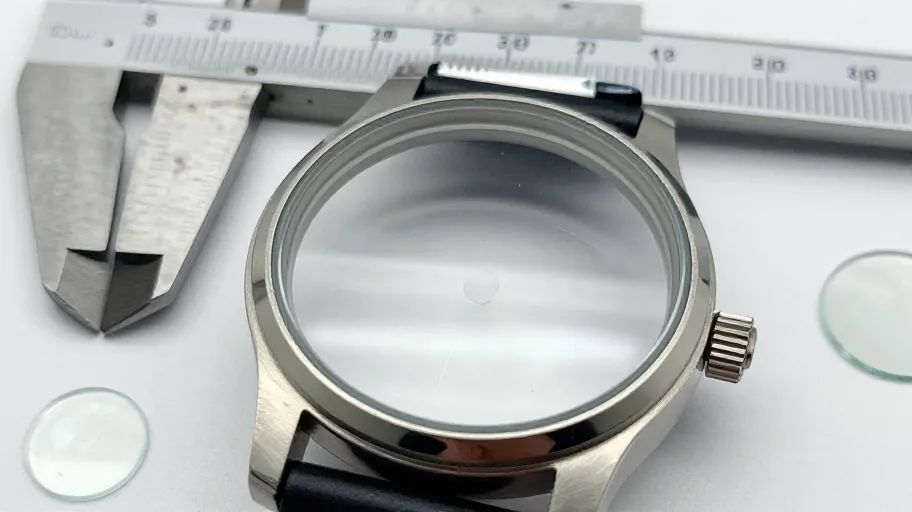
Is sapphire crystal very hard to break? Sapphire is exceptionally hard — it resists scratching better than almost any transparent material used in watchmaking — but hardness is not the same as toughness. A sapphire crystal can still crack or shatter under a sharp impact or uneven mounting load, so the honest answer for a buyer is: sapphire resists scratches extremely well, and its breakage behaviour depends on geometry, mounting and test conditions that you should verify with your supplier rather than assume.
Hardness versus toughness: the distinction that matters in sourcing
When sourcing managers ask whether sapphire crystal is hard to break, two different properties are being conflated:
- Hardness — resistance to surface scratching. Synthetic sapphire (corundum) sits near the top of the Mohs scale, which is why it is specified for premium watch crystals and instrument windows.
- Toughness — resistance to crack propagation under impact. Sapphire is harder than most alternatives but more brittle than some; a sharp blow at the right angle can fracture it, especially at an edge or drilled feature.
For a watch brand, the practical implication is that a spec sheet saying "sapphire" is not a complete breakage specification. Two crystals of the same material can behave very differently depending on edge profile, thickness distribution, coating layers, mounting method and the shape of the case opening. When you compare suppliers, ask not only what the material is, but under which documented conditions the part was evaluated.
The SHAPE Framework for evaluating breakage risk
Use SHAPE to turn a vague hardness question into a verifiable specification:
- S — Specification. Confirm the material grade, dimensional requirements, edge geometry and coating requirements in writing. Treat every parameter as a question for the supplier to confirm rather than an assumption to inherit.
- H — Hardness context. Ask which hardness measurement or reference the supplier uses, and what it does and does not tell you about fracture behaviour.
- A — Assembly conditions. Document how the crystal will be seated: gasket design, press-fit method, case-opening tolerances and any handling steps where point loads could occur.
- P — Proof. Agree on what evidence will support approval: sample parts, inspection reports or condition-specific tests the supplier offers. Confirm directly what documentation is available.
- E — Evaluation. Define your own acceptance criteria before samples arrive — what passes, what fails and who signs off.
Decision table: what drives breakage risk and what to verify
| Risk factor | Why it matters | What to verify with the supplier |
|---|---|---|
| Thickness relative to diameter and case design | Load distribution changes with proportions. | Ask the supplier to review your case drawings before quoting. |
| Drilled or shaped features | Holes and cutouts concentrate stress. | Confirm how such features are produced and inspected. |
| Coating stack | Coating choices may affect handling and inspection. | Ask what coating options exist and what performance documentation is supplied. |
| Mounting and press-fit method | Installation loads can crack an otherwise sound part. | Agree on assembly guidance and confirm it in writing. |
| Handling and transport before fitment | Damage can occur before assembly. | Confirm packaging method and inspection-on-arrival steps directly. |
Questions to ask before approving a sample
Bring these questions into your supplier conversation and record the answers in your approval file:
- Which material specification applies to this part, and can it be documented?
- What inspection will be performed on samples, and what report accompanies them?
- How does the drawing define edge geometry, and how is conformity checked?
- What assembly recommendations apply to this crystal in our case design?
- What is the current sample policy, including any fee and shipping arrangements? Confirm the current policy directly — do not rely on assumptions from a previous project or another supplier.
- What happens if first-article parts do not meet the approved drawing, and how are non-conformities documented?
Do not approve a sample against an undocumented verbal description. Every question above should have a written answer before the part enters your assembly process.
Sample-approval checklist
- Drawing includes material, dimensions, edge geometry and coating requirements.
- Supplier has confirmed in writing how each requirement will be verified.
- Sample policy (fees, shipping, timelines) confirmed directly with the supplier and recorded.
- Samples inspected against the drawing by your own team, not only by the supplier's report.
- Assembly method agreed and documented with the supplier.
- Accept/reject criteria and sign-off owner defined before samples arrive.
- Non-conformity handling process agreed in writing.
FAQ
Is sapphire crystal harder to break than mineral glass or acrylic? Sapphire is significantly more scratch-resistant than both, which is why it is specified at premium levels. On fracture behaviour, resist relying on material reputation alone: the real-world result depends on geometry, thickness, mounting and impact conditions. Ask each supplier how their specific part design addresses impact risk and what verification they can document.
Can a sapphire crystal shatter? Yes. Hardness and brittleness are related but distinct properties, and a sharp impact — particularly at an edge or around a case feature — can crack or shatter sapphire. For sourcing purposes, the useful question is not whether shattering is possible, but whether the specific part and assembly method have been evaluated for your use conditions.
Does a coating change breakage behaviour?
How should I test breakage risk for my design? Start with a documented review of your case drawings and mounting method with the supplier, then agree what condition-specific evaluation is available and what report you will receive. Define your own acceptance criteria before evaluation begins, so results map to a decision rather than a general impression.
What should be in place before I commit to production? An approved drawing, a documented sample policy confirmed directly with the supplier, first-article inspection results, agreed assembly guidance and a written non-conformity process. If any of these are missing, your breakage risk is unmanaged regardless of the material.
Work with JadeZone Sapphire
JadeZone Sapphire is a B2B manufacturer of custom sapphire watch crystals and precision sapphire components, with operations in Shenzhen and Hong Kong. Whether you are evaluating sapphire for a new reference or requalifying an existing part, the fastest route to a clear answer is a structured brief: your case drawings, mounting method, dimensional requirements and evaluation criteria in one document.
CTA — 获取采购 Brief. Send us your project parameters and we will respond with the specification questions, documentation and sample-process details you need to confirm before approval. Request the procurement brief today and put your breakage-risk questions in writing where they belong — with the drawings, not the marketing.
Low-friction next step. Not ready for a full brief? Copy the sample-approval checklist above into your sourcing file and use it for your next supplier comparison — with JadeZone Sapphire or anyone else. It costs nothing and it standardises the answers you need.