
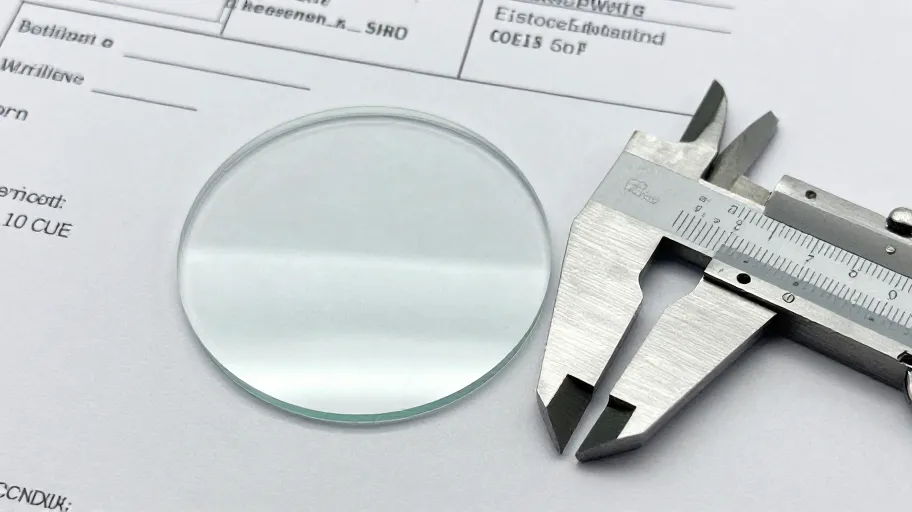
Sapphire crystal is good for watch components because it is a single-crystal synthetic corundum with high hardness and strong optical clarity, which makes it resistant to the scratches and wear that mark a watch face in daily use. For a sourcing manager, though, "good" is only a starting claim: the real decision rests on how well a specific supplier's crystal matches your geometry, coating and documentation requirements.
What sapphire does — and what it does not do
Sapphire ranks extremely high on the hardness scale, second among watch-relevant transparent materials. In practical terms, a sapphire watch crystal resists scratching from most everyday contact far better than softer alternatives. It also transmits light well, accepts anti-reflective coatings, and can be machined — cut, domed, drilled and edge-finished — to precise drawings, which is exactly why it dominates the custom and OEM crystal conversation.
But a property of the material is not a property of your supplier's output. Hardness tells you nothing about whether a domed profile was polished to your drawing, whether the coating meets your reflectance target, or whether incoming batches will be consistent. That gap between "sapphire is a good material" and "this crystal is a good part" is where sourcing decisions are won or lost. Treat material choice as settled and spend your diligence on specification and verification.
A second caution: do not over-buy. Sapphire is one option among several transparent materials, and the right choice depends on your price point, case construction and brand positioning. The Five-Checkpoint Framework below works for any transparent crystal material, but it assumes you have already decided sapphire fits your build.
The Five-Checkpoint Sapphire Approval Framework
Use this framework to turn "why is sapphire crystal good?" into an approval process you can hold a supplier to. Each checkpoint has a buyer question and a document you should expect.
| Checkpoint | What it covers | Question to put to the supplier | Document to expect |
|---|---|---|---|
| 1. Material | Sapphire grade, optical quality, inclusion limits | "What grade of synthetic sapphire do you supply for this part, and what optical-quality limits apply?" | Material specification sheet for the quoted grade |
| 2. Geometry | Diameter, thickness, dome profile, edge finish | "Can you hold the tolerances on my drawing, and which dimensions do you consider critical?" | Dimensional drawing with agreed tolerance callouts |
| 3. Coating | Anti-reflective layers, single or double side, coating durability | "What coating construction do you propose, and how is coating quality verified before shipment?" | Coating spec and your agreed acceptance method |
| 4. Sample verification | First-article samples against the drawing | "What exactly does a sample from you include, and what are the current sample and shipping terms?" | Written sample terms confirmed by the supplier directly |
| 5. Documentation | Certificates, inspection records, batch traceability | "What documentation accompanies production batches, and how is traceability handled?" | Agreed inspection and documentation checklist |
Notice that checkpoint 4 does not assume anything about sample fees, shipping responsibility or whether any fee applies — those are supplier-specific terms you must confirm in writing each time. The framework's value is that it forces every such unknown into a question rather than an assumption.
Specs to define before you request quotes
Before contacting suppliers, write down the following. A quote issued against a blank brief cannot be compared fairly, and a supplier asked to "quote a sapphire crystal" will fill the gaps with their own assumptions.
- Part geometry: diameter, thickness, dome or flat profile, edge treatment, and any date-window cut-outs or drilling.
- Tolerance priority: mark which dimensions are critical versus cosmetic. This shapes both manufacturability and inspection.
- Coating intent: single-sided or double-sided anti-reflective treatment, and your acceptable residual reflection.
- Mounting method: how the crystal seats in the case — gasket, adhesive or press fit — since this drives edge tolerances.
- Inspection criteria: what you will measure, on what instrument, and what happens if a batch fails.
- Commercial constraints: your target volumes and any schedule boundaries — state them as your requirements, not as expectations of the supplier.
If any of these are undecided, say so in your enquiry. A capable supplier will help you close open points; an incapable one will guess quietly.
Sample evaluation: the questions to ask
The sample round is where sapphire's on-paper advantages become real or fall apart. Run it with the Five-Checkpoint Framework and put these approval questions in writing:
- Which drawing revision does this sample correspond to?
- What grade of sapphire does this sample represent, and will production use the same grade?
- What coating construction is on this sample, if any, and is it the same as production will receive?
- Which dimensions were measured, with what instrument, and can I see the measurement record?
- What are your current terms for samples — including any fee, shipping responsibility and whether either is subject to conditions — confirmed in writing?
- How are production batches inspected, and what documentation accompanies each shipment?
- If a batch does not meet the agreed criteria, what is the review process?
Question 5 is deliberately neutral. Sample policies vary by supplier and change over time; the only safe practice is to confirm the current policy directly with the supplier in writing before you commit to a sample round. Never rely on a verbal description, a blog post — including this one — or a past project's terms.
A low-friction pre-enquiry checklist
Before you send any RFQ, confirm you have:
- A dimensioned drawing with revision number
- Critical tolerances marked
- Coating intent stated (single-side, double-side, or none)
- Mounting method specified
- Inspection criteria drafted
- Your target volume range stated as a requirement
- Sample terms flagged as a question to confirm in writing
- A named internal approver for first-article sign-off
If you are missing more than two items, resolve them first — an incomplete brief is the most common cause of a stalled sourcing project.
FAQ
Is sapphire crystal worth it for my watch line? Sapphire offers hardness and optical clarity that suit scratch resistance and coated clarity, which is why it is specified across a wide range of watch builds. Whether it is "worth it" depends on your price point, case design and brand positioning. Evaluate it against your spec using the framework above rather than on material claims alone.
What should a custom sapphire crystal quote include? At minimum: part geometry with tolerances, sapphire grade, coating construction, inspection criteria, and the commercial terms. If a quote omits any of these, ask for it in writing before comparing quotes side by side.
How do I evaluate a sapphire crystal sample? Measure against your drawing, not against impressions. Check the dome profile, edge finish and coating appearance under the lighting conditions your inspection standard defines, and ask the supplier for their measurement records for the sample.
What are the sample fees and shipping terms? These are supplier-specific and subject to change. Confirm the current policy directly with the supplier in writing before requesting samples. Do not assume any arrangement from prior projects or third-party descriptions.
What documentation should accompany a production batch? Agree this in advance: which measurements are recorded, what certificates apply, and how batches are traceable. Documentation you have not specified before production begins cannot be demanded afterwards.
Ready to structure your sourcing project?
Turn the framework above into a working brief. 获取采购 Brief — JadeZone Sapphire will work through your drawing, coating intent, sample round and documentation requirements so your first enquiry is a specification, not a guess. All commercial and technical terms are confirmed with you directly, in writing, for your specific project.