
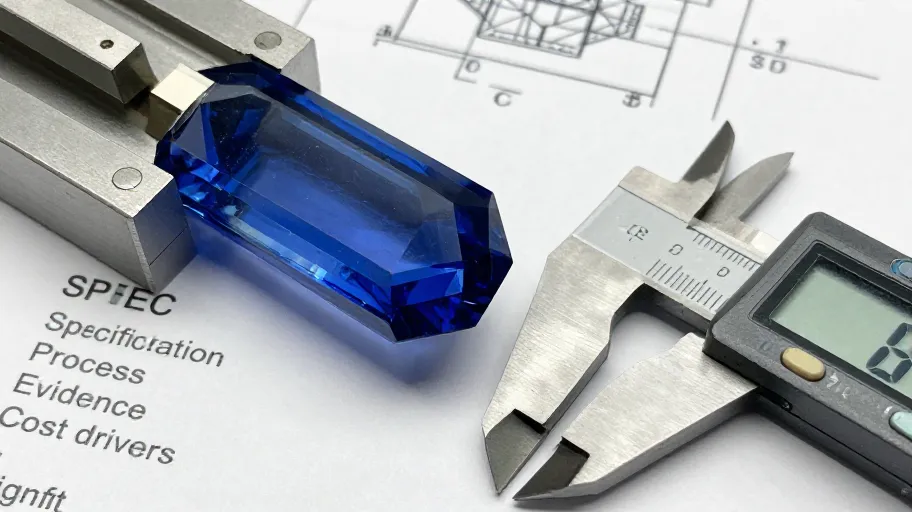
When buyers ask how much does a sapphire crystal cost?, the honest answer is that no single figure exists: price is an output of your specification, not a catalogue entry. Use the SPECS Framework — Specification, Process, Evidence, Cost drivers, Sign-off — to control the variables that move price, then compare suppliers on identical drawings. This guide shows which questions shape cost and which answers you must confirm in writing before you approve production.
Why the question is a specification question
A sapphire crystal is a machined, ground and polished component, not a commodity part. Two crystals of identical diameter can differ materially in cost because of edge profile, thickness, doming, coating stack, hole drilling, printing and inspection requirements. A supplier who answers your first email with a price — before asking for drawings — is quoting assumptions, not your part.
That is why experienced buyers treat pricing as the fifth step, not the first. Define the specification, agree the process, set the evidence requirements, identify the cost drivers, then sign off. Each stage below turns an unknown into a documented item.
SPECS Framework:
- Specification — geometry, thickness, edge shape, doming, tolerances and material grade, documented on a controlled drawing.
- Process — the cutting, grinding, polishing and coating route the supplier proposes, including any treatment layers.
- Evidence — first article samples, inspection reports and the criteria used to accept or reject a sample.
- Cost drivers — the line items in the quotation: unit price at stated quantities, tooling or setup charges, coating, printing, packaging and freight assumptions.
- Sign-off — written approval of samples and quotation terms by a named person on both sides before production.
The seven questions that move your unit price
Use this table in your internal review and in supplier discussions. Every row is a question to confirm with the supplier — this guide states the cost relationship, not any specific policy.
| Cost driver | Question to ask your supplier | Why it affects price |
|---|---|---|
| Geometry complexity | Is a flat, boxed, or double-domed profile required? | Domed and boxed profiles require more grinding and polishing stages. |
| Dimensions and tolerances | Which dimensions carry tight tolerances, and which are free? | Controlling only critical dimensions reduces scrap and rework. |
| Coating | Is an anti-reflective coating required, and on which surfaces? | Single-side, double-side and no coating are distinct process routes with distinct pricing. |
| Printing or marking | Is date-window framing, logo or lume printing needed? | Each printed colour or feature adds a process and inspection step. |
| Order quantity | What is the unit price at my target quantity, and at higher tiers? | Quantity tiers change unit price; confirm the tiers in writing. |
| Tooling and setup | Are there setup, tooling or drawing charges, and do they apply to repeat orders? | One-off charges affect total project cost, not just unit price. |
| Logistics | What Incoterms, packaging and shipping assumptions are in the quote? | Freight terms change the landed cost you actually compare. |
Note the absence of numbers here is deliberate. JadeZone Sapphire does not publish price points in this guide, and any figure you receive from any supplier is only meaningful against a controlled specification and a stated quantity.
What a complete quotation must state
Before comparing two quotes, verify that each one contains:
- Unit price broken down by quantity tier, with the currency and validity period of the quote.
- A clear list of what is included: coating, printing, packaging, inspection.
- Any separate charges — tooling, setup, artwork, sample fees — shown as distinct line items.
- The Incoterms and shipping assumption used.
- The specification revision number the quote is based on.
If a quote is silent on any of these, ask before comparing. Comparing a quote with tooling included against one with tooling excluded tells you nothing about the suppliers.
Samples, approval and the questions to ask
The sampling stage is where cost surprises and quality disputes are prevented — or created. JadeZone Sapphire provides sample and first-article processes for custom crystals, but the commercial terms of sampling are project-specific and must be confirmed directly with the supplier before you commit. Do not assume any policy about sample fees, shipping responsibility or sample conditions; ask, and get the answer in writing.
Bring these approval questions to your first sampling conversation:
- What does the sample programme cover for my part — a single sample, a small batch, or a first article with full inspection?
- Who is my single point of contact for sample feedback, and what format do you want rejection notes in?
- What inspection report accompanies the first article — dimensional report, cosmetic criteria, coating verification?
- What happens to tooling and process settings after sample approval — are they locked to the approved revision?
- If a revision is needed after the first sample, what is the revised process and what does it affect in the quotation?
- What written approval do you require from us before mass production starts?
A supplier who welcomes these questions is a supplier you can audit. A supplier who resists documenting approval criteria is a risk you are choosing to carry.
How to compare suppliers fairly
Send the identical drawing, revision number and quantity schedule to every supplier on your list. Ask each to quote the same Incoterms and the same coating specification. Then compare:
- Unit price at your real target quantity, not the headline tier.
- Total project cost including tooling and setup.
- The clarity and completeness of the quotation document itself.
- The supplier's response to your approval questions.
The cheapest incomplete quote is frequently the most expensive project.
FAQ
How much does a sapphire crystal cost for a custom watch project? It depends on geometry, coating, printing, quantity and tolerances. No responsible supplier can quote accurately without a drawing and a quantity schedule. Prepare both, then request a quotation so the price reflects your specification.
Is sapphire more expensive than mineral glass or acrylic? Sapphire requires synthetic crystal growth and diamond-based machining, so its material and processing costs differ from those of softer cover materials. For your actual project cost, request quotations for the alternatives on the same drawing if the comparison matters to your business case.
Do I pay for samples before mass production?
What information should my RFQ contain? A dimensioned drawing with tolerances, material and coating requirements, target quantity and tiers, packaging requirements and Incoterms. The more complete the RFQ, the fewer assumptions in the quote.
Can I get a quote without coating details? You can get a quote, but not a comparable one. Coating is one of the largest cost drivers in a crystal quotation; specifying it — even as "quote both coated and uncoated" — makes your comparison meaningful.
Request your sourcing brief
Bring your drawing and quantity schedule, and JadeZone Sapphire will respond with a specification-based quotation and a sample plan for your project.
[获取采购 Brief — send your crystal specification and start your quotation conversation →]
Before you send your RFQ — quick checklist
- Drawing with revision number and critical tolerances marked
- Dome/edge profile and thickness defined
- Coating specified (or "quote both options")
- Printing requirements listed, if any
- Target quantity and any tier structure stated
- Incoterms and destination stated
- Packaging requirements noted
- Approval criteria written down before sampling begins
Tick every box, then request your brief. A complete RFQ shortens the path from enquiry to approved sample.