
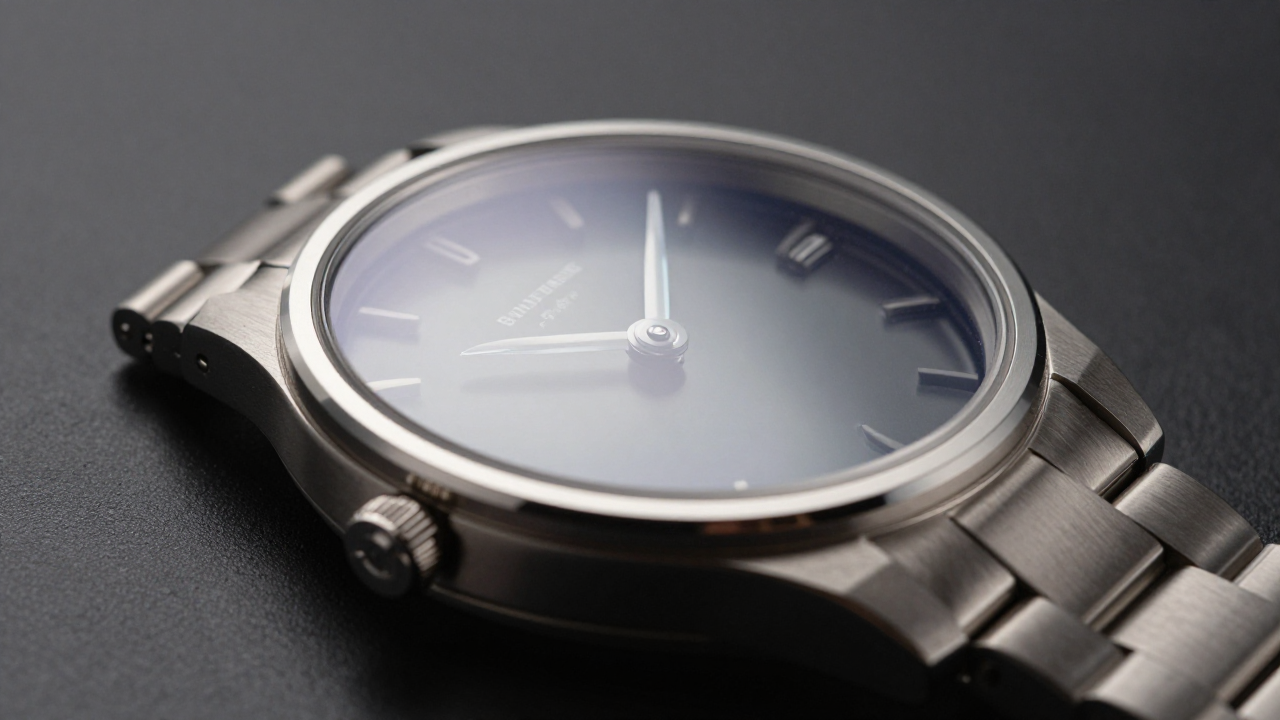
Fully loaded crystal cost per shipped unit at Halstead Watch Co. fell from $9.12 to $6.32 between the 2025 and 2026 model years — a 30.7% reduction, roughly $532,000 a year across 190,000 units.…
The sapphire watch crystal itself cost 73% more per piece than the hardened mineral glass it replaced.
What Did a 30% Cost Cut Look Like in Practice?
That gap is the whole story. Halstead is a 38-person assembly shop in Carlstadt, New Jersey, that builds private-label and house-brand watches from imported components and sells through a 240-door regional jewelry chain plus its own site. They buy movements from Japan, cases from Dongguan, and until September 2025 they bought crystals the same way most sub-$250 brands do: hardened mineral glass with a sprayed anti-reflective coat, sourced on price.
Their operations lead, Marcus Oyelaran, pulled three years of warranty data in July 2025 and found that 6.8% of shipped units came back with a crystal-related complaint. Not movement failures. Not water ingress. Scratches, coating haze, and edge chips.
What follows is how the switch actually ran, including the parts that went sideways.
Is Sapphire Watch Crystal Actually Worth the Premium?
Yes, but not for the reason the spec sheet implies. Synthetic sapphire stops scratches; the money shows up in everything that stops happening after the watch ships.
Sapphire is single-crystal corundum, aluminum oxide, rated 9 on the Mohs scale and roughly 2,000 HV on Vickers. Hardened mineral glass lands near 550 HV. That hardness is why a US buyer scanning a product page on a phone treats "sapphire crystal" as a checkbox — it sits next to the movement caliber and the lug width as one of the four or five lines people actually compare. Retail staff know it too. At the counter, "it won't scratch" closes more sales than any caseback engraving.
The trade-offs are real. Sapphire's refractive index is about 1.77 against 1.52 for mineral glass, so an anti-reflective coating designed for glass doesn't behave the same way on sapphire — that matters later in this story. Sapphire is also stiffer, around 345 GPa Young's modulus versus roughly 70 GPa, which changes how it behaves under a press. And it costs more. A lot more, at first glance.
(Same mineral, wildly different economics: a 198-carat Romanov sapphire on a diamond bracelet cleared $4.9 million at a Geneva auction this year. Nobody is putting that on a $229 field watch.)
How Bad Was the Old Crystal Setup?
By mid-2025 Halstead was spending $9.12 per shipped unit on crystals once every downstream cost was counted. Only $3.15 of that was the part itself.
The rest was the tax on cheap glass. They inspected 100% of incoming mineral crystals because the coating defect rate from their previous vendor ran 4–6% per lot — $0.94 per unit in labor. Rejects and re-coats added $0.71. Crystals scratched or chipped during handling on the assembly bench cost $1.18. Warranty and returns, at 6.8% and $38.50 per claim, came to $2.62. And because they carried 34 crystal SKUs across 11 case families, dead inventory wrote off at $0.52 per unit.
Two pressures made this urgent rather than interesting. The 2025 tariff stack on Chinese-origin components — IEEPA layers on top of Section 301 — pushed landed costs up twice in one year, and Halstead's January cost model had to be rebuilt both times. Separately, the jewelry chain sent a vendor scorecard in June flagging their return rate against a 3% threshold, with chargebacks implied.
Mineral glass was the cheap part and the expensive decision.
Where Did the Real Trade-Offs Sit?
The team evaluated four options in August 2025 and the decision came down to a single question: how much supply-chain flexibility would they trade for unit economics?
Three quotes landed on the table. A Taipei trading house at $7.90 per crystal, 8-week lead time. A European-branded reseller at $11.80 with a two-year stocked inventory program. Direct from our Shenzhen plant at $5.44 on 190,000 pieces annually, with an 11-week ocean lead time and a 4,000-piece minimum per diameter.
They took the direct route and accepted the rigidity. Consolidating 34 SKUs down to 9 shared diameters and 2 thicknesses (1.2mm flat and 1.6mm flat) is what made $5.44 possible — the volume per tool went up roughly fourfold. The cost: no more mid-season crystal changes, and forecasts had to be locked a full quarter out.
Two smaller calls mattered more than they looked. Halstead stayed with flat crystals instead of box-domed, because box-domed would have required new bezel geometry on all 11 case families. And they went double-sided AR rather than single-sided, adding cost per piece but killing the interior reflection that shows up in fluorescent store lighting — the single most common complaint in their Amazon reviews for the previous line.
They did not split the range. Keeping mineral on the $149 entry model would have broken the volume tier and pushed the sapphire price back up near $7. One material, one program.
What Did We Get Wrong in the First 90 Days?
We assumed the risk was scratches. Scratches stopped on day one. What nearly killed the program was a 2-millimeter gasket.
Lot one — 4,000 crystals, 1.2mm flat, double-sided AR — cleared the Port of Newark on October 27, 2025. Assembly scrap hit 4.9% against a 1.2% mineral baseline. Crystals were fracturing at the edge during press-in, and nobody could explain why, because sapphire is harder than the tooling pressing it.
The root cause took eleven days to find. Halstead's line was running 70 Shore A EPDM gaskets with the same press force they'd used for glass. Sapphire doesn't compress. The press force went straight through the crystal into the bezel seat's sharp inner corner, and the edge gave out. We switched to 50 Shore A silicone gaskets, dropped press force 18%, and added a 0.15mm chamfer on the crystal edge. Lot two scrap came in at 0.9%. By lot four it was 0.31%.
Two more surprises followed. The single-layer MgF2 coating we'd proposed for cost reasons read distinctly purple on sapphire under warm retail lighting — the higher refractive index shifts the reflection band. We moved to a 4-layer stack and ate the difference on lot two. And we had braced for ISO 1413 shock-test failures, expecting brittleness to hurt. Failures actually dropped, because the returns we'd been attributing to shock were chipped coated mineral edges all along.
The costliest mistake wasn't technical. Nobody recalculated the Black Friday forecast for an 11-week lead time, and Halstead ran 9,000 units short on two of the nine case families in November 2025. That's a $340,000 revenue miss on a program we were supposedly optimizing.
Where Did the 30% Actually Come From?
The savings came from the six cost lines surrounding the crystal, not from the crystal. Per shipped unit, across the full 2026 model year (production closed August 2026):
Incoming inspection fell because our lots ship with a dimensional Cpk above 1.33 and a documented AR adhesion test per lot — Halstead moved to AQL sampling in February 2026. Warranty fell to 0.4% because the failure mode disappeared. SKU write-off collapsed with the 34-to-9 consolidation.
One-time costs: $18,400 to re-cut bezel seats on nine case families in Dongguan, and $3,900 for new gasket molds. At $532,000 in annualized savings, payback landed under six weeks.
The 2026 line also moved from $189 to $229 retail on the sapphire spec, with the chain reporting a 14% sell-through lift in the first quarter against the prior-year comparable. That's not part of the 30%, but it's why the program survived the November shortage.
What Carries Over to Another Program?
1. Price the whole system, not the part. Halstead's mineral crystal was 35% of its true crystal cost. Any material swap evaluated on quote price alone will get the answer wrong — build the model from warranty rate, inspection labor, assembly scrap, and dead inventory before comparing two numbers.
2. Hardness and stiffness are different problems. A harder crystal doesn't crack less during assembly. Gasket durometer, press force, edge chamfer, and bezel seat radius have to be re-engineered whenever the substrate's Young's modulus changes. Budget two lots to get there.
3. Consolidate SKUs before you negotiate. The $5.44 price didn't come from supplier pressure. It came from cutting 34 part numbers to 9 diameters and 2 thicknesses first, then taking that volume to one source. Do it in the other order and the quote won't move.
4. Recalculate lead time against your selling calendar. An 11-week ocean lane against a November peak means the forecast is due in August. Nobody owns that task by default, and it's where the real money leaks.
Frequently Asked Questions
How much more does a sapphire watch crystal cost than mineral glass?
Expect roughly 60–75% more per piece at comparable volumes. Halstead Watch Co. paid $5.44 landed for a 1.2mm flat sapphire crystal with double-sided AR versus $3.15 for coated hardened mineral glass in 2025 — but the fully loaded cost per shipped unit fell 30.7% once inspection, scrap, and warranty were counted.
How long does it take to switch a watch line to sapphire crystals?
Plan on five to seven months from supplier decision to stable production. Halstead approved the switch in September 2025, received its first 4,000-piece lot in late October, and reached sub-1% assembly scrap by January 2026. The 11-week ocean lead time and two gasket revisions drove most of the schedule.
Why do sapphire crystals crack during assembly?
Stiffness, not hardness. Synthetic sapphire runs about 345 GPa Young's modulus against roughly 70 GPa for mineral glass, so press force transfers straight to the crystal edge instead of being absorbed. Halstead solved a 4.9% fracture rate by moving from 70 Shore A EPDM to 50 Shore A silicone gaskets and adding a 0.15mm edge chamfer.
How do you verify a sapphire crystal supplier before committing?
Ask for per-lot dimensional Cpk, a documented AR coating adhesion test, and the actual substrate grade — sapphire watch crystal should be single-crystal corundum, not a polycrystalline or coated-glass substitute. Request two pilot lots and run your own press-in trial, because supplier bench data rarely matches your gasket and bezel geometry.
Is a sapphire watch crystal worth it on a $200 watch?
Yes, if you model the full cost. At Halstead's 190,000-unit volume, sapphire cut fully loaded crystal cost by 30.7% and warranty returns from 6.8% to 0.4%, which more than covered a 73% higher part price. Below roughly 20,000 units a year, the volume tiers usually change that math.