
- Real-world performance gains
- Hidden cost savings
- What sets top-tier sapphire china factory output apart
Why Sapphire Isn’t Just Harder—It’s Smarter Protection
Synthetic sapphire scores a Mohs hardness of 9 means your display survives sandstorms, glove swipes, and tool drops because its atomic structure resists deformation that clouds or cracks glass. That’s not an upgrade—it’s operational insurance.
A U.S. military logistics tablet maker switched to sapphire windows from a certified sapphire china manufacture and saw field failure rates drop by 42% in 18 months because micro-scratching no longer degraded touch sensitivity or optical clarity under stress.
According to a 2025 report by Display Supply Dynamics, nearly 38% of premature touchscreen failures in industrial devices come from invisible surface erosion. Each scratch scatters light and disrupts capacitive fields. Users compensate by cranking up brightness (killing battery life) or pressing harder (causing input errors). In medical settings, this delay can impact patient care. In defense, it risks mission accuracy.
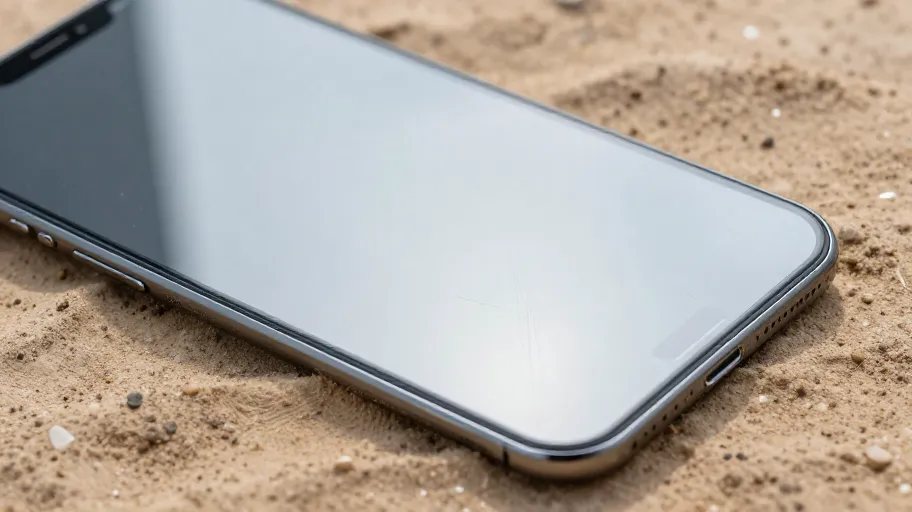
But sapphire stops that decay at the source. Made from single-crystal alumina (Al₂O₃), these Sapphire Screen protector window units transmit 85–90% of visible light—on par with premium glass—while shrugging off abrasion that would ruin coated or laminated alternatives. Its strength isn’t painted on; it’s built in.
From Desert Sensors to Surgical Tools—Where Sapphire Wins
Unlike polycarbonate overlays or multi-layer glass stacks, sapphire doesn’t rely on adhesives or UV-sensitive coatings that degrade over time. That means Arctic sensors stay readable after years of freeze-thaw cycles, mining equipment displays don’t haze over from rock dust, and surgical monitors resist chemical etching from disinfectants.
A 2024 study by the Global Institute for Advanced Display Research found industrial sapphire windows maintain 95% of initial optical transmission after 10,000 sand abrasion cycles—equivalent to five years of harsh outdoor exposure. That performance means fewer replacements, less downtime, and lower long-term maintenance costs because devices stay functional without recalibration.
For implantable medical monitors and autonomous vehicle HMIs, where reliability is non-negotiable, sapphire shifts from optional layer to core system component. The material isn’t just protecting the screen—it’s preserving data integrity and user safety.
China’s Crystal Factories Are Scaling Perfection
Producing sapphire at volume requires mastering crystal growth—a skill now concentrated in advanced sapphire china factory operations. Using either Verneuil flame-fusion for simple shapes or Kyropoulos pulling for large, low-stress boules, these facilities produce metric tons of optical-grade sapphire annually.
What separates leaders from the rest? Consistency. Top producers use closed-loop monitoring of oxygen levels, thermal gradients, and pull speeds to reduce crystal defects by up to 60% since 2022, based on quality audits shared with OEM partners. Fewer flaws mean higher yields, tighter thickness control, and lower cost per usable unit—even when raw purity hits 99.999%.
This precision means engineers get predictable substrates. No more batch-to-batch surprises in birefringence or edge strength. For global OEMs, that reliability translates into faster time-to-market and fewer design iterations.
Not All Sapphire Is Equal—Here’s How to Spot the Real Deal
Just because a spec sheet says “sapphire” doesn’t mean it delivers maximum performance. Poorly grown crystals introduce birefringence that warps touch response or creates glare hotspots. Some suppliers reuse scrap or apply inconsistent doping, leading to weak spots under mechanical stress.
Top-tier sapphire crystal china manufacture sites now use AI-driven process controls that adjust temperature and growth speed in real time. Each boule meets exact specs for optical homogeneity and fracture toughness. The result? A supply chain that ships predictability, not just material.
One rugged tablet OEM paid 2.3x more upfront for sapphire windows but saved $1.8 million in year one from reduced warranty claims and field servicing. Over three years, ROI exceeded 220%. Devices held resale value better because they weren’t hazy or scratched—critical for leasing models in healthcare and public safety.
- 42% fewer field failures meant smaller spare inventories and fewer emergency deployments
- Touch accuracy stayed within ±2% of factory settings after 18 months of continuous use
- End-of-life recovery improved by 31%, boosting refurbishment revenue
The real advantage isn’t just hardness—it’s longevity with consistency.
The Future Is Clear—And It’s Growing in Southern China
The next phase of sapphire tech is already moving beyond pure durability. Pilot lines in southern China are testing anti-reflective nanostructures and conductive layers embedded directly into sapphire substrates. That means glare-free outdoor kiosks, touch-responsive cockpit displays, and sterile medical interfaces—all without adding fragile coatings.
As 5G kiosks, AV dashboards, and wearable health monitors demand resilience, the line between protective layer and functional component continues to blur. Sapphire is no longer a niche alternative—it’s becoming the default for any application where failure isn’t an option.
For global OEMs, the question isn’t whether sapphire is worth it. It’s whether they can partner with a sapphire china supplier who delivers scale, quality, and innovation on schedule. The factories are ready. The tech is proven. Now it’s about execution.