
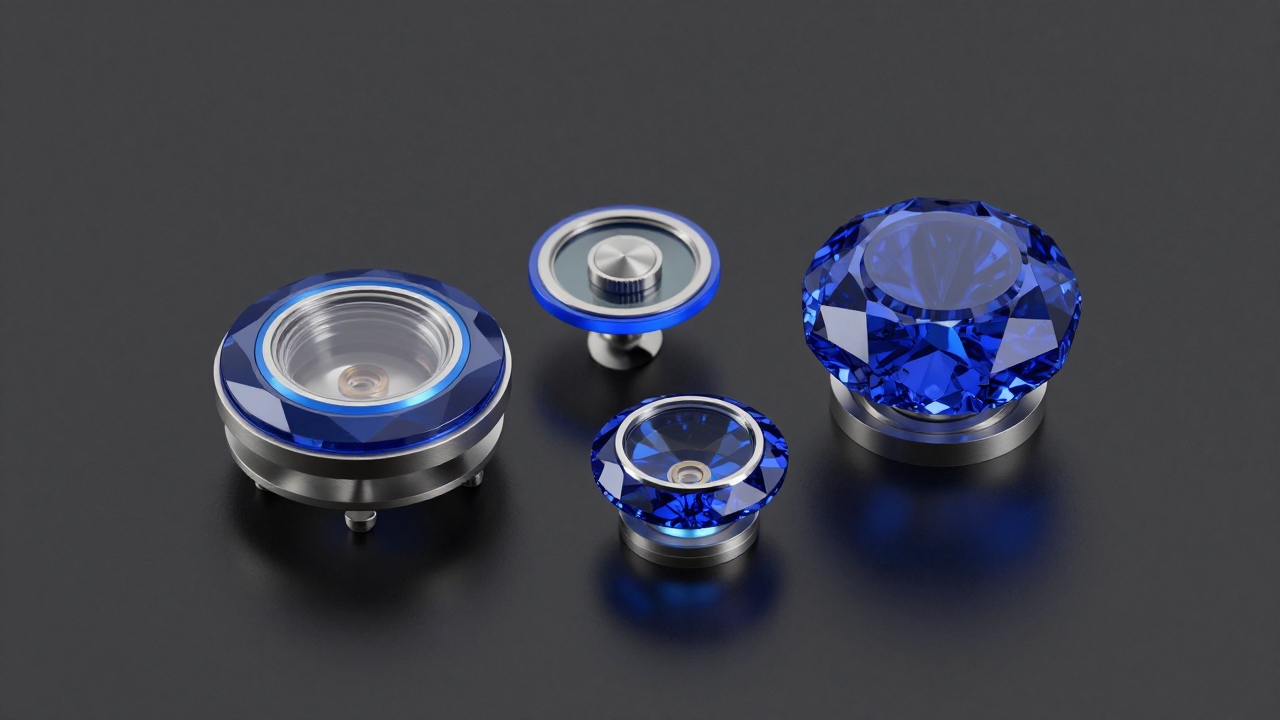
In March 2022, Jason R. from Portland, Oregon wired $37,500 to a supplier he found on Alibaba. The listing branded the operation as a Sapphire China Factory with 15 years of production history.…
Jason ordered 5,000 sapphire watch crystals for a dive watch line. The quoted price was 22% below the next closest bid. He skipped the video audit because the sample box looked clean. When the shipment reached his Tacoma warehouse, the crystals showed a blue-gray tint under 3,000-lumen LED inspection. Al2O3 purity later tested at 91.3%, not the 99.99% written on the spec sheet. Jason had also signed a clause that allowed no post-arrival inspection before final payment. He lost $37,500 in product cost and another $6,200 in freight and lab fees.
The Real Cost of Skipping Due Diligence at a Sapphire China Factory
A spec sheet from an unverified sapphire processing plant is a marketing document until a third party tests it. That one sentence would have saved Jason $43,700.
The Factory Audit You Skip Will Cost More Than a Flight
In August 2023, a Chicago-based phone repair chain ordered 8,000 sapphire lens covers from a trading company that claimed to own a factory in Dongguan. The buyer paid for a "factory audit" that turned out to be six photos sent by the trading company. When the shipment arrived, 12% of the covers had micro-cracks around the edges. The buyer later traced the actual production site to a 20-person workshop in Zhuhai running old Kyropoulos furnaces. The trading company stopped answering emails. Total loss: $58,400.
Here's the math I use. A well-run sapphire watch crystal line typically runs 50 to 200 Kyropoulos or EFG furnaces. A 20-person workshop cannot produce 8,000 optical-grade pieces in 30 days. If a supplier cannot show a utility bill, export license, and factory address that match, walk away. At Jadezone Optical (HK) Ltd., we've audited third-party suppliers since 2010, and the ones that hide their address always have something worse to hide.
Spec Sheets Lie When Nobody Checks the Hard Numbers
In February 2024, a Denver-based brand ordered 3,000 sapphire phone cover glasses from a Shenzhen factory. The spec sheet promised transmittance above 91% after AR coating, Mohs hardness 9, and thickness of 0.80 mm with a tolerance of ±0.02 mm. Incoming QC at a Reno warehouse used a $120 optical comparator. Thickness ranged from 0.71 mm to 0.93 mm. Coating delaminated after 48 hours in a salt spray chamber. The base crystal wasn't the problem. The factory had subcontracted the AR coating step to another line without telling anyone.
This is the table I would have wanted before that order shipped.
Do not accept an in-house certificate of analysis. Require an ISO 17025 lab report with the heat lot number written on it. If the factory will not let you send samples to an independent lab, that is your answer.
A Purchase Order Clause That Sounds Strong but Has No Teeth
In September 2021, a Miami importer wrote a purchase order that said, "All goods must meet U.S. market standards." When 1,200 sapphire watch crystals arrived with edge chips, the factory in China refused liability because the PO did not define which standard, which inspection method, or which AQL limit. The importer spent $11,000 on legal fees and recovered nothing. A phrase like "U.S. market standards" is not a quality clause. It is a wish.
A functional PO for sapphire watch glass names measurable acceptance criteria. That means an inspection level, an AQL for critical, major, and minor defects, and a clear method for measuring edge chips, thickness, coating adhesion, and refractive index. If you are not comfortable writing that, your customs broker or a quality consultant can draft it in an afternoon.
Your Shipping Window Was Never Realistic
On January 8, 2024, a Dallas importer confirmed an order for 6,500 sapphire watch crystals with a 30-day lead time. He promised his retail accounts a March 1 restock. Chinese New Year started February 10. The factory shut down for 18 days. The shipment reached Yantian port on March 2, waited nine days for vessel space, then sat another 14 days at Long Beach waiting for a chassis. The buyer lost three accounts and paid $9,300 in air freight for a partial replacement.
I'll be straight with you—this is not a foolproof fix. Around Chinese New Year, the whole sapphire supply chain runs slow, including cutting shops, coating lines, and freight forwarders. If your order crosses CNY, add three weeks to whatever the factory quotes. If the date is critical, either pay for pre-CNY completion or book air freight before production even starts.
U.S. Customs Will Not Care About Your Deadline
In April 2024, a Los Angeles importer of sapphire phone covers had 11 pallets held at LAX for 17 days. The paperwork used HTS 7116.20 for articles of precious stones, but the CBP officer flagged the shipment because the product was unmounted synthetic corundum, which should have entered under 7104.90. Storage fees totaled $2,300, and the buyer missed a retail restock window. The 2024 forced labor case at a Georgia flooring plant, though unrelated to sapphire, has made CBP officers more aggressive about requesting supplier audit trails from Chinese-owned supply chains. Brokers now ask for more documentation than they did three years ago.
Work with a broker who handles synthetic gemstones regularly. Send them the exact product photos, material composition, and intended end use before the goods leave China. If the broker starts guessing HTS codes, get another broker.
Scaling Without Owning the Process Will Bite You
In November 2023, a Seattle phone repair brand scaled from 1,000 to 10,000 units per month without changing their sourcing process. Their sapphire supplier in Shenzhen subcontracted cutting to two different workshops. The brand found out when 9% of units came back from customers for inconsistent oleophobic coating. Chargebacks totaled $107,000 in Q1 2024.
Scaling is where we see the worst failures. At our Shenzhen operation, we keep cutting, polishing, and coating under one roof for exactly this reason. If you cannot own the factory floor, own the audit. Require a batch-level lot code on each piece, do a random sample inspection at a third-party warehouse, and do not let a supplier move production without written approval.
If I had to boil all of this down to one page for 2026, it would be these seven things:
This list will not make you immune. But it will keep you from being the next importer standing at a loading dock with a $37,500 lesson in a cardboard box.