
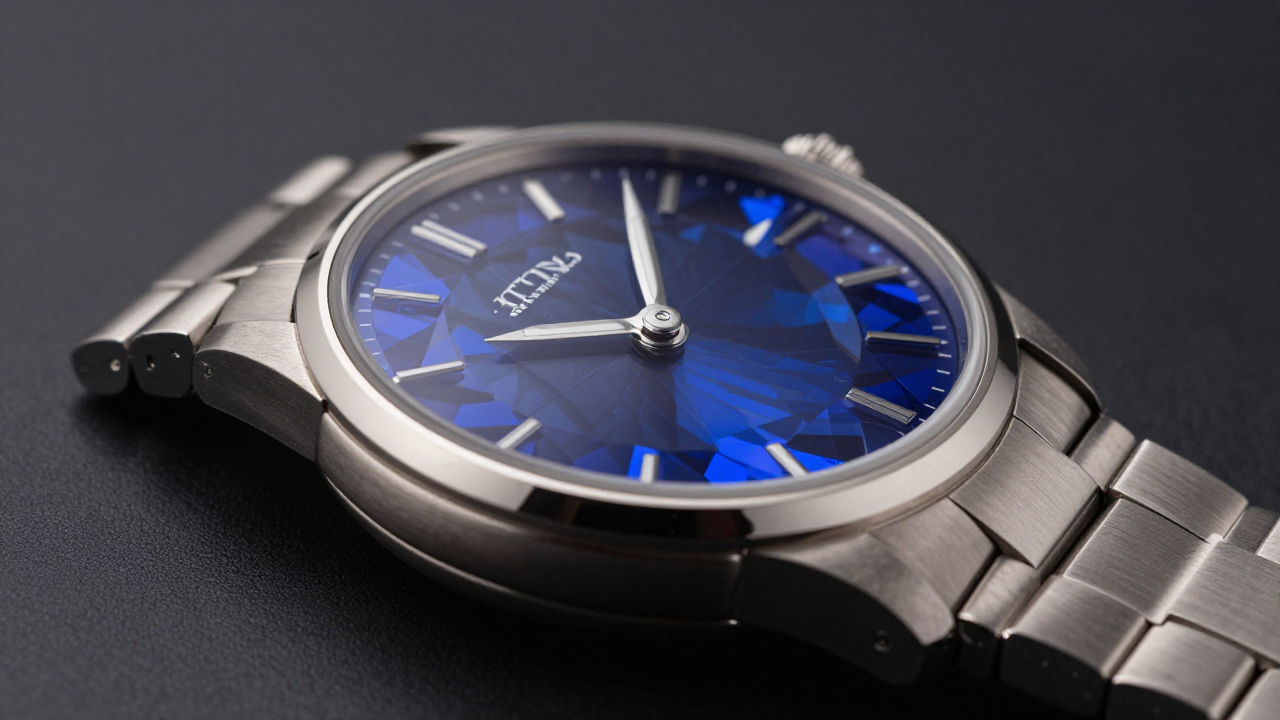
In the next 18 months, sapphire watch crystal will move from premium spec to baseline expectation across mid-tier watches. We've watched that transition from a production floor in Shenzhen since 2010.…
But upgrade cycles create predictable failure patterns. Most buyers don't fail because they choose the wrong material. They fail because they trust a supplier's spec sheet, skip verification, and ignore how sapphire behaves in the real world. Here are four cases that cost people money.
A Chicago Retailer Lost $180,000 on Fake Sapphire Watch Crystals
Mark Didn’t Test Until the Refund Requests Started
Mark D. ran a mid-size online watch store out of Chicago. In March 2023, he ordered 4,000 units from a trading company based in Dongguan, with “sapphire crystal” written in the spec sheet. He checked a hand sample—it looked clear, felt cold to the touch, and he moved forward. Three months later, customers started emailing photos of hairline scratches on watch faces. One customer posted a macro shot with a scale bar; the scratch pattern suggested mineral glass with a hard coating, not solid sapphire.
An independent lab in Naperville, Illinois confirmed the material had a refractive index around 1.52, not the 1.76–1.77 you see with a genuine sapphire watch crystal. Mark's total cost—refunds, return shipping, chargeback fees, and a dead-end supplier—hit $180,000.
The lesson: don't treat a supplier's noun as a material guarantee. For a few hundred dollars, you can send five random samples to a lab for refractive index and density testing. Real sapphire has a density between 3.98 and 4.10 g/cm³; coated mineral glass sits closer to 2.4–2.6. If you don't want to pay for a lab, a jeweler's refractometer gets you an answer in two minutes per piece.
The “Unbreakable” Myth That Bit a Denver Outdoor Brand
A 0.3 mm Bezel Wasn’t Enough Protection
In November 2021, a Denver outdoor equipment brand launched a $425 field watch aimed at hikers and climbers. The spec sheet called for a 1.2 mm sapphire watch crystal, which is adequate for everyday wear. The problem was the case design: the bezel rose only 0.3 mm above the crystal edge, and the crystal sat almost flush with the case. Sapphire has excellent scratch resistance—Mohs hardness 9, right below diamond—but its fracture toughness is roughly 2.0 MPa·m^1/2. That's lower than many steels and far lower than polycarbonate. When a climber banged the watch against a carabiner or rock edge, the crystal didn't scratch. It cracked.
Within six weeks, the brand's Amazon rating dropped from 4.6 to 3.9. They had a 6.8% return rate on that SKU, most citing cracked crystals. Their marketing had leaned hard into “unbreakable sapphire,” which consumers read literally. The fix was not material replacement; it was design. They moved to a 1.5 mm crystal, added a 0.8 mm raised bezel, and changed all copy to “scratch-resistant sapphire watch crystal.” That one word change cut refund complaints by half over the next quarter.
Hardness is not toughness. Scratch-resistant does not mean impact-proof. If your product page says “unbreakable,” you've already lost the dispute before the first customer drops the watch on a tile floor.When Anti-Reflective Coating Got Blamed for a Diamond Ring
Reddit Knew the Real Problem Before Customer Service Did
A Soho-based fashion brand released a women's watch in August 2020 with a double-sided anti-reflective (AR) coating on the sapphire watch crystal. The AR layer is typically a few hundred nanometers thick—fragile enough that a diamond, which sits at Mohs 10, can slice through it with a casual wipe. One customer removed her diamond engagement ring while cleaning the watch face and accidentally dragged the ring across the crystal. The resulting marks looked like scratches on the crystal itself. She posted a photo on Reddit's r/Watches with the caption “Three days old.” Customer service replied that sapphire cannot scratch, implying she was lying.
That response turned a $15 coating issue into a brand crisis. The thread got 14,000 upvotes. The brand saw 200 canceled orders in 72 hours and later switched suppliers.
Honestly, this failure wasn't about the material. It was about customer education. The manual never mentioned avoiding diamond jewelry or tungsten carbide edges. The fix took two sentences added to the FAQ and a small insert in the box. If you sell any watch with an outer AR coating, write this down: “Avoid contact with diamond jewelry and tungsten carbide. The anti-reflective layer is not the sapphire itself.”
What the 2026 Baseline Looks Like, Based on One New Release
The new Glashütte Original Senator Chronograph shows the direction—a sapphire crystal with anti-reflective coating on both sides and a sapphire caseback. That dual-side AR looks better in bright light but also moves a fragile layer to the outside, which is exactly where the New York failure happened. The takeaway is not that AR is bad. It's that 2026 buyers expect clarity and scratch resistance without understanding the trade-offs.
A quick reference we use on the production floor:
Costs depend heavily on diameter, dome shape, edge chamfer, and order volume. The $25 figure is for a large, custom-domed crystal with tight tolerances; a standard flat 30 mm crystal can run under $4.
How to Verify a Sapphire Watch Crystal Before You Commit
We've reworked enough batches at our Shenzhen facility to know that a visual check is worthless. Here's the sequence we recommend to clients:
For ongoing production, pull five samples from every 1,000 units and run the refractometer test. It takes less than 10 minutes and costs under $400 a year for a basic unit. That's cheaper than one chargeback dispute.
Maintenance is the other half. Clean a sapphire watch crystal with warm water, a drop of mild soap, and a microfiber cloth. Keep it away from sandpaper, concrete dust, and diamond jewelry. Replace the caseback gasket every two to three years; moisture ingress can fog the inside of the crystal and make the AR coating delaminate. If you do see a chip, retire the watch until the crystal is replaced—cracks propagate quickly along the crystal plane.
I realize I drifted a bit there. Pulling back. The point isn't to avoid sapphire watch crystal in 2026—it's to avoid treating a spec sheet as truth, hardness as toughness, or an AR coating as the crystal itself. Those three distinctions have saved clients in Chicago, Denver, and New York a lot of money.