
Ask any watchmaker at the 2025 Las Vegas JCK show what separates a $500 diver from a $5,000 one, and you'll hear the same thing inside two minutes: the sapphire watch crystal.…
It's not marketing fluff. Synthetic sapphire—a single crystal of aluminum oxide (Al2O3)—sits at 9 on the Mohs hardness scale, below only diamond. That's the practical reason luxury brands like Rolex and Omega made it their standard from the late 1980s onward.
What Makes Sapphire the Go-To Crystal for Serious Watch Buyers?
A recent WISHDOIT comparison piece laid out the scratch resistance vs. mineral glass debate clearly, but it stopped short of explaining why two watch giants diverge on coating strategy. That divergence matters more than the base material itself.
In November 2023, a collector from Chicago named Marcus Rivera sent us a macro photo of his Rolex Datejust 41 after a kitchen knife fell against the face. The impact left a 0.2 mm chip near the edge at 4 o'clock. No cracks, no spider webbing. He wrote, "My mineral glass beater would have shattered across the face." That matches what we see daily at our Shenzhen facility, where we've cut sapphire watch crystals since 2010 for OEM clients and replacement buyers. The trade-off is real. Sapphire resists scratches, but it's also more brittle than mineral glass. A direct edge hit can cause a chip exactly like Marcus's. That's why case design—how the bezel protects the crystal edge—matters as much as the glass itself.
How Do Rolex and Omega Actually Stack Up on Sapphire Watch Crystal Technology?
Rolex has stuck with a single-side anti-reflective (AR) coating on most references. If you see a blue or purple tint on the top surface of a Rolex crystal, that's usually aftermarket work. Their factory spec keeps the outer surface clean and glossy, while a thin AR layer on the inside reduces internal reflections just enough to keep the dial legible under direct light. Omega goes a different route. Many Seamaster and Planet Ocean models get double-side AR coating, which cuts visible light reflection down to roughly 0.6–0.8% per surface. An Omega often looks darker and less reflective under showroom lights, but the outer AR layer is something we tell owners to expect a little wear on after two or three summers of sunscreen and sand.
That table reflects typical specs, not published guarantees. Rolex and Omega both use lab-grown synthetic sapphire, usually from Kyropoulos or EFG growth methods. The difference comes down to how they finish and coat the material.
What Does It Take to Identify a High-Quality Sapphire Watch Crystal Before You Buy?
You don't need a lab to spot a fake or low-grade sapphire watch crystal, but you do need to know what to look for. In May 2024, a buyer from Austin named Danny Tran brought us a watch he'd won on eBay—listed as "sapphire crystal." He'd done the steel needle test at home and saw a faint scratch. We confirmed under 40x magnification that it was hardened mineral glass with a blue AR tint. A real sapphire crystal would not have marked.
Here are the checks we recommend at the counter or when the package arrives:
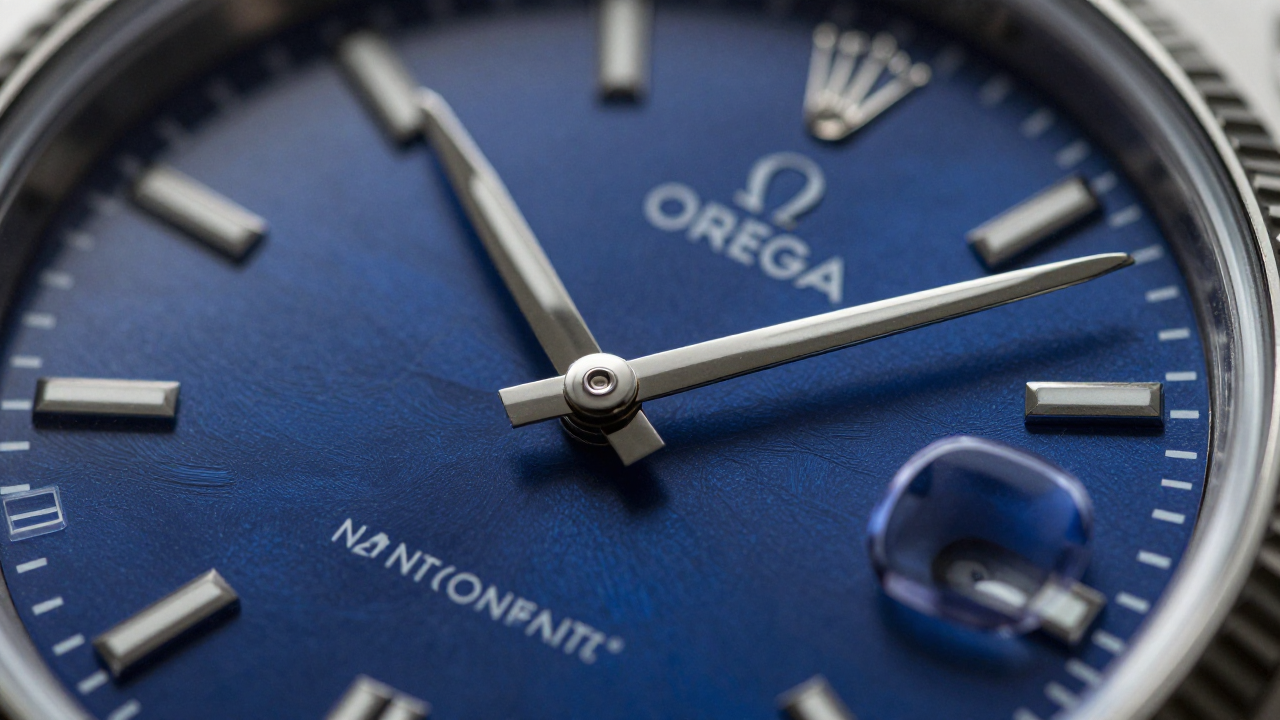
1. Water drop test: place one drop of water on the crystal. On sapphire it beads up and holds a sphere; on mineral glass it spreads and flattens.
2. Look at the edge reflection: sapphire typically shows a crisp, cool white reflection, while mineral glass gives off a softer, slightly green or blue edge.
3. Tap test: sapphire has a higher, sharper "ping" than mineral glass, though this requires some practice.
4. Ask the seller about the growth method—Verneuil, EFG, or Kyropoulos. If they don't know what you mean, walk away.
5. Check thickness with calipers. Most modern sapphire watch crystals run between 0.8 mm and 2.0 mm. Below 0.6 mm, you're likely dealing with a thin display-grade piece, not something built for a dive watch.
One more thing. A sapphire watch crystal can be flawless in the center and still have micro-pits or uneven edge bevels from poor CNC finishing. Those flaws don't always show up in photos. If you're buying aftermarket, request a macro side profile shot before paying.
How Do You Maintain a Sapphire Watch Crystal Without Ruining the AR Coating?
The crystal itself is scratch-resistant, but the anti-reflective coating is not. In April 2022, a client from Denver named Sarah Ellison emailed us about her Omega Seamaster 300M. She'd worn it on a beach in Maui, and after two days of sand and sunscreen, the outer AR coating looked hazy around 6 o'clock. A local watchmaker quoted her $180 for a replacement crystal, which is actually on the low end for a Seamaster with the box-dome profile.
Daily care can extend the life of an outer AR layer. Use a microfiber cloth, not paper towels. Skip ammonia-based eyeglass cleaners—they degrade AR coatings over time. If you're rinsing a watch with a screw-down crown, keep the crown fully seated and avoid direct high-pressure water on the crystal edge.
For chips like the one Marcus experienced in Chicago, the only real fix is replacement. A chip won't spread like glass, but it can compromise water resistance and become a weak point during thermal shock. Professional replacement for a Rolex or Omega through brand service centers runs $220 to $480, depending on the model and whether the case needs a full pressure test afterward.
What's Actually Coming for Sapphire Watch Crystals by 2026?
The next two years will push sapphire watch crystal specs in three directions: thinner, more curved, and harder to smear. We're seeing R&D samples at our Shenzhen plant with center thickness down to 0.6 mm while holding a 3D dome shape that would have cracked at the grinder five years ago. CNC diamond tooling and laser-assisted polishing have made that possible.
Double-side AR coating is becoming the default for mid-tier dive watches in the $1,500–$3,000 range, but the outer layer still wears. The new work is in hydrophobic topcoats that bond to the AR layer and resist oils from skin and sunscreen. In accelerated wear tests, some of these topcoats last 300–500 cycles before degradation, compared to 80–120 cycles for untreated AR layers. That's not a huge gain, but it's enough to push a coating past the two-year mark for daily wearers.
By 2026, expect to see more integration between sapphire crystals and case design—thinner bezels with higher protective lips, which reduce the edge-chip risk that Marcus saw on his Datejust. Omega has already started moving toward more integrated box-dome geometries on the Planet Ocean line, and Rolex will likely refine its crystal gasket tolerances rather than chase double-side AR. Different approaches, same base material, and both lean on the one thing that hasn't changed since the 1980s: sapphire is still the clearest, hardest practical surface you can put in front of a dial.