
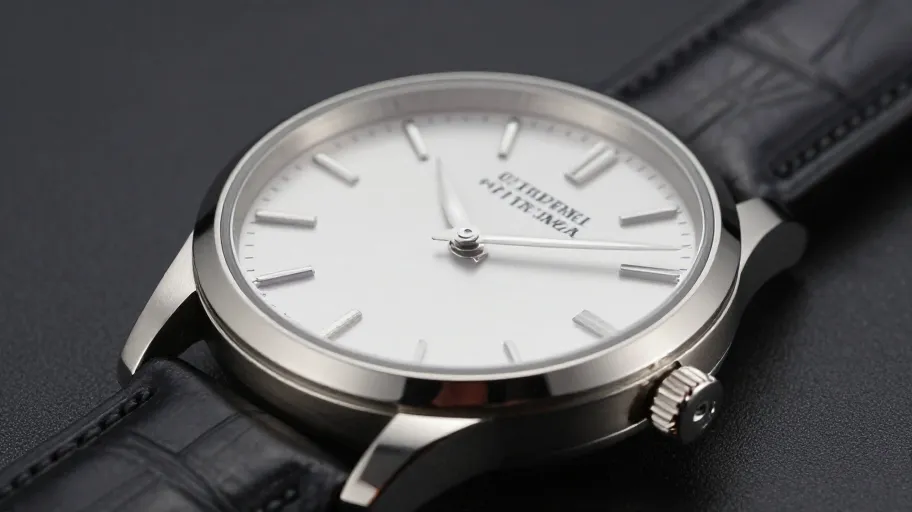
How Synthetic Sapphire Outperforms Traditional Materials
Switching from mineral glass to synthetic sapphire means fewer customer complaints, lower service costs, and stronger brand trust—because sapphire scores 9 on the Mohs hardness scale, second only to diamond. Mineral glass (5–6) scratches easily; acrylic (3) deforms under pressure. Sapphire doesn’t.
This hardness translates directly into real-world performance. ISO 22810 shock testing simulates drops onto hardwood and metal edges. Acrylic lenses deform, risking seal failure over time. Mineral glass chips or cracks outright. Synthetic sapphire maintains structural integrity because of its thermal stability (up to 2,040°C) and resistance to mechanical fatigue. That means fewer field failures, tighter water resistance, and longer service intervals—cutting maintenance costs by up to 40%.
But here’s what most brands miss: not all sapphire is equal. The assumption that “sapphire is sapphire” ignores how manufacturing method shapes performance. Two processes dominate global supply—Verneuil and Czochralski—and their differences impact optical clarity, fracture toughness, and long-term reliability.
The Verneuil Trap Every Budget Supplier Loves
The Verneuil process melts aluminum oxide in a hydrogen-oxygen flame, letting droplets form and solidify rapidly into a boule. It’s fast and cheap, which makes it popular among low-cost sapphire china factories. But rapid cooling creates internal stress gradients—meaning micro-distortions in the crystal lattice.
These stresses cause subtle visual warping—double reflections at angles, distorted dial markers—that undermine the premium feel of high-end watches. More critically, they create weak points prone to radial cracking under impact. Third-party tests show Verneuil-grown sapphire fails up to 40% more often in drop simulations than CZ-grown material.
For brands, this means accepting higher return rates and potential reputation damage. One European marque learned this when a batch of Verneuil crystals cracked spontaneously after air travel temperature swings. The recall cost exceeded $1.2 million. Choosing based on price alone turned a cost-saving decision into a financial liability.
Why Top Brands Choose Czochralski-Grown Sapphire
The Czochralski (CZ) method pulls single-crystal ingots slowly from a molten bath under tightly controlled conditions. This slow growth allows atoms to align into a near-perfect lattice, minimizing dislocations and residual stress. The result? Optically neutral surfaces with distortion below 0.05 degrees—critical for skeleton dials and intricate hands where visual fidelity matters.
CZ-grown sapphire also performs better under stress. A 2024 benchmark study by the Asian Institute of Precision Engineering found it has up to 40% higher fracture toughness in impact testing. For dive watches hitting rocks or dress pieces enduring daily wear, that difference means surviving abuse without blemish.
Leading sapphire crystal China manufacture facilities now combine CZ growth with precision annealing cycles, directional cooling chambers, and AI-powered flaw detection. Each blank is scanned for sub-micron defects before polishing. These steps aren’t luxury extras—they’re necessary for consistent quality at scale. And thanks to vertical integration, these advanced processes are now accessible beyond haute horlogerie, reaching mid-tier luxury and independent makers.
The Real Business Case for Premium Sapphire
Choosing superior sapphire isn’t about specs—it’s about risk reduction and lifetime value. A Swiss watchmaker that switched to CZ-sourced sapphire from a top-tier sapphire china factory saw post-sale replacement claims drop 75% within 18 months. That’s hundreds of thousands saved in warranty labor, logistics, and goodwill repairs.
Beyond cost savings, there’s customer perception. Unlike acrylic, which yellows under UV exposure, or coated mineral glass that clouds when scratched, synthetic sapphire retains perfect transparency indefinitely. A watch face made today will look unchanged decades later—preserving aesthetic integrity and secondary market value.
- A 75% reduction in replacements cuts service overhead and streamlines operations.
- Lower return rates boost Net Promoter Scores, with durability consistently cited as a top purchase driver.
- No yellowing ensures consistent brand presentation across resale channels, strengthening collector confidence.
One competing brand using CZ-sapphire reported zero field failures across 40,000 units over three years. The difference wasn’t luck—it was process control. When you treat sapphire as a strategic asset instead of a commodity, you gain reduced exposure, stronger loyalty, and a measurable edge in a transparent market.
The Future Is Clear—And It Starts With Your Supplier
The future of high-end watch design belongs to those who see material superiority as the foundation of brand equity—not a line-item cost. Flat box-type or domed sapphire watch glass made via Czochralski process delivers unmatched scratch resistance, optical clarity, and structural resilience. That means longer product lifecycles, lower warranty burdens, and higher resale premiums.
But none of this matters if your sapphire crystal China manufacture partner cuts corners. Brands that source based on price alone risk hidden liabilities. Those who demand CZ-grown material, stress-relieved annealing, and AI-backed inspection gain more than a stronger crystal—they gain peace of mind.
The path forward is clear—literally and commercially. If you're ready to eliminate avoidable returns, enhance customer satisfaction, and future-proof your collection, it’s time to audit your current supplier. See if they use Czochralski growth, not just Verneuil shortcuts. Because when it comes to sapphire, the method is the message.