
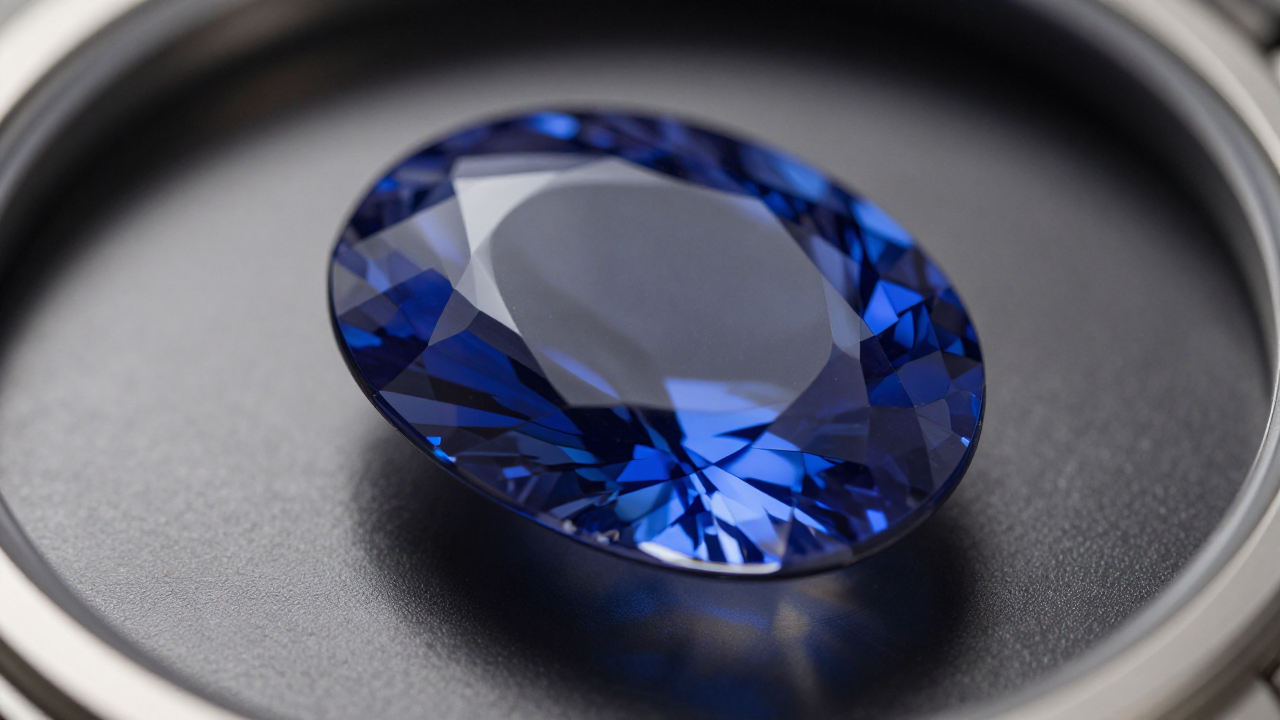
In February 2023, a collector in Austin, Texas—call him Mike—paid $240 to have a sapphire watch crystal installed on a vintage Omega Seamaster.…
Six weeks later, the crystal cracked while he was pushing a shopping cart at H-E-B. The replacement was genuine sapphire. It was still the wrong crystal for that case.
When a Real Sapphire Crystal Still Fails
The shop ordered a flat crystal because the original was flat. But the Seamaster’s bezel seat had been polished several times over 30 years. The inner lip had softened. The new crystal sat slightly high on one side, concentrated stress at the 7 o’clock position, and cracked under ordinary pressure. A solid sapphire watch crystal should not fail that way.
The lesson is not that sapphire is fragile. It is that case geometry matters as much as material. At Jadezone Optical in Shenzhen, we now measure aftermarket crystals against 12 case reference points, not just the outer diameter. That change started after a 2018 batch for a Portland microbrand had 37 cracked crystals out of 1,000 due to a 0.2 mm bezel lip mismatch.
The eBay Bargain That Wasn’t Sapphire
In September 2021, a collector in Miami—Dana—bought a “sapphire watch crystal” for a Rolex Datejust on eBay. Price: $38.50. Two weeks after installation, hairline scratches appeared near 4 o’clock.
A local watchmaker tested the surface with a diamond-tip probe. It scratched at Mohs 6, not 9. What Dana actually bought was mineral glass with a thin sapphire coating. The listing called it “sapphire-coated” in small print. Removing and redoing the install cost $145.
The check that would have saved her five minutes: specific gravity. Synthetic sapphire runs 3.98–4.00 g/cm³. Mineral glass runs 2.4–2.6. A $40 digital scale and a cup of water can tell you whether the crystal is solid corundum or a coated layer. No gem lab required.
The Double Dome That Seized the Watch
In November 2022, a collector in Phoenix—Tony—installed a double-domed sapphire crystal on a watch with a Seiko NH35 movement. The second hand cleared. The hour hand did not.
The flat crystal he removed was 1.8 mm thick at the center. The double dome was 2.4 mm. That extra 0.6 mm ate the hand clearance. The watch stopped at 2:15 on the first day. The dial track picked up micro scratches. Repair bill at a Phoenix shop: $310.
Double domes photograph beautifully, but they demand more internal room. The NH35, ETA 2824, and Miyota 9015 all run tall hand stacks. If you’re ordering a replacement, ask for center thickness, not just diameter. Compare it to the original before the watch goes under the press.
The Coating That Peeling in Six Weeks
In March 2023, a collector in Denver—Chris—cleaned a new outer anti-reflective coated sapphire with a lens wipe containing isopropyl alcohol. Six weeks later, the coating started peeling at the edge and left a blue-green bloom under office lighting.
Most high-quality watch crystals put anti-reflective layers on the inside surface only. The coating stack is typically under 500 nanometers thick. Alcohol, ammonia-based glass cleaners, and repeated rubbing are enough to destroy an outer coat. Chris needed a second crystal.
If you like the blue AR tint, ask for inner-only coating. If you insist on outer AR, clean with dry compressed air or a clean microfiber. Keep Windex and hand sanitizer away. Our lab in Shenzhen runs steel wool abrasion tests on uncoated sapphire and stops when wear becomes visible. Uncoated samples typically hit 3,000 cycles. Outer AR-coated samples rarely survive 300.
The Gasket That Flooded a Dive Watch
In July 2019, a collector in Seattle—Aaron—reused the old gasket while replacing the crystal on a 200-meter dive watch. He figured the new generic gasket looked close enough. Two weeks later, swimming in Lake Washington, the watch fogged by noon.
The sapphire held. The gasket did not. A mismatch of 0.1–0.2 mm in cross-section can collapse under pressure cycling. Aaron also skipped replacing the caseback O-ring. Total repair: $240 plus a dial restoration.
The rule is boring but non-negotiable: match the gasket to the crystal thickness and case groove. Then pressure-test to 10% above the rated depth. We ship crystals with gaskets matched to common Seiko, Rolex, and ETA case specs, but we still recommend a pressure test because vintage cases drift.
At this point I realize the first five examples are all about sourcing and installation, not the crystal itself. Let me pull it back to material selection.
What Actually Matters When You Upgrade in 2026
By 2026, almost every microbrand in the $500–$1,200 range includes a sapphire crystal. The gap is no longer who has sapphire but who specs it correctly. Thickness, profile, AR placement, and gasket compatibility decide whether the upgrade works.
Acrylic is not a downgrade in every situation. If you smack your watch into door frames weekly, acrylic flexes and survives. Sapphire resists scratches but shatters under sharp impact. The March 2022 MoonSwatch launch sold millions with acrylic. A $600 microbrand with sapphire can still disappoint if the crystal profile is wrong.
We started as an industrial sapphire window supplier in 2010. Watch crystals came later. That background taught us one thing: material specs without installation tolerance are just marketing.
The best 2026 upgrade is not the biggest dome or the bluest AR. It is a sapphire watch crystal matched to the case, measured against the original, and installed with a fresh gasket. Get those three right and you will probably never notice the crystal again.