
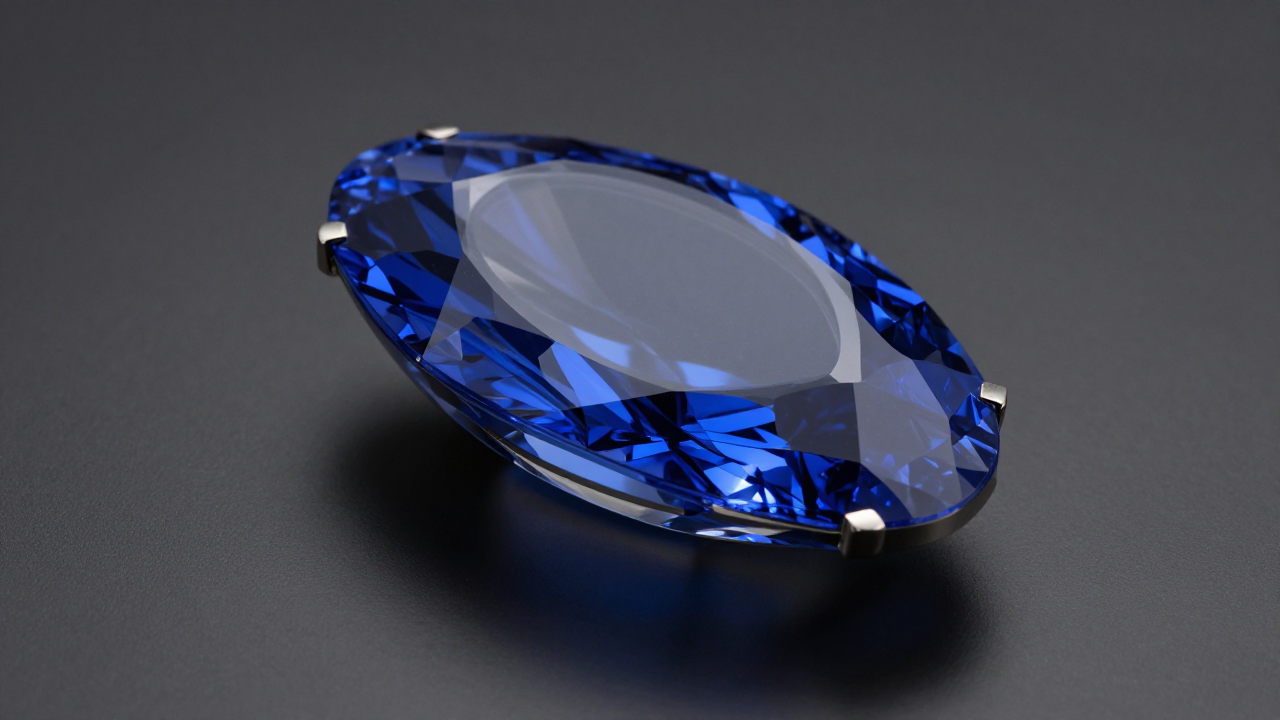
Marcus Trent bought a Swiss diver in Miami in March 2023. The seller promised a sapphire watch crystal.…
On the first cold morning of November 2025, he dropped the watch face-down on a granite curb outside a coffee shop on Michigan Avenue. The crystal cracked in two places.
The Chicago Repair Bench That Told the Truth
Trent assumed bad luck. Then his repair shop in Chicago told him the lens was mineral glass, not sapphire. Replacement cost: $38 for mineral, $220 for a genuine sapphire crystal with inner anti-reflective coating.
"When I put it under a loupe, the edge didn't have the right bevel," says Daniel Okafor, a watchmaker in Portland, Oregon, who sees about 40 repairs a week. He estimates three out of ten vintage watches described as sapphire are actually mineral glass. In 2026, that gap in buyer knowledge still drives thousands of bad purchases.
This article is for people about to spend money. I write from the production side—our plant in Shenzhen has cut sapphire watch crystals since 2010—but I still get angry when I see a buyer overpay for a word that wasn't true.
Scratch Resistance Is Only Half the Story
Sapphire rates 9 on the Mohs hardness scale. Mineral glass sits around 5.5. Acrylic is down at 3.5. That gap explains why a sapphire watch crystal shrugs off keys, sand, and steel tools. But scratch resistance is not impact resistance.
Some U.S. listings still call it sapphire glass. The correct trade term is synthetic sapphire crystal, but watch buyers rarely care about the distinction until a return starts.
A 2024 drop simulation we ran on our Shenzhen floor used a 1.8 mm flat sapphire and a 1.8 mm mineral glass. The sapphire survived a 20 cm face-down drop onto a steel plate without scratching, but shattered at 50 cm when the edge struck the plate. Mineral glass cracked earlier under a key scratch but did not shatter as easily on edge impact. This is the tradeoff nobody puts on a spec sheet.
Clarity matters more than hardness for daily wear. Uncoated sapphire reflects about 15% of visible light. A double-sided anti-reflective coating drops that below 1.5%, pushing light transmission above 95%. Without AR coating, a flat sapphire can look like a glass window under office lights. With good AR, the dial almost disappears against the crystal.
Durability claims get murky. Here is what our factory data shows across standard production runs:
Prices shift with diameter, dome, bevel, and AR layers. A 30 mm flat sapphire with single AR ran about $11.40 wholesale in our Q1 2026 order data. A double-domed version ran $19.80.
A Factory Floor in Shenzhen Is Where the Specs Get Real
Jadezone Optical (HK) Ltd, where I work, runs two production lines in Shenzhen. We ship about 22,000 sapphire watch crystals a month to North American clients. The difference between a $12 crystal and a $45 crystal is not always visible. It lives in edge geometry, thickness consistency, and AR coating adhesion.
A flat crystal can be cut, polished, and coated with simple tooling. Yields run 88–92% from blank to finished piece. A double-domed crystal with a 0.4 mm bevel is different. Early runs start around 70–75% yield because the dome distorts AR coating thickness at the edges. After process adjustment, we stabilize near 85%.
That yield gap explains prices. A seller offering a double-domed "sapphire" at $9 retail cannot be using a true dome. More likely, they are selling flat mineral glass with a printed logo.
One vivid failure: in September 2025, a batch of 1,200 double-domed crystals from a new coating vendor showed edge delamination during a cross-hatch tape test. We scrapped the full batch before it reached customers. Most buyers would not have seen that defect for six months, when the AR coating started peeling at the edges.
For anyone reading this outside the trade, that test involves scoring the coating in a grid and pulling tape off. If the coating lifts, it fails. Cheap AR is why some sapphire crystals look hazy after one summer of sunscreen and humidity.
Seven Checks for Any Sapphire Watch Crystal in 2026
1. Check the edge bevel. Genuine sapphire typically has a sharp, glossy bevel at the rim. Mineral glass often feels soft or polished but rounded. Use a 10x loupe.
2. Run a quick reflection test. Hold the crystal under a light. Uncoated sapphire shows a slightly cool, bluish tint on modern AR versions. If the surface looks like plain window glass with no AR haze, ask questions.
3. Ask for exact thickness. Standard flat sapphire watch crystal thickness runs 1.0 mm to 2.5 mm. Dive watches may use 2.8 mm. If a seller cannot give you a number in mm, skip it.
4. Look for a water contact angle. Sapphire is oleophobic after coating. A drop of water should bead tightly, not spread. On untreated mineral glass, drops flatten within seconds. This test isn't perfect—some coatings mimic the effect—but it catches low-end swaps.
5. Demand a scratch-test guarantee, not a claim. A reputable shop will let you test a corner with a steel file or diamond tester. If they refuse, the word "sapphire" is doing too much work.
6. Check case back markings against the crystal. Not every watch with a display back uses sapphire on both sides. If the seller claims "full sapphire," verify with a diamond tester on both crystals.
7. Price check against thickness and dome. Use the table above as a gut check. A true double-domed sapphire under $20 retail is rare. It happens with surplus stock, but repeated availability at that price means something is off.
None of these tests is perfect, but they catch the lazy counterfeit. That is usually enough.
In January 2026, a buyer named Rachel Ortiz from Scottsdale, Arizona, walked into a Phoenix repair shop with a list of exact specs: 32 mm, flat, single AR, 1.5 mm thickness. The first quote came in at $165. She asked for the thickness. The seller hesitated, then said 2.0 mm. She walked. Another shop quoted $89 for the same crystal with paperwork. Knowing one number saved her $76.
The 2026 Shift Nobody Is Talking About
In June 2026, a wave of light blue dial watches flooded U.S. dealer cases. IWC's Ingenieur 35 mm in "Pool" blue had sapphire crystal front and back, 100 m water resistance, and applied markers. This has become the new baseline: sapphire is no longer only on the watch face. Transparent case backs now expose movements through sapphire windows, which pushes more buyers to ask about coating quality and thickness on both sides.
We welcomed that change. It makes "sapphire watch crystal" a default term in more listings, but also a bigger target for counterfeit swaps.
When Sapphire Is the Wrong Call
One honest note before you spend. Sapphire is not always the right material. If you wear a watch during heavy impact work—construction, firefighting, some field sports—acrylic may be the smarter choice because it flexes instead of shattering. Mineral glass sits in between. The industry knows this; it's why some military-issue watches still use acrylic.
In February 2026, a firefighter in Denver emailed our support team after his acrylic crystal saved his watch from a door strike. He was about to upgrade to sapphire because a forum said acrylic was cheap. We told him to stay with acrylic for work and buy a sapphire crystal for his dress watch. He did both.
I'm not telling you to avoid sapphire. I'm telling you to match the crystal to the actual risk. A scratch on acrylic can be polished out in minutes. A shattered sapphire needs full replacement.
What Happened to Marcus Trent
Trent kept the watch. He paid the $220 for genuine sapphire, then listed the seller in a Reddit group. The thread drew 300 comments by December 2025. Several buyers posted macro photos of their own crystals. At least two were mineral glass sold as sapphire.
Okafor told me something that stuck: "The material is easy to test. The hard part is admitting you didn't test it."
That feels like the whole market in one line. Sapphire watch crystals are not rare, but honest specs are. Until more sellers publish exact thickness, material, and AR layer counts, buyers will keep paying for stories instead of stones.