
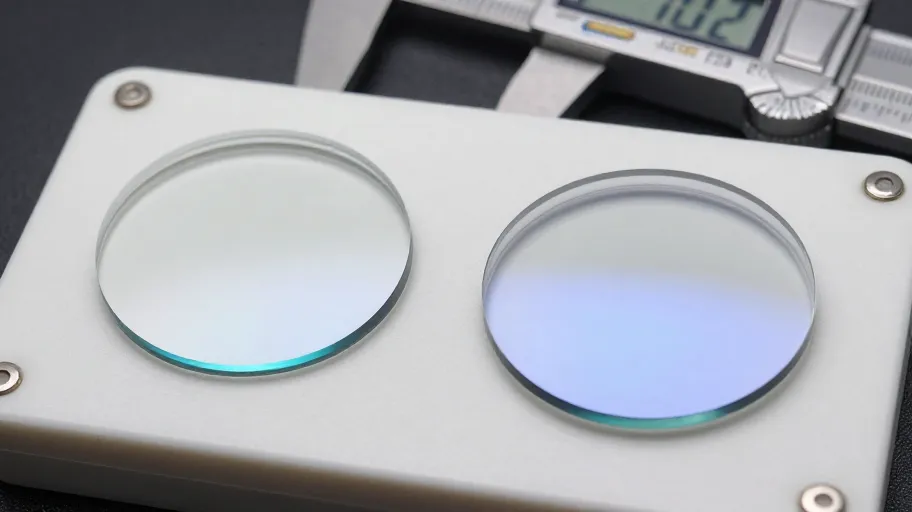
When a supplier sends a revised anti reflective sapphire crystal coating sample, you do not need to restart approval from zero. Review only the delta: what changed, what that change could affect, and what evidence you need to approve it. A structured delta review protects your timeline, keeps earlier agreements intact, and turns each sample round into a documented step toward sign-off.
Why revised coating samples stall sourcing
The obstacle is not the coating itself. It is process ambiguity. When a revised crystal arrives without a written statement of what changed, buyers face two bad options: approve on visual impression and risk a regression, or re-open every specification and lose weeks.
The anti reflective sapphire crystal coating on a watch crystal interacts with several other decisions — case fit, printing or lume layers beneath the crystal, edge treatment, and which face carries the coating. A change to one of these can shift how the others behave in review lighting. That is why an unstructured review feels risky: every observation seems to require a fresh judgement.
A better approach is to make the supplier state the delta in writing before you open the box. If the revision memo says "coating stack adjusted on the top face only; substrate, dimensions and edge finish unchanged," your review scope is defined before the sample is unwrapped. If no such memo exists, requesting one is your first action — not a demand, just a professional expectation that both sides work from the same change record.
The Delta-Review Framework
The Delta-Review Framework is a three-step method for approving revised samples without restarting:
- Isolate the delta. Obtain a written statement from the supplier listing exactly what changed versus the previous sample round — and, equally important, what did not.
- Map the impact zone. Determine which of your acceptance criteria the change could plausibly affect, and which are logically untouched. Only the impact zone needs active re-review.
- Document the decision. Record what you approved, against which criteria, with what observations and any conditions attached. This document becomes the baseline for the next round.
The framework works because it separates change from re-evaluation. An unchanged substrate does not need renewed hardness discussions. An unchanged edge finish does not need a fresh fit check. The revision earns a narrow review, and your earlier agreements stay valid.
Decision table: what changed versus what to re-review
| What changed in the revised sample | Re-review immediately | Carry forward unchanged | Approval evidence to request |
|---|---|---|---|
| Coating applied to top face only (previously both faces) | Reflectance appearance from the front; visibility of internal reflections; underside behaviour over printed dials | Substrate material, dimensional fit, edge finish | Side-by-side photos against previous sample under agreed lighting; supplier statement of which faces carry coating |
| Coating layer count or stack adjusted | Colour neutrality under daylight and warm light; reflected colour of the coated surface | Fit, thickness at the edge, printing clarity beneath | Written stack description; visual comparison record |
| Coating moved from inner to outer face (or reverse) | Scratch exposure of the coated face; reflection from the case side; cleaning behaviour | Substrate, dimensions, coating composition | Supplier statement on coating position; your own handling test notes |
| Substrate batch changed (coating identical) | Fit in case; edge quality; optical clarity | Coating performance criteria already approved | Supplier confirmation that coating process parameters were held; fit-check record |
| Only packaging or handling changed | Condition on arrival; surface cleanliness | All optical and dimensional criteria | Inspection photos on receipt |
Treat this table as a starting template, not a substitute for your own acceptance criteria. Every project has different priorities — for a dress watch, colour neutrality may dominate; for a tool watch, coated-face durability may matter more. Build your own impact-zone map for each project and attach it to the specification.
Concrete approval questions to sign off a delta
Before approving a revised anti reflective sapphire crystal coating sample, ask these questions and record the answers:
- Which faces of this crystal carry the anti reflective coating, and did that change from the previous round?
- Which process parameters were held constant, and which were adjusted? Request this in writing.
- What lighting conditions did the supplier use for their own outgoing inspection, and can your review replicate them?
- Are there any criteria you approved last round that the supplier considers affected by this change? Where do your two lists differ?
- What happens if the delta review finds a regression in an area outside the stated impact zone — what is the corrective path and who owns it? Confirm the current policy directly; do not assume.
- What documentation will accompany the next sample round, so the baseline stays unambiguous?
These questions are not adversarial. A capable supplier welcomes a written delta statement because it narrows their own corrective work if something goes wrong. Suppliers who resist documenting changes are telling you something about how future disputes would be handled.
Documenting the approval
Your approval record does not need to be elaborate. A single page per sample round is enough:
- Sample round identifier and date received.
- The supplier's written delta statement (or a note that none was provided — which is itself a finding).
- Your observations by criterion, with photographs under defined lighting.
- The decision: approved, approved with conditions, or rejected with reasons.
- The agreed scope of the next round, if any.
This record is what lets a revision stay a revision. Six months later, when someone asks why the coating sits on the inner face, the file answers without a meeting. It also gives your watchmaker and assembly team a reference for what the finished crystal should look like, which prevents quality debates at a far more expensive stage.
FAQs
Do I need to re-check the sapphire substrate every time the coating is revised? Not if the supplier confirms in writing that the substrate and its processing were unchanged. Ask for that confirmation explicitly; if it cannot be given, treat substrate fit and clarity as back inside the impact zone.
Should both faces of the crystal be coated? That depends on the watch's design and the reflections you want to suppress versus the exposure the outer face will face. Both configurations are legitimate choices — the decision belongs in your written coating specification, and a revised sample is a good moment to confirm the choice deliberately rather than by default.
How do I judge colour neutrality without lab equipment? Compare the revised sample against the previous round under at least two lighting conditions — cool daylight and a warm indoor source — and photograph both under identical settings. A visible colour cast will show in the comparison even when each sample alone looks acceptable. For formal criteria, ask the supplier what optical measurements they can provide and document them.
Who pays for revised samples and shipping? That depends on the supplier's current policy, which varies by project and relationship. Confirm the applicable sample, fee and shipping policy directly with JadeZone Sapphire before the round begins, and record it in your approval file so it never becomes a mid-project dispute.
How many sample rounds should I expect before approval? There is no fixed number — it depends on how precisely the initial coating specification was written and how well each delta is isolated. A disciplined delta-review process exists precisely to keep rounds few and narrow, rather than to predict a count in advance.
Next step: confirm your coating specification
If you are preparing a coating specification or reviewing a revised sample, send your current criteria — coating face placement, optical priorities, and acceptance conditions — to JadeZone Sapphire for confirmation against your project. A written, agreed specification is what makes every future revision a narrow, fast delta review instead of a restart.
Prefer to start smaller? Use the delta-review checklist above — isolate the change, map the impact zone, document the decision — on your next sample round, and bring the resulting questions to your supplier conversation.