
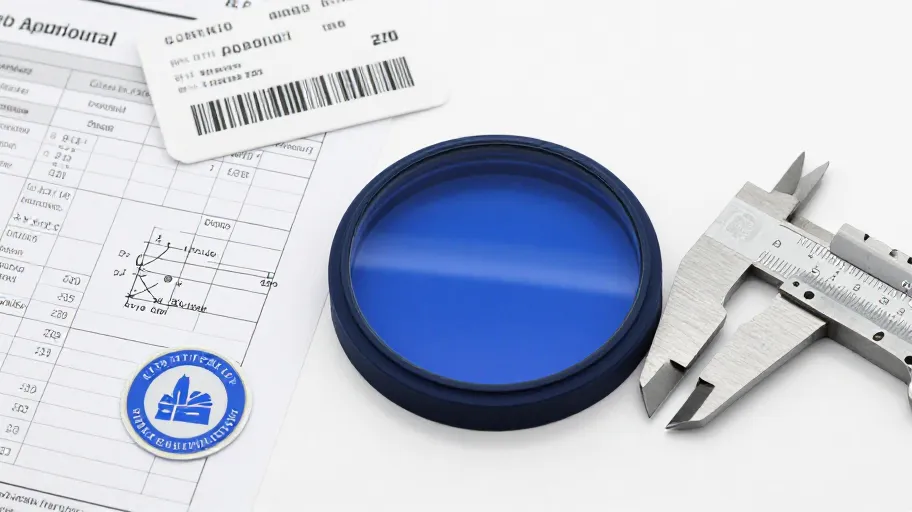
Sapphire crystal watch price is driven by five controllable levers: the crystal's shape and dimensional spec, coatings, the sample approval process, logistics arrangements, and the quality evidence you require. Two drawings that look identical can produce different quotations because of coating choices, gasket-fit tolerances, dome geometry and inspection scope. This guide gives you a framework to define each lever before you request a quote — so you compare prices against documented specs rather than assumptions.
The S.C.A.L.E. Framework: five levers behind every sapphire crystal quotation
When a supplier prices a custom sapphire crystal, they are pricing a bundle of decisions you make long before the RFQ goes out. The S.C.A.L.E. Framework separates that bundle into five levers so you can see which of your own choices are moving the number:
- S — Specs. Diameter or shape, thickness, dome profile, flat versus curved geometry, gasket seat, edge finish, hole drilling or applied indices. Each element adds machining, polishing or finishing operations, and each operation carries its own yield risk for the supplier — which is priced in.
- C — Coatings. Anti-reflective treatment on one side or both, and any decorative or functional plating. Coating scope changes both the process steps and the inspection burden. Ask your supplier to quote coating scope as a separate line so you can compare offers on the same basis.
- A — Approval. How many sample rounds you plan, what you measure at each round, and what evidence releases production. A loosely defined approval process creates re-quoting and re-tooling risk; a documented one constrains it.
- L — Logistics. Incoterms, packaging spec, destination (Shenzhen consolidation or Hong Kong shipment — each has different documentation implications), and how rejects and re-shipments are handled. These are commercial questions, not technical ones, and they belong in the quotation conversation.
- E — Evidence. Inspection criteria, measurement reports, inclusions standards, and what documentation accompanies each batch. More evidence means more inspection work, and that work is part of the price — but it is also part of your protection.
The framework's value is diagnostic: when two quotes differ, walk down S, C, A, L and E and find which lever the cheaper supplier quietly dropped.
Spec-to-cost decision table
Use this table when finalising your drawing package. The right-hand column gives you the questions to resolve internally or ask the supplier — not assumptions to make.
| Decision point | Options | Cost and risk consequence | Questions to confirm with the supplier |
|---|---|---|---|
| Geometry | Flat, domed, double-domed, shaped (tonneau, cushion) | More complex curves demand longer polishing and carry higher yield risk | What geometry can you polish to the finish spec? What evidence do you provide for curved surfaces? |
| Thickness & gasket fit | Nominal thickness with looser fit; tight seat tolerance | Tighter seat requirements increase grinding and inspection operations | What seat tolerance do you recommend for my case and gasket? How do you verify it? |
| Coating | None, inner AR, double-sided AR, decorative plating | Each coating layer adds process steps and inspection scope | How do you quote coating as a line item? What coating durability evidence can you document? |
| Features | Printed indices, applied markers, drilled holes | Additional operations and handling risk per part | Which features do you produce in-house versus subcontract? |
| Inspection evidence | Visual only; visual plus dimensional report; full documentation per batch | More evidence raises inspection cost but strengthens your incoming QC | What inspection documentation accompanies a batch? Can you match our incoming inspection format? |
| Logistics | Consolidated Shenzhen dispatch; Hong Kong shipment | Documentation, incoterm and packaging choices change landed cost | What incoterms and packaging options do you support for my destination? What is your current policy on rejected parts? |
From drawing to release: a stage-gate approval path
A disciplined approval sequence protects both sides and keeps the price stable between quote and production. Consider four gates:
- Drawing gate. Freeze the drawing with material, geometry, coating scope, and the measurement method for every critical dimension. Ambiguity at this stage becomes a price change later.
- Sample gate. Receive samples and measure against the frozen drawing — not against a photo. Document what passed, what did not, and the corrective action requested.
- Evidence gate. Before releasing production, confirm what reports and inspection records accompany the batch, and agree the process for any non-conforming parts.
- Release gate. Issue a written production release referencing the approved sample revision and drawing revision. If either document changes, re-quote rather than assume the price holds.
Concrete questions to ask before approval:
- Which revision of the drawing does this sample represent, and can you confirm it in writing?
- What measurement method and equipment did you use for the critical dimensions?
- What is your current policy on sample charges and shipping for sample rounds? (Confirm directly — do not rely on assumptions.)
- What inclusions or surface criteria are acceptable under your inspection standard, and can you share the criteria in writing?
- If a production batch fails our incoming inspection, what is your corrective process?
- What is your current MOQ and tooling policy for this part number, and does the sample round count toward it?
Evidence to request from any supplier
Whether you work with JadeZone Sapphire or any other source, ask for documentation rather than assurances: measurement reports tied to drawing revisions, inspection criteria in writing, coating scope stated per side, and a stated process for non-conformance. Compare quotations only when the evidence scope is identical — a lower number backed by less inspection is not a lower price; it is an unpriced risk transferred to your incoming QC.
Frequently asked questions
What makes sapphire crystals more expensive than mineral glass for a watch? Sapphire's hardness — the reason brands specify it — also makes it slower and more demanding to cut, grind and polish, and coating adds further process steps. The price reflects the machining and inspection sequence, not just the material. Ask suppliers to break down which operations drive your specific part's cost.
Does a dome shape change the price compared with a flat crystal? Doming changes the polishing workflow and the yield risk, so it can change the quotation. The size of that change depends on the exact curve and finish spec. Ask each supplier to quote flat and domed variants of the same part so you can compare the delta rather than the absolute number.
Should I expect to pay for samples? Sample policy, charges and shipping arrangements are commercial terms that vary and change over time; confirm the current policy directly with the supplier in writing before placing a sample order, and confirm whether any conditions attach to sample rounds.
How can I compare two sapphire crystal quotations fairly? Line-item each quote against the S.C.A.L.E. levers: identical geometry, identical coating scope, identical evidence requirements, identical incoterms. Any gap in the bundle — not just the unit price — is where the real comparison lives.
What documentation should accompany a production batch? At minimum, tie every batch to an approved drawing and sample revision, and request measurement or inspection records for critical dimensions. Agree the exact format at the approval gate so production release is not delayed by paperwork disputes.
Get the sourcing brief
Ready to structure your next RFQ so every lever of the S.C.A.L.E. Framework is defined before you ask for a price? 获取采购 Brief — download the JadeZone Sapphire procurement brief and use it to compare quotations on documented specs, not assumptions.
Or start smaller: reply with "sample checklist" and we'll send you a one-page sample approval checklist you can apply to your very next crystal sample round — no RFQ required.