
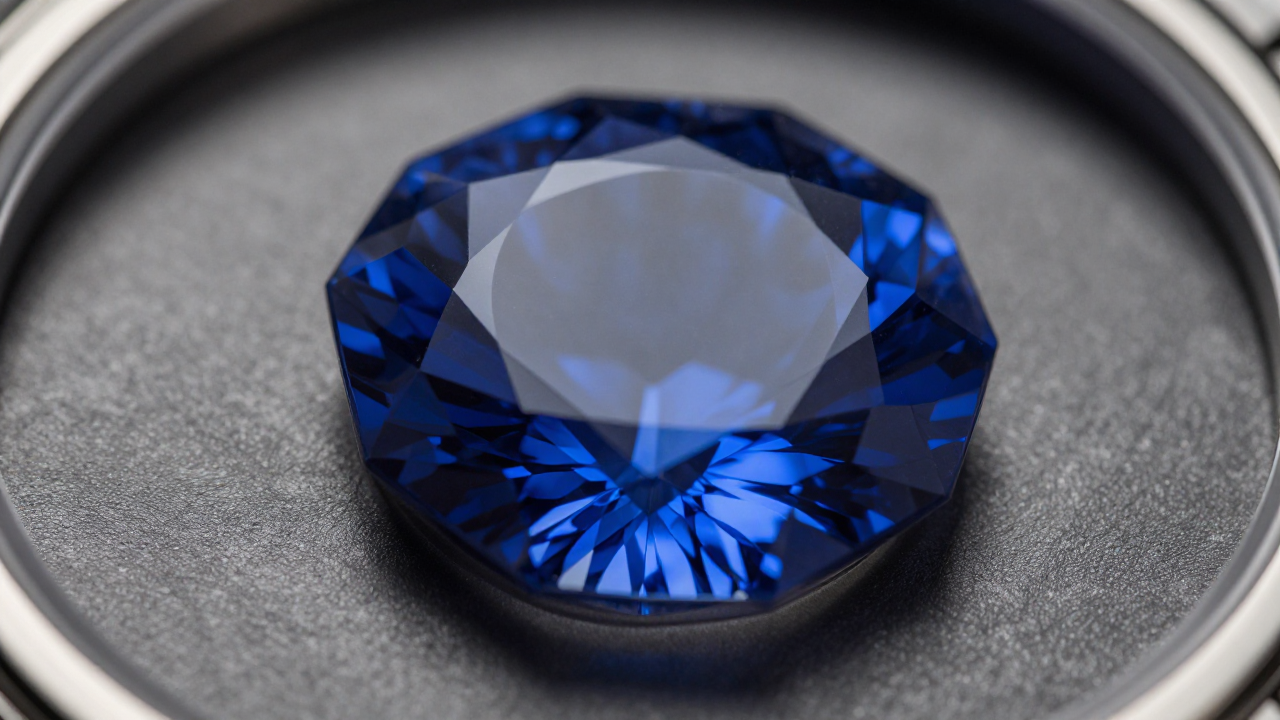
When sourcing a sapphire watch crystal, prioritize single-crystal substrate purity, double-sided AR coating adhesion, and edge-chamfer tolerance of ±0.03mm or tighter.…
These three specs, not brand name or country of origin, determine whether your finished watch survives five years on a wrist or comes back as a warranty claim in eighteen months.
What Separates a Good Sapphire Watch Crystal From a Bad One
That answer comes from a stack of failed samples in our QC lab. We've tested crystals from at least fourteen suppliers since 2015. Every failure traces back to one of those three variables.
In September 2024, a procurement manager at a Michigan microbrand called our Shenzhen office at 11 p.m. EST. Her last shipment — 2,500 sapphire watch crystals — had arrived with a 0.2mm thickness variance across the batch. Every unit failed the case-back sealing test. She had 2,500 assembled movements and no crystals to cap them. The supplier's datasheet said "±0.1mm." The actual delivered tolerance was double that.
This is not a rare story. It's the norm in an industry where "sapphire" has become a marketing word as much as a material specification.
How Synthetic Sapphire Is Actually Made (and Why It Matters)
Synthetic sapphire for watch crystals begins as high-purity aluminum oxide (Al₂O₃) powder, melted at 2,050°C using the Kyropoulos method or the edge-defined film-fed growth (EFG) process. The result is a single crystal with a Mohs hardness of 9 — second only to diamond. According to the ASTM C1624 scratch test standard, single-crystal sapphire resists scratching from hardened steel tools at forces that would permanently mar mineral glass.
What most buyers don't realize: there are two grades of "sapphire" on the market.
Single-crystal sapphire is what you want. It's grown as one continuous crystal structure. Optical clarity is above 92% transmittance in the visible spectrum. Scratch resistance is genuine Mohs 9. Polycrystalline alumina (sometimes sold as "sapphire-coated" or "sapphire glass") is sintered from multiple crystal grains. It's cheaper — often 40–60% less per unit. Hardness lands around Mohs 8.3–8.7. It scratches. Not easily, but it scratches. Under a polariscope, polycrystalline alumina shows grain boundaries that single-crystal sapphire never has.If a supplier quotes you under $2.50 per unit for a domed sapphire crystal at 5,000 pieces, ask for the polariscope image. You'll find out quickly which material you're actually buying.
Four Factors That Decide Your Purchase
1. Substrate certification
Demand a polariscope image or X-ray diffraction (XRD) report for every production lot. Single-crystal sapphire shows uniform extinction patterns. Polycrystalline alumina shows a speckled, fragmented pattern. This is a 30-second check that eliminates the single biggest source of counterfeit material in the supply chain. We run XRD on incoming raw material from every boule supplier. In 2023, we rejected 7% of incoming material — all from two suppliers who had substituted lower-grade alumina.
2. Coating adhesion, not coating presence
Almost every sapphire watch crystal sold today claims "anti-reflective coating." The real question is how that coating was applied. Ion-assisted deposition (IAD) produces a coating that survives 500+ abrasion cycles under a 1kg load. Dip-coating — the cheaper method — starts flaking at around 30–80 cycles. The test method is straightforward: ASTM D3359 tape adhesion test, followed by a Taber abrasion test. Ask your supplier for the test report. If they can't produce one, the coating is decorative, not functional.
3. Edge geometry
This is where dimensional tolerances kill you. A sapphire crystal with a chamfer angle off by 2° or a flatness deviation above 0.05mm will fail water-resistance testing under ISO 22810:2010. The sealing gasket can't compensate for that gap. The failure shows up at 5 ATM, not at 3 ATM, which means it passes incoming inspection and fails at the customer's wrist.
4. Thickness consistency across the batch
Batch-to-batch thickness variance is the hidden killer. A single lot of 10,000 crystals should hold ±0.02mm. If your supplier delivers ±0.08mm, you'll get inconsistent press-fit results on your assembly line — some crystals seat perfectly, others leave a hairline gap. In January 2023, a Swiss brand we supply ran into exactly this problem with a previous vendor. Their assembly yield dropped from 97% to 82% before they traced it to crystal thickness variance.
Budget vs. Recommended Options: What Each Tier Actually Delivers
This matrix reflects FOB Shenzhen pricing as of Q1 2026, based on orders of 3,000–10,000 units. Prices assume standard round or cushion shapes.
Two notes on this table. First, the $5–$12 tier is where most independent brands live, and it's where the quality gap between suppliers is widest. The substrate is correct, but coating adhesion and edge tolerance swing wildly. Second, the jump from single-sided to double-sided AR coating adds roughly $3–$6 per unit but improves legibility in bright sunlight by 40–60% — measurable with a spectrophotometer, not just a marketing claim. The Gear Patrol review of the Mk II field watch highlighted its domed sapphire crystal with anti-reflective coating on both sides. That double-sided detail is why a $400 field watch can read clearly at high noon.
Hidden Parameters the Sales Rep Won't Mention
Stock crystal programs hide shape compromise. Many Chinese and Swiss suppliers keep "standard" crystal molds in 0.5mm increments. If your case design calls for a 31.2mm diameter, they'll push you toward 31.0mm or 31.5mm to avoid a new tooling charge ($800–$2,000). In a 31.0mm opening, you'll get gasket compression that's 60% higher on one side. The watch may pass QC. It will fail in the field. We've seen this exact scenario cost a German brand $180,000 in a recall in 2022 — all because a 0.2mm mold compromise seemed like a cost-saving move at the time. "Scratch-proof" is a lie, but "scratch-resistant" undersells it. Sapphire at Mohs 9 will scratch if you drag it across a diamond or another sapphire. That's it. Kitchen counters, car keys, granite — none of these will touch it. The industry habit of saying "scratch-proof" is technically wrong, but the practical difference over a 10-year ownership period is negligible. Where consumers should worry instead: the AR coating. It's softer than the sapphire substrate by a factor of 3–4x on the Mohs scale (typically around Mohs 6–7). A coating scratch looks like a hairline smear that won't wipe off. This is why coating hardness and adhesion matter more than the substrate's headline number.Frequently Asked Questions
What is the difference between sapphire crystal and mineral glass?
Sapphire crystal is synthetic single-crystal aluminum oxide with Mohs 9 hardness. Mineral glass is heat-treated silica with Mohs 5–6 hardness. Sapphire resists scratches that permanently damage mineral glass, but costs 4–8x more per unit.
How long does a sapphire watch crystal last?
A well-manufactured sapphire watch crystal with quality AR coating lasts 10–15 years under normal daily wear. Coating degradation, not sapphire scratching, is the typical end-of-life trigger. IAD-coated crystals outlast dip-coated ones by 5–8 years.
How much should I pay for a quality sapphire watch crystal?
For single-crystal sapphire with double-sided IAD anti-reflective coating at 5,000 units, expect $12–$25 per unit FOB Shenzhen in 2026. Anything under $5 at that volume is almost certainly polycrystalline alumina or single-sided dip coating.
What is the best way to test sapphire crystal quality before ordering?
Request three documents: a polariscope or XRD report (confirms single-crystal), an ASTM D3359 tape adhesion test result (confirms coating durability), and a batch thickness report with Cpk values. A Cpk above 1.33 means the supplier controls their process. Below 1.0 means they don't.
Why does my sapphire crystal have a blue or purple tint?
That's the anti-reflective coating, not the sapphire itself. A slight residual color is normal. If the tint is strong or uneven, the coating thickness varies across the surface, which degrades optical clarity. A quality IAD coating shows less than 1% color shift across the full crystal face.
The Decision
Choose the $5–$12 tier if you're building watches that retail between $200 and $500, you need 15–25 day turnaround, and your customers expect legitimate sapphire quality without paying for luxury-grade coating durability. Choose the $12–$25 tier if your brand competes on long-term reliability, you want to minimize warranty claims past year three, and double-sided AR coating legibility is part of your product story. Choose the $25+ tier if you're supplying luxury or near-luxury watches where the crystal is part of the perceived value equation, and your retail partner expects zero visible coating wear after five years.The $2.50–$5.00 tier? That's polycrystalline alumina with a sapphire-sounding name. It works for promotional pieces and short-lifecycle fashion watches. Just don't put it on anything your customer will wear daily for three years and expect them to come back happy.