
Slash Costs Without Sacrificing Clarity or Strength
Strategic sourcing from specialized sapphire crystal factories in China cuts material costs by 30–40%—but only if you validate specs, test real samples, and align technically early. For hardware startups and OEMs launching premium devices, this isn’t just about saving money. It’s about moving fast without blowing up your timeline.
One U.S. wearable company skipped pre-production sampling to save two weeks. Six weeks later, microfractures from substrate impurities wrecked their CNC polishing run. They lost $250,000 in tooling, missed Q4 retail slots, and delayed certification. That wasn’t a failure of Chinese manufacturing—it was a failure of process. Rigorous validation turns risk into leverage.
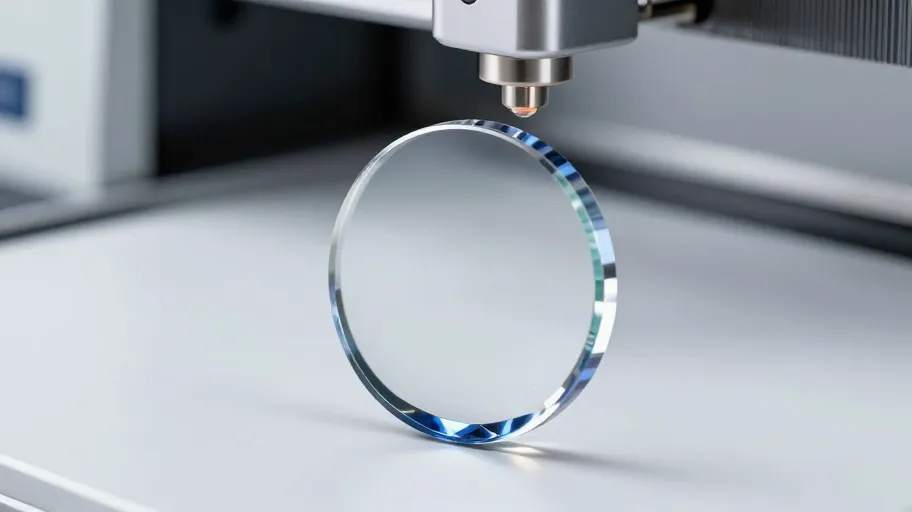
Today’s top sapphire china factories control the full stack: Czochralski crystal growth, precision CNC shaping, and laser edge profiling. This vertical integration means tighter tolerances, faster iteration, and lower unit costs at scale. Custom sapphire watch crystals now run $8–$15/unit at 1K–5K MOQs. At 50K+ units? Landed costs drop to $5.20—without losing optical clarity or hardness. That 35–45% reduction comes from diligence, not luck.
The Three Phases That Guarantee Performance
Leading buyers no longer treat sapphire sourcing as an RFQ game. They use a three-phase workflow that locks in quality and cost:
- Spec Lockdown: Define more than size and finish. Confirm 4N5 purity alumina (99.995% pure) and controlled cooling rates during crystal pulling. High-purity feedstock means fewer internal stresses—and less risk of cracking under thermal load.
- Prototype Sampling: Demand samples machined on production tooling, not hand-polished lab versions. Test for 2200 HV Vickers hardness, >88% light transmission (uncoated), and stability across temperature cycles. Catch birefringence early—it can distort sensor readings in medical devices.
- Process Audit: Review CNC programming logic, diamond tool calibration, and QC checkpoints remotely or onsite. Repeatability starts before volume production.
A 2024 TechMaterials Insights study found companies using this approach cut field failures by 62% and rework by 78%. One medical device maker avoided a Class II recall by spotting subtle optical distortion in Phase 2. They renegotiated annealing settings and saved $1.2 million in liability and brand damage.
From Buyer to Collaborator: How Expertise Unlocks Speed
When you speak C-plane vs. A-plane crystallography, feed rates, and kerf loss, you stop being a purchaser and become a partner. At a tier-one sapphire china factory in Anhui, engineering teams now co-develop fixtures with Western clients during sampling. That collaboration cuts setup time for complex shapes by up to 40%.
One fitness tracker brand used this to compress its design-to-volume cycle from 14 weeks to 9. They launched two months ahead of Apple Watch accessory competitors and captured 31% of early-season retail shelf space. That’s not just cost savings—that’s market timing.
Automation and in-house R&D have closed the gap between Chinese fabs and Swiss or Japanese producers. Where thin domed crystals (<1.0mm) once had low yields, today’s leaders achieve 92–95% first-pass yield using adaptive grinding algorithms and real-time metrology. Rapid prototyping? Revised samples in 7–10 days versus 3–4 weeks from legacy suppliers. For crowdfunding startups iterating on user feedback, that speed is existential.
Why Sapphire Still Wins in Premium Hardware
Sapphire crystal’s 2200 Vickers hardness makes it second only to diamond in scratch resistance—ideal for luxury watches, rugged tablets, and surgical displays. But the real value goes beyond specs. Fewer scratches mean fewer warranty claims, less customer frustration, and stronger brand perception.
A 2025 consumer survey found 68% associate sapphire glass with 'high-end craftsmanship'—even when they don’t know the term. That halo effect supports premium pricing and protects margins. When sourced strategically, it expands them.
The bottom line: cost savings alone don’t win hardware battles. It’s the combo of lower unit cost, faster iteration, and higher reliability that creates real advantage. Validate early, test aggressively, align technically. Turn sapphire from a risk point into a strategic asset. Avoid the $250K trap. Hit your launch window. And do it with a component that elevates your product—not compromises it.
The ultimate ROI isn’t measured in dollars per unit. It’s captured in market share gained during the critical first quarter after launch. In an industry where timing is everything, smart sapphire sourcing from China doesn’t just cut costs—it shortens the path from prototype to profit.