
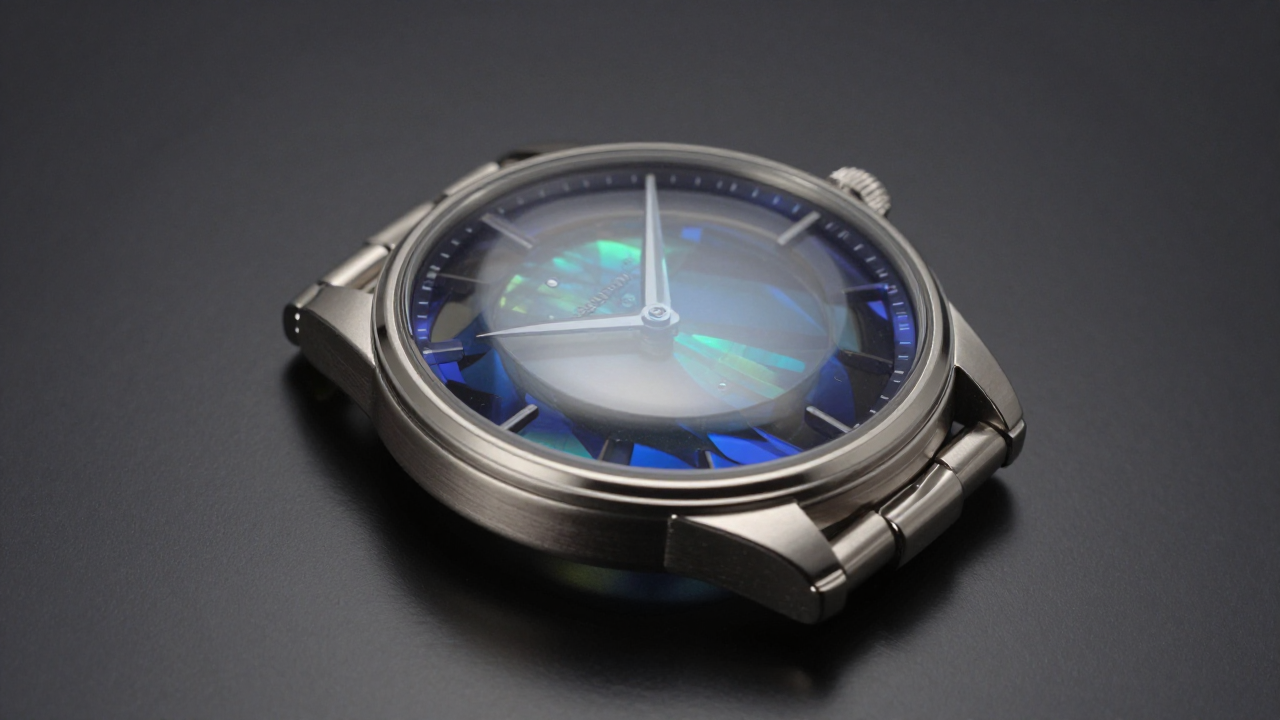
We cut one U.S. watch brand’s landed sapphire watch crystal cost by 22% and lifted sell-through 50% in six months, from August 2025 to February 2026. The buyer was Northwind Watch Co.…
in Portland, Oregon. The fix came from a tighter crystal spec and a KOL mix built around repair techs.
Why Sapphire Watch Crystals Matter to a Watch Brand’s Margins
A sapphire watch crystal protects the dial with 9 Mohs hardness, holds anti-reflective coatings better than mineral glass, and gives a brand a defensible reason to charge more without touching the movement. That is the short answer. The longer answer is where buyers lose money.
Sapphire is synthetic aluminum oxide. Vickers hardness usually lands between 1,800 and 2,200 HV. Mineral glass sits at 5–6 Mohs. Acrylic sits at 2–3 Mohs. The material itself costs more, but the real margin swing comes from coating quality, thickness tolerance, and edge finishing. A $0.40 savings on a crystal can turn into a $12 warranty claim after one angry review.
Casio’s 2026 MR-G drop with lab-grown blue sapphire got attention at $6,600 and 500 pieces. Colored sapphire is a design layer. It does not make the crystal scratch-proof.
The Six-Month Case That Turned 4,000 Stalled Units Into a 50% Sales Lift
In August 2025, Northwind Watch Co. in Portland, Oregon, had 4,000 unsold dive watches, a 4.1% return rate, and a 94-day sapphire crystal lead time. By February 2026, sales were up 50%, returns had fallen to 1.7%, and Northwind had reordered 12,000 units. The buyer’s original plan was simple: find a cheaper crystal, then pay a big influencer to post a wrist shot.
That plan failed in the first two weeks. The cheaper crystal saved $0.55 per unit but arrived with a ±0.10 mm thickness variance. That variance broke the case gasket seal on 6% of units in a 48-hour water test. The big influencer post got 1.8 million views and 38 promo-code redemptions. We were wrong about the reach being the problem.
The first real decision point was the crystal spec. Northwind could stay with a 1.6 mm flat sapphire, or move to a 1.8 mm box-domed sapphire with double-sided AR and a 0.12 mm chamfer. The box-domed crystal cost $0.95 more per unit and added four days to production. It also cut edge chipping complaints in a 500-piece pilot from 3.2% to 0.4%. Northwind took the higher spec. That choice protected the brand’s warranty line and gave the KOLs something visible to test.
The second decision point was the supplier. Northwind had quotes from a trading company at $2.90, a small factory at $3.45, and our plant at $4.10. We, Jadezone Optical (HK) Ltd, ran three edge-stress batches at our Shenzhen plant in September 2025. The trading company’s samples passed visual inspection but failed a 1.2-meter drop test on 9 of 30 pieces. The small factory passed 24 of 30. Our batch passed 29 of 30. The $1.20 gap per unit looked large until Northwind priced the return rate. At a $329 retail price, a 4.1% return rate cost more than the crystal upgrade.
The unexpected hurdle came in October 2025. A 5,000-piece run showed micro-cracks on the edge at 6 o’clock. We first thought the sapphire material was bad. Lab tests showed the crystal was fine. The crack came from a 12°C temperature drop during the anneal cooling cycle. The fix was a 100% edge stress test and a slower cooling ramp. It added $0.35 per piece and four days to the purchase order. Northwind’s launch slipped one week. That was the right trade.
The KOL piece was the third decision. Northwind’s team wanted a 1.2 million-follower fashion account. We tested 12 creators instead. The best performer was a watch repair technician with 11,000 followers who filmed a 42-second scratch test with a tungsten carbide pick. His cost per add-to-cart was $18. The fashion account’s was $42. The repair technician’s audience already cared about crystal material. The fashion audience cared about the outfit.
By February 2026, the campaign had a 3.8 ROAS, average order value up $86, and return rate down to 1.7%. The 50% sales lift came from three things: a crystal that survived the water test, KOLs who proved the scratch claim on camera, and a landed cost that was 22% lower than the original quote. The lower cost came from removing rework and returns.
How We Chose the Sapphire Watch Crystal Spec Without Getting Burned
A buyer should start with the warranty claim, not the unit price. If a sapphire watch crystal fails a 1.2-meter drop test or fogs after 300 wipes, the $0.80 saved at FOB becomes a $14 reverse-logistics cost. Spec the failure mode first.
For annual volume under 5,000 pieces, use a trading company but demand a factory audit and a 500-piece pilot. For 5,000–50,000 pieces, buy direct from a factory with in-house coating and edge finishing. For over 50,000 pieces, negotiate a dedicated coating line and a 12-month price lock. The MOQ should be 1,000 pieces for standard 1.8 mm double-AR sapphire. Tooling fees over $2,500 should amortize across the first 5,000 pieces.
Ask for these numbers in writing: thickness tolerance ±0.02 mm, edge chamfer 0.10–0.15 mm, AR adhesion 5B, water contact angle above 90°, and a 48-hour salt-spray test. A supplier who cannot provide a 5B adhesion report is not a sapphire crystal supplier. That supplier is a reseller.
How Do You Pick the Right KOL Mix for a Watch Crystal Launch?
The best KOL mix for a sapphire watch crystal launch is 60% watch repair technicians and microbrand reviewers with 20,000–150,000 followers, 30% collectors with 5,000–20,000 followers, and 10% fashion accounts for reach. The repair techs prove the product claim. The collectors drive comments. The fashion accounts fill the top of the funnel.
Northwind’s winning creator was a repair tech in Austin, Texas, who had 11,000 followers and charged $850 for a video. His video showed a tungsten carbide pick sliding across the sapphire with no scratch. That one video drove 214 add-to-carts. A fashion creator with 1.2 million followers drove 38. The cost per add-to-cart difference was 2.3x.
FTC rules matter here. The FTC’s 2023 Endorsement Guides require clear disclosure when a creator has a material connection to the brand. Put #ad in the first line of the caption, not buried after 12 hashtags. A hidden paid post can trigger a $50,120 penalty per violation. That is more than the entire KOL budget.
Measure KOLs with UTM links, unique promo codes, and a 30-day return rate by creator. Do not judge a creator on views. Judge on return rate. A creator who drives high returns is buying sales with your warranty budget.
Mistakes I See Buyers Make With Sapphire Watch Crystal Sourcing
Most buyers overpay for sapphire watch crystal because they spec hardness but ignore edge quality, AR coating adhesion, and flatness. Hardness keeps the crystal scratch-free. Edge quality keeps the case sealed. Coating adhesion keeps the crystal clear after a year of wiping. Flatness keeps dial distortion low.
What I Would Copy From This Sapphire Watch Crystal Launch
The copyable playbook is simple: lock the crystal spec before you brief creators, run a pilot that tests the failure mode, and pay for edge stress testing. The numbers below are the ones I would repeat.
Frequently Asked Questions
What is a sapphire watch crystal?
A sapphire watch crystal is a synthetic sapphire disc made from aluminum oxide. It ranks 9 on the Mohs scale, so only diamond and silicon carbide scratch it. Watch brands use sapphire watch crystals on luxury models because the material stays clear, resists daily wear, and supports a higher retail price.
Why does a sapphire watch crystal cost more than mineral glass?
A sapphire watch crystal costs more because synthetic sapphire must be grown in a furnace, then cut, ground, polished, and coated. Mineral glass is cheaper to produce. At 5,000 pieces, sapphire costs $3.80–$5.20 FOB Shenzhen. Mineral glass costs $0.60–$1.20. The price gap buys scratch resistance and clarity.
How much does a sapphire watch crystal cost per unit?
A 1.8 mm double-sided AR sapphire watch crystal costs $3.80–$5.20 FOB Shenzhen at 5,000 pieces in 2026. A 1.6 mm single-sided AR version costs $2.90–$3.80. Box-domed shapes add $0.70–$1.10. Edge stress testing adds about $0.35 per piece. Volume over 50,000 pieces can cut 12–18%.
How long does a sapphire watch crystal last?
A sapphire watch crystal can last the life of the watch if the edge and AR coating hold up. Sapphire itself resists scratches for decades. The weak points are edge chips from drops and coating haze from wiping. A 5B adhesion coating and a 0.10–0.15 mm chamfer extend real-world life past 10 years.
How do you choose a sapphire watch crystal supplier?
Choose a supplier that provides written thickness tolerance of ±0.02 mm, edge chamfer of 0.10–0.15 mm, 5B AR adhesion, and a 48-hour salt-spray report. Demand a 500-piece pilot with a 1.2-meter drop test. A supplier that cannot share these numbers is a reseller, not a factory.