
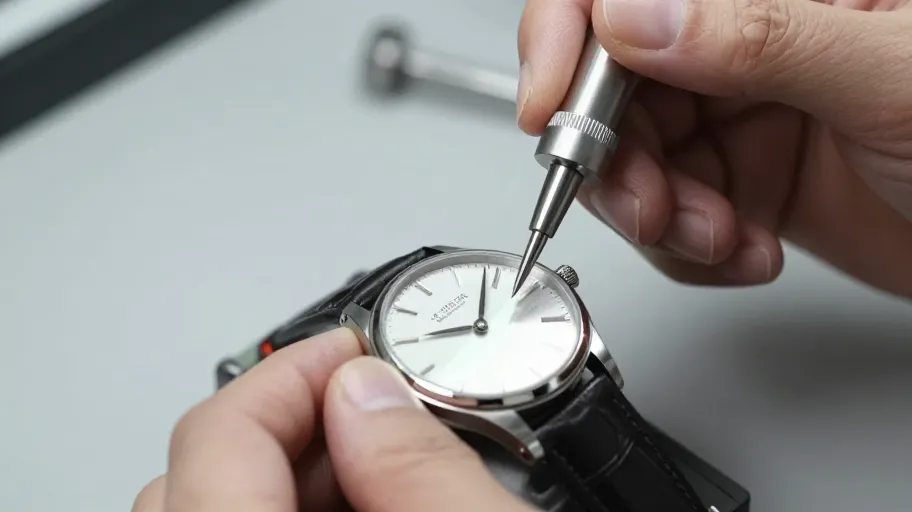
The Real Cost of Misdiagnosing a Scratch
Replacing an entire sapphire crystal because of a surface scratch is like rebuilding an engine for a dirty air filter — expensive overkill. One Swiss brand discovered that 18% of their warranty returns were flagged for visible marks, triggering $320 replacements and 14-day delays. But after applying a diagnostic protocol from their contract Sapphire China Factory, they found 90% of those crystals only had micro-scratches under 5 microns.
This misdiagnosis isn’t rare. Most third-party shops lack the tools to measure scratch depth or assess coating integrity, so they default to full swaps. That means higher costs, longer wait times, and a subtle hit to resale value — collectors know a replaced crystal when they see one, even if it’s invisible to most.
Correctly identifying repairable damage means you avoid unnecessary inventory, reduce shipping urgency, and maintain component provenance. Because the original crystal stays in place, so does the watch’s authenticity. That’s not just cost savings — it’s brand protection.
How Top Chinese Factories Diagnose Scratches
Factories supplying Rolex, Omega, and independent haute horlogerie brands don’t panic at every mark. They use a three-point assessment that separates cosmetic flaws from structural damage:
- Depth: Scratches under 5 microns affect light refraction but not strength. These respond well to polishing.
- Location: Edge marks near lugs or bezels are less disruptive than center-dome blemishes that impair legibility.
- Coating Integrity: If the anti-reflective (AR) layer is compromised, standard polishing can create haze or color shifts.
Using confocal microscopy and reflectance mapping, technicians classify each flaw before acting. A 3-micron off-center scratch with intact AR coating? It qualifies for correction. A deep gouge from diamond contact or thermal discoloration? That needs replacement.
This tiered approach means fewer parts ordered, faster turnaround, and better outcomes. One Hong Kong distributor cut full replacements from 41% to 14% within six months — freeing $1.2M annually in spare parts and logistics. Their customers got their watches back in 72 hours, not two weeks, with the original crystal restored.
Why You Can’t DIY This Like Glass
Sapphire ranks 9 on the Mohs scale — harder than steel (5.5) and quartz sand (7). That means everyday wear won’t scratch it, but it also means repair requires extreme precision. Generic online 'repair kits' often use uncalibrated abrasives above level 7, which can embed new micro-scratches or remove too much material.
Uneven polishing on a domed crystal creates optical distortion — what looks like fog or haze. Worse, removing more than 0.02mm alters curvature, potentially breaking the gasket seal and compromising water resistance. That’s why ISO 13485 cleanrooms, CNC-polishing jigs, and batch-tested slurries matter: they ensure every micron removed is intentional.
A Middle Eastern retailer learned this the hard way. After trying in-house repairs with imported films, 37 watches came back with clouded domes. The root cause? Inconsistent abrasive particle distribution. The fix wasn’t training — it was switching to the same cerium oxide slurry used in their OEM’s Foshan factory. Once aligned, defect recurrence dropped to zero.
Access to calibrated consumables means consistent results, fewer comebacks, and technician certification tied to live calibration checks. That’s not just repair — it’s repeatable quality.
When Replacement Is the Only Option
Some damage can’t be polished. Deep gouges from diamond-tipped tools, edge chips, or thermal discoloration require full replacement. But not all sapphire crystals are equal. Only certified Sapphire China Factories can replicate exact dome geometry, edge bevel angles, and multi-layer AR coatings matched to within 0.3nm of refractive index.
Generic replacements fail here. Off-the-shelf domes often have flatter profiles or mismatched coatings, creating visible glare or rainbow effects under light. That’s unacceptable for high-end timepieces where optical clarity defines premium perception.
Direct access to the original manufacturer means you get parts built to factory specs — not approximations. This capability means faster fulfillment, no reverse-engineering guesswork, and perfect visual continuity. For brands, it also strengthens negotiation leverage: factories prioritize partners who submit accurate claims and reduce false positives.
How to Partner with the Right Factory
You can’t achieve this level of precision without direct alignment with a sapphire crystal China manufacture facility. Start by verifying their technical capabilities: Do they use spectral analyzers? CNC jigs? Batch-tested slurries? Ask for sample protocols and master calibration standards.
One effective strategy is to request a technical liaison agreement. This gives your team access to approved materials, live calibration data, and joint training — turning repair from a liability into a differentiator.
The payoff? Up to 40% lower lifetime service costs, faster turnaround, and stronger customer trust. Owners aren’t getting a ‘like-new’ watch — they’re getting their original, restored. In luxury markets, that distinction drives loyalty and resale value.
Ready to stop replacing when you could restore? Connect with a certified sapphire crystal factory and start treating scratches like science — not guesswork.