
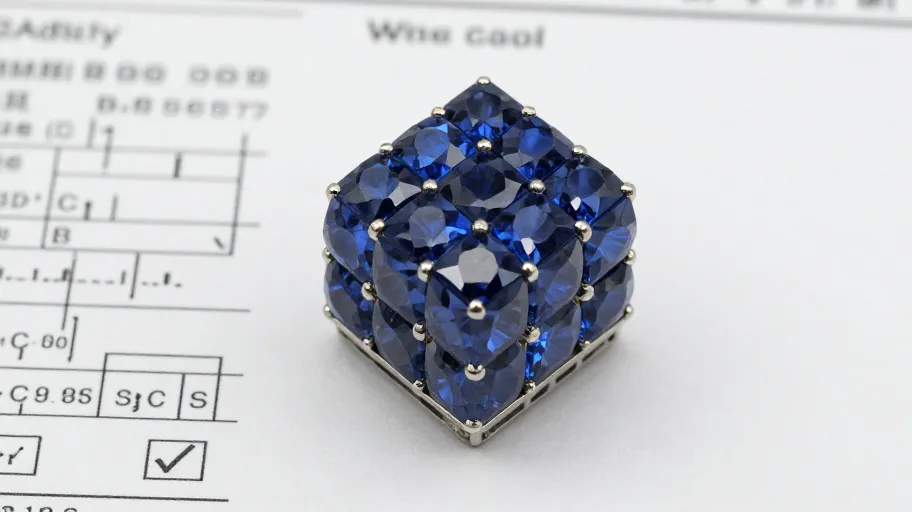
Sourcing a box sapphire crystal bracelet component comes down to three linked decisions: specify the geometry and finish precisely, sample against that written specification, and gate approval on documented evidence rather than verbal assurances. This guide gives component buyers a working framework, a specification checklist, a supplier decision table and the approval questions to ask before any production commitment.
What "box sapphire crystal bracelet" means in specification language
For a B2B buyer, the phrase describes a sapphire crystal shaped with a box-like geometry — flat top face, defined side walls and crisp edge transitions — integrated into or paired with a bracelet-style watch construction. The crystal may serve as a protective window, a design element that continues the bracelet line, or both. Because box geometries place stress at corners and edges, the specification stage carries more weight than it does for simple round crystals.
What matters commercially is that box-shaped crystals are custom components. Every dimension, edge treatment, coating and mounting interface should be written into a drawing and a specification sheet before samples are ordered. A supplier conversation that begins with "can you make this?" should end with "here is the drawing, here is the acceptance criterion, here is how we will both verify it."
The SPEC–SAMPLE–GATE framework
JadeZone Sapphire, as a Shenzhen and Hong Kong B2B manufacturer of custom sapphire watch crystals and precision sapphire components, works with buyers who arrive at different stages of readiness. The framework below works regardless of where you start.
SPEC. Translate the design intent into a controlled document: geometry, material grade expectations, surface finishes, coatings, mounting features, inspection methods and acceptance criteria. Anything not written down becomes a negotiation later.
SAMPLE. Order samples against that document, not against a verbal description. Evaluate samples with the same methods named in the specification — the same gauges, the same lighting, the same coating tests — so results are comparable.
GATE. Approve only when the evidence is documented: measured results against acceptance criteria, agreed defect classifications, a signed sample retained by both parties, and written confirmation of any commercial terms. If a gate fails, the correction loops back to SPEC or SAMPLE — never straight to production.
Specification checklist: what to define before requesting a quote
- Geometry: overall form, top face, side-wall angles, corner radii and edge transitions, all referenced to a drawing
- Mounting interface: how the crystal seats in the case or bracelet segment, including any steps, chamfers or grooves
- Material expectations: the sapphire grade and orientation the supplier proposes, and how it will be confirmed
- Surface finish: polish level for each face, and any matte or textured zones
- Coating: whether an anti-reflective or other coating is required, on which faces, and what evidence of coating performance will be accepted
- Dimensional agreement: which dimensions are critical, which measuring equipment each party will use, and how discrepancies are resolved
- Visual criteria: acceptable levels of inclusions, edge chips or polish marks, agreed against boundary samples or photographs
- Marking: any logo, index or printing, its method, placement and durability requirements
- Inspection and acceptance: sampling plan, measurement methods and the documentation the supplier returns with each lot
- Commercial terms to confirm in writing: MOQ, unit pricing structure, tooling or setup charges, sample policy including any fees and who covers shipping, lead times for samples and production, and revision charges
Note that this checklist deliberately converts unknowns into questions. Sample fees, whether shipping is covered, fee treatment on order placement, MOQs and lead times vary by programme and must be confirmed directly with the supplier — including with JadeZone Sapphire — at enquiry time. This article does not state a policy because none was supplied for publication.
Decision table: evaluating supplier responses
Use this table to score supplier replies to your specification package. Assign a weight to each row according to your programme's risk profile.
| Evaluation dimension | Strong response | Weak response | What to do |
|---|---|---|---|
| Drawing interpretation | Supplier returns a marked-up drawing or written confirmation of every dimension | Vague confirmation, "no problem", or requests to discuss by voice only | Request written dimensional confirmation before samples |
| Measurement capability | Names equipment and methods matching your acceptance criteria | Cannot describe how dimensions will be measured | Align methods in the specification before ordering |
| Coating evidence | Offers a defined verification approach for coating performance you can audit | Asserts quality without a stated verification method | Ask what evidence accompanies each lot |
| Defect classification | Proposes explicit visual acceptance criteria and boundary samples | Relies on undefined "quality" language | Agree criteria in writing; retain signed boundary samples |
| Commercial transparency | Confirms MOQ, price structure, sample terms and lead times in writing | Defers all commercial terms to later stages | Gate any tooling spend on written terms |
| Revision handling | Defines how design changes after sample approval are quoted and processed | No defined change process | Agree the change process before the first sample |
| Communication discipline | Responses reference your drawing numbers and criteria | Generic replies not tied to your documents | Treat responsiveness now as a signal of production-stage behaviour |
No row in this table presumes what any supplier — including JadeZone Sapphire — will answer. The table exists to make replies comparable and auditable.
Sample evaluation and approval questions
When samples arrive, work through these questions and record the answers:
- Does each measured dimension fall within the acceptance criteria agreed in the specification, using the agreed measuring equipment?
- Do the edge transitions and corners match the drawing, and were any stress-related edge conditions observed?
- Do the surface finishes and any coatings meet the visual and functional criteria, and what evidence supports that judgement?
- If markings are applied, are they correctly placed, durable and consistent across all samples?
- Are discrepancies documented, root-caused and corrected through a revised sample rather than accepted verbally?
- Has a golden sample been signed and retained by both parties as the production reference?
- Are final commercial terms — MOQ, pricing, lead time, sample fees and shipping responsibility — confirmed in writing and aligned with the approved specification version?
Approval is a decision to start production against a frozen document. If the document is not frozen, the approval is not real.
FAQ
How is a box sapphire crystal bracelet component priced? Pricing depends on geometry complexity, coating requirements, volumes and tooling, and no pricing is stated in this guide. Ask each supplier for a written quotation structure that separates tooling, unit price by volume band, sample charges and shipping responsibility.
What should I confirm before paying for samples? Confirm the current sample policy directly with the supplier: whether a fee applies, who covers shipping, whether fees are adjusted on order placement, and what the sample will and will not represent. No sample policy details are asserted here because none were supplied.
How do I verify coating performance on a box sapphire crystal? Define the verification method in the specification before samples are made — which tests, performed by whom, with what documentation — and require the same evidence with production lots. Do not accept coating claims without a stated verification approach.
Can I use one supplier's spec sheet with another supplier? Yes, and it is good practice to send an identical specification package to multiple suppliers so replies are comparable. The decision table above is designed for exactly that comparison.
What documentation should exist at approval? A frozen specification and drawing, measured sample results against acceptance criteria, agreed defect classifications, signed golden samples held by both parties, and written confirmation of commercial terms. Anything absent becomes a future dispute.
Next step
获取采购 Brief — request the procurement brief to structure your box sapphire crystal bracelet enquiry, spec sheet and supplier questions in one document.
Prefer to start smaller? Download the ten-point specification checklist above and mark which items your current drawings already cover — that alone will sharpen your next supplier conversation.