
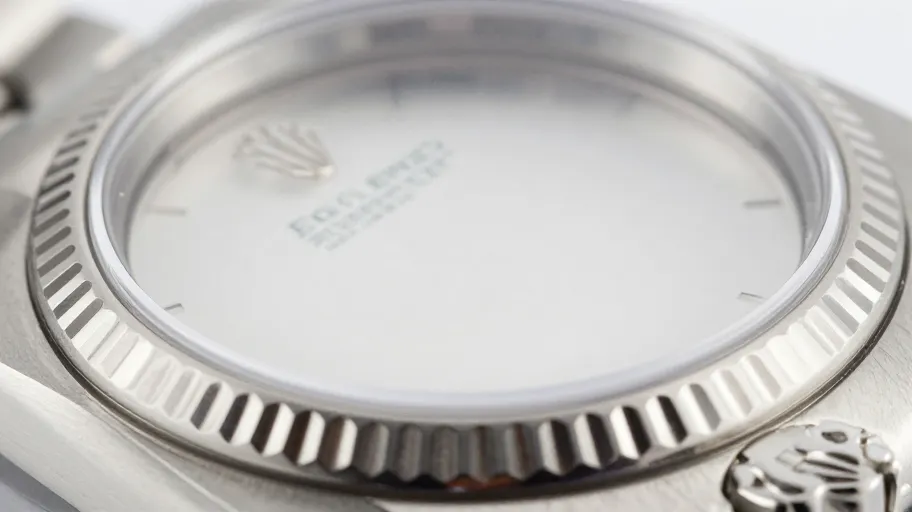
Yes — Rolex uses sapphire crystal across its current watch collections, having moved from acrylic to sapphire across its ranges over past decades. For component buyers, the useful question is not what Rolex uses, but how to specify, sample and approve sapphire crystals for your own product line with documented confidence at each step.
What the Rolex Reference Does — and Does Not — Tell You
Rolex's adoption of sapphire crystal matters to a sourcing team for one reason: it establishes sapphire as the reference material for scratch resistance and optical clarity at the top of the watch market. When your product developers ask "should we go sapphire?", the honest answer is that the material choice is proven at the premium tier, but the material alone does not define a component.
A sapphire crystal is not a single product. It is a family of engineered parts defined by:
- Growth method and quality grade of the sapphire boule
- Cut geometry — flat, domed, bevelled, box-shaped, or a custom contour
- Coating — anti-reflective treatment on one or both faces, or none
- Surface finish and edge treatment
- Fitting system — tension ring, gasket, adhesive bond, or pressed fit
- Dimensional and optical acceptance criteria documented in writing
Two crystals both labelled "sapphire" can behave very differently in assembly, in warranty terms, and on the customer's wrist. So the Rolex reference validates the material category; it does not validate a supplier, a drawing, or a price. That distinction is where your sourcing work begins.
The SPEC–SAMPLE–SIGN-OFF Ladder
When we work with watch brands and component buyers at JadeZone Sapphire — a Shenzhen and Hong Kong B2B manufacturer of custom sapphire watch crystals and precision sapphire components — we recommend a three-stage ladder before any production commitment. Each stage produces a document. Documents, not conversations, are what protect both sides.
Stage 1: SPEC — define the specification before you ask for a price
Write down, in a drawing and a spec sheet, everything that defines the part. At minimum:
- Nominal geometry, including curvature or bevel details, with the tolerances your movement and case actually require
- Sapphire material grade and any optical quality requirements
- Coating: whether anti-reflective treatment is required, on which faces, and how it will be verified
- Edge and surface finish requirements
- Fitting interface and what the crystal must interface with (gasket, case rim, adhesive)
- Marking, if any — logo printing, indices, or metallisation
- Acceptance criteria: what measurements and inspections the supplier must report against
Without this document, quotes from different suppliers are not comparable, because each will be quoting to its own default interpretation of your request.
Stage 2: SAMPLE — validate against the specification, not against a photo
Request samples made to your specification, and inspect them against your written acceptance criteria. Keep records of what you measured, what passed, and what did not. If a sample deviates, document the deviation and the correction agreed — this becomes part of your approval trail.
What a sample round includes, whether sample fees apply, who covers shipping, and what the current minimum order quantity is are all supplier-specific terms. Confirm each of these directly before making comparisons; do not assume terms carry over between suppliers or between projects.
Stage 3: SIGN-OFF — approve in writing with defined evidence
Final approval should name: the drawing revision approved, the inspection evidence attached, the agreed acceptance criteria, and who approved on behalf of your organisation. A written sign-off prevents the two most expensive failure modes in crystal sourcing — silent spec drift between sample and production, and disputes over what "good" meant when nobody wrote it down.
Decision Table: Matching Your Product Tier to Specification Depth
| Your product tier | Specification decision | Sample and approval approach | Key risk to manage |
|---|---|---|---|
| Entry or promotional line | Consider whether sapphire is justified versus other crystal materials; if sapphire, keep geometry simple and coating minimal | One sample round against a concise spec sheet | Over-specifying — paying for features the tier does not support |
| Mid-market brand | Define coating, geometry and fit precisely; align tolerances with your case supplier's drawings | Two sample rounds: dimensional check, then assembly and wear check | Tolerance mismatch between crystal and case from different suppliers |
| Premium or sports line | Full spec: coated sapphire, defined optical quality, documented inspection evidence per lot | Multi-round validation including assembly trials and environmental exposure you define | Coating or geometry claims without supporting inspection documentation |
| OEM / third-party manufacturing | Spec is contractual; every dimension and test is an acceptance criterion | Formal sample approval with signed evidence and revision control | Verbal agreements replacing documented acceptance criteria |
Use this table to decide how much specification depth your project genuinely needs — then hold every supplier, including us, to the same document standard.
Approval Questions to Put to Any Sapphire Crystal Supplier
Bring these to your first technical conversation. A supplier that answers them precisely is easier to qualify than one that answers warmly.
- What sapphire material grade do you propose for this part, and how do you grade incoming material?
- Which dimensions on our drawing will you measure on every part, which on a sampling basis, and what measurement equipment is used?
- If we specify an anti-reflective coating, how is coating presence and quality verified, and what evidence accompanies each lot?
- What is your process when a sample or production lot deviates from our drawing — correction, documentation, timeline?
- What are your current terms for samples, sample fees, shipping responsibility, minimum order quantity and lead time for a part of this complexity? (Confirm these directly; they change by project and must be quoted, not assumed.)
- Can you produce to our drawing revision control, and how do you flag a proposed change to our spec rather than implementing it silently?
- What documentation ships with an approved production lot — inspection reports, material records, or certificates you currently hold?
None of these questions presumes an answer. Their purpose is to surface, in writing, the facts a buyer needs before comparing suppliers honestly.
Pre-Approval Documentation Checklist
Complete every line before signing off any sapphire crystal:
- Written spec sheet and drawing with revision number
- All critical dimensions and tolerances stated on the drawing, not in email
- Sapphire grade and optical requirements specified
- Coating requirement specified per face, with verification method
- Fitting interface defined against the actual case or gasket drawing
- Sample inspection records filed against acceptance criteria
- Deviations found, corrections agreed, and re-sample results recorded
- Current sample, fee, MOQ, lead time and shipping terms confirmed in writing with the supplier
- Named approver and approval date on the final sign-off
- Production lots tied to the approved drawing revision
FAQ
Does Rolex use sapphire crystal on all its watches?
Rolex uses sapphire crystal across its current collections, having transitioned from acrylic crystals across its ranges over past decades. Vintage and some historical models used acrylic, which matters if you service or source parts for older references.
Is sapphire crystal the right choice for every watch line?
Not automatically. Sapphire offers strong scratch resistance and optical clarity, which suits premium and sports positioning. For entry lines, promotional products, or designs where cost or shatter behaviour matters more, other crystal materials may fit the brief. Decide per product tier, using the decision table above.
What should I compare when evaluating custom sapphire crystal suppliers?
Compare four things: how precisely they respond to your written specification, what inspection evidence they attach to samples and lots, how transparently they confirm current commercial terms, and how they document deviations. A supplier's clarity on these points predicts the production relationship better than any brochure.
Can I get sapphire crystals made to my own drawing?
Yes — custom and OEM sapphire crystals are manufactured to buyer drawings, including custom geometry, coatings and fitting systems. The critical step is that your drawing, tolerances and acceptance criteria are documented and mutually confirmed before sampling, so that approval and production both trace back to one controlled specification.
What evidence should I require before approving a sapphire crystal for production?
At minimum: a sample inspected against your stated acceptance criteria, written records of any deviations and corrections, confirmed commercial terms, and a signed sign-off naming the approved drawing revision. Anything approved verbally remains disputed for as long as it stays verbal.
Next Step
Before you contact any supplier — including us — get your specification house in order. 获取采购 Brief and use it to structure your drawing, acceptance criteria and supplier questions so that every quote you receive answers the same specification.
Prefer to start smaller? Download the pre-approval documentation checklist above and run it against your current crystal project — it works for any supplier, any tier, any drawing.