
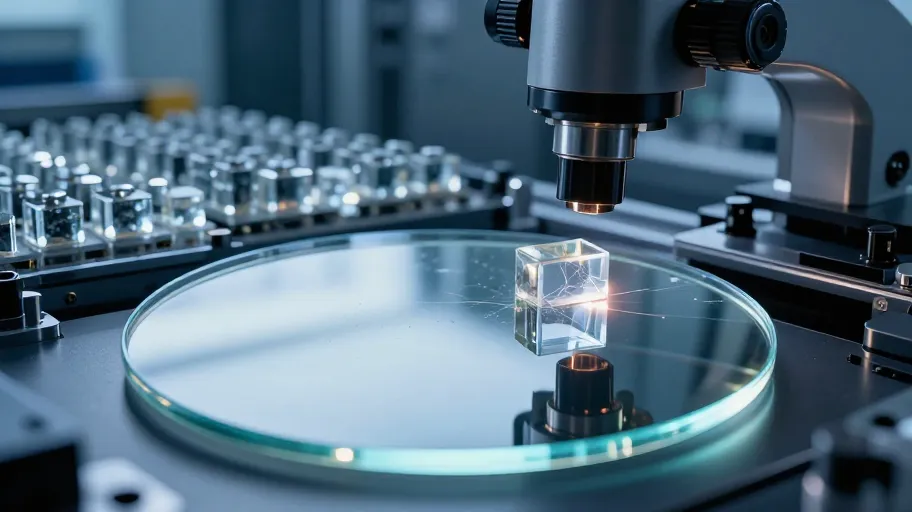
Building a Bulletproof Sample Approval Process
You cannot eyeball your way through a sapphire crystal procurement cycle. When buyers rely on subjective visual checks across different time zones, communication gaps inflate approval times and rework costs. We see this constantly. A single misunderstood optical tolerance or uncalibrated surface scratch can derail a product launch.
Transitioning to a data-driven First Article Inspection protocol replaces ambiguous feedback with quantifiable metrics. Automated interferometry data in initial sample approvals typically reduces revision cycles by 40%. This means your engineering team can finalize designs weeks ahead of schedule because microscopic deviations are resolved against exact specifications rather than subjective opinions. For procurement managers, this efficiency gain directly translates to capturing seasonal market demand before competitors finish their second round of samples.
Deconstructing the Manufacturing Myth
A major vulnerability in global sourcing is the assumption that every sapphire china factory possesses identical crystal growth methodologies. They do not. These foundational processes vary wildly, and those variations dictate the performance of your final product.
The intrinsic quality of the Monocrystalline Sapphire Substrate determines baseline structural integrity. If a supplier uses a lower-tier growth method with unstable thermal gradients, the substrate contains microscopic inclusions that compromise durability. The finishing stage relies on Chemical Mechanical Polishing to achieve nanometer-level surface roughness. Variations in polishing slurry composition directly control final optical clarity. This means your optical components maintain peak light transmission efficiency because the nanometer-level surface roughness prevents light scattering in high-temperature applications.
Consider a consumer electronics firm that approved a sapphire display cover based on a flawless visual sample. During high-volume production, the supplier altered the polishing slurry to cut costs. The result was a 15% drop in thermal shock resistance, causing micro-fractures during assembly. By mandating thermal stress testing during the sample phase, a medical device manufacturer avoided this exact pitfall. Their data-backed validation identified a subtle variance in substrate growth early on, securing a 30% faster time-to-market for their diagnostic equipment.
Scaling to High-Volume Production
A rigorous sample approval process is the foundation for long-term supply chain resilience. When you anchor initial validations in hard data, you transition from a reactive buyer to a strategic manufacturing partner.
Looking ahead, AI-driven optical inspection will become the mandatory baseline for every tier-one sapphire crystal manufacturer. This means your executive team can forecast production yields with high accuracy because predictive algorithms identify defect patterns before they compound into catastrophic failures. For a sapphire crystal manufacture operation, this shifts the competitive advantage toward predictive yield optimization, often lowering infrastructure and scrap costs by up to 25%.
Ready to cut your defect rates and secure flawless optical components? Contact our engineering team for a personalized assessment of your sapphire crystal china manufacture requirements.