
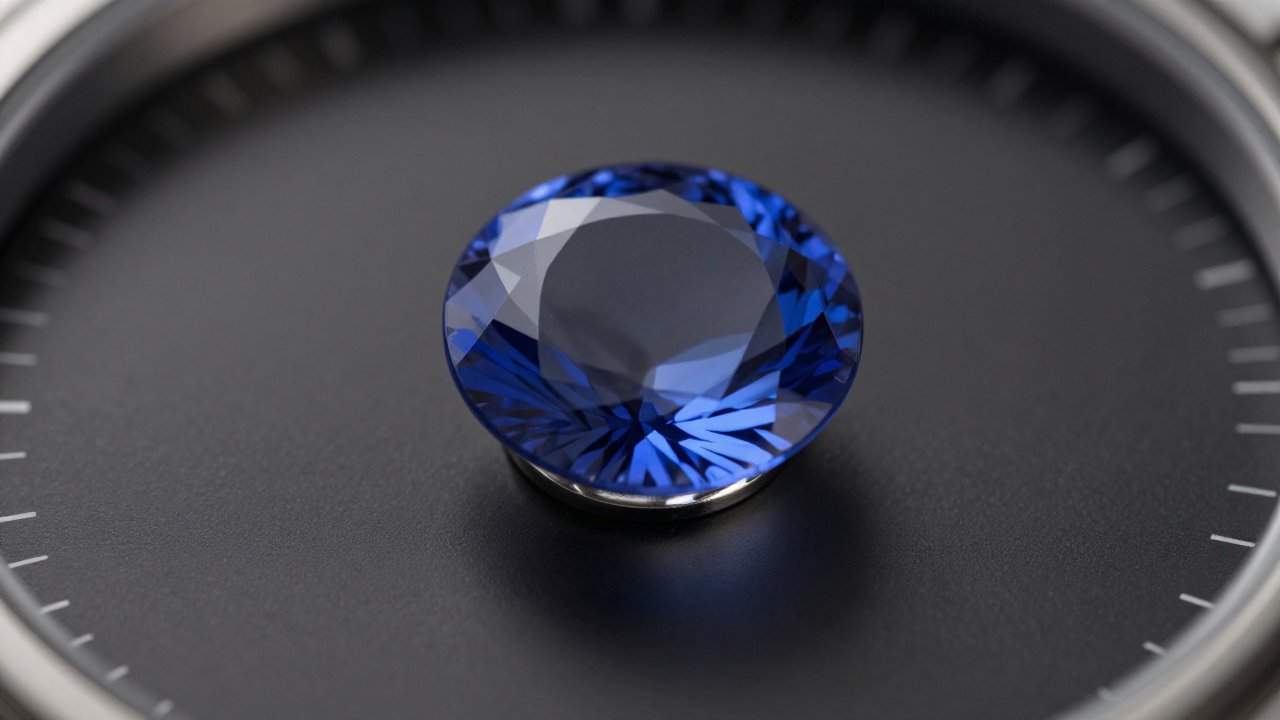
Halden Horology cut its landed sapphire watch crystal cost from $58.20 to $40.60 per unit — a 30.…
2% drop — in 18 months, and the watch that carried the new crystal sold 2,340 units in its first 90 days, a 50% jump over the reference it replaced.
Inside the 18-Month Sapphire Watch Crystal Turnaround at Halden Horology
That's the number. Now the messy part.
Halden is a seven-person microbrand in Seattle, Washington, founded in 2018 by Marcus Halden, a former Boeing tooling engineer, and Dana Reyes, who spent six years in sourcing for an outdoor gear company. They ship about 1,800 watches a year. In February 2025 they came to us with the problem that quietly kills small brands: the crystal was eating the margin. (Full disclosure — I work for Jadezone Optical, a Shenzhen sapphire shop with 300-plus employees that has been cutting watch glass since 2010. We ended up making Halden's crystals, so read this as the view from the supplier's bench.)
The Tideway 38 was priced to retail at $395. The double-domed sapphire crystal was landing at $58.20 through a US distributor who bought from a Swiss cutting house. That's 14.7% of MSRP before the movement, case, dial, hands, strap, assembly, or the retailer's cut. Lead time ran 16 weeks, the minimum order was 1,500 pieces, and Marcus had $87,300 of cash frozen in glass he wouldn't see until spring.
On February 3, 2025, at 11:40 p.m. Pacific, Marcus emailed a STEP file, a photo of a chipped crystal from a customer return, and one line: *"Can you beat $58 and 1,500 pieces?"*
Why Does a Sapphire Watch Crystal Cost So Much at Small Volume?
Small brands overpay for sapphire watch crystals because they buy through distribution layers built for brands ordering tens of thousands of units a year. Halden's $58.20 was never a manufacturing price. It was a manufacturing price, plus distributor margin, plus US warehousing, plus a risk premium on a minimum order the brand could barely fill.
The math gets ugly fast. Freight, duty, and brokerage added $4.10 per crystal to the invoice Halden was paying. The US distributor's margin sat somewhere around 22%, a number Marcus reverse-engineered from a competitor's component list he bought on the secondary market in December 2024.
Then there's the working-capital trap. A 1,500-piece minimum at $58.20 means $87,300 in inventory against a brand that sells 1,800 watches a year. Every dollar in that shelf is a dollar not spent on a dial sample, a movement deposit, or photography. Dana put it best in her first call with us: "We're not buying crystals. We're buying a warehouse we can't afford."
What Halden Compared Before Signing Anything
Halden compared a Swiss cutting house through a US distributor, a Japanese optical manufacturer, and a vertically integrated Shenzhen factory. The Shenzhen option won on two specs that mattered more than headline price: a 500-piece minimum and double-sided anti-reflective coating applied in the same building as the polishing.
Marcus set four gates before any samples shipped. Unit cost had to land under $45. Minimum order had to sit at 600 pieces or below. The AR coating had to be double-sided and done in-house. And first-article approval had to close inside 60 days.
The Japanese option was the safest and Halden rejected it anyway. Their 2026 forecast was 2,400 units. Committing to 3,000 meant either dead stock or a second run they'd have to discount. Safety that costs you cash flow isn't safety.
What made them nervous about us was coating quality. Fair concern — plenty of Chinese optical shops still spray AR coating in batches with visible variation. We shipped a 30-piece pilot at their spec and let a third-party lab in Dongguan measure reflectance before they signed anything.
What We Got Wrong About the Cost Drivers
We assumed the sapphire boule price drove Halden's unit cost. When we tore the quote apart line by line in April 2025, the raw Kyropoulos-grown boule was only 18% of the total. Lapping, polishing, and anti-reflective coating rejection together accounted for 63%.
Here's the actual cost stack we measured across the first 300-piece pilot run: boule 18%, core drilling and edge grinding 9%, lapping and polishing 38%, AR coating 25%, final QC and packaging 10%. Marcus had been negotiating over the wrong 18% for two years.
The pilot batch also embarrassed us. Final QC pass rate came in at 71%. Fourteen percent of the parts failed at the edge chamfer with micro-chipping too small to see under a loupe but obvious under 20x magnification. The cause was infeed speed — we were pushing the chamfer wheel at 0.04mm per pass on a domed profile, and domed edges don't tolerate that. We dropped to 0.015mm per pass with a two-stage polish and the next run hit 94%.
Then the water-resistance failure, which taught us more than the yield problem did.
Marcus was certain the first 10 ATM prototype failed because the 1.2mm crystal was too thin. We tested it against ISO 22810 and he was wrong. The crystal was fine. The leak came from the flat land — the 0.35mm seating surface where the sapphire meets the I-ring gasket. Under pressure the domed crystal flexed just enough to break the seal at that narrow contact band. Widening it to 0.55mm fixed it, and the change cost exactly nothing.
One more correction: we quoted single-side AR coating to hit their original price target. A spectrophotometer reading showed single-side coating left total reflectance at roughly 8.1%. Double-sided brought it to 0.4%. The $2.90-per-unit difference became the single most-quoted spec in Halden's launch reviews.
The Results 18 Months Later
By July 2026, Halden's landed crystal cost was $40.60 at 3,000 pieces, 30.2% below the February 2025 baseline. Lead time fell from 16 weeks to 8, final QC yield reached 94%, and Halden now owns its tooling outright — $6,400 paid once, instead of $9,800 in tooling amortization baked into every distributor quote.
Annual savings on crystals came to roughly $52,800 at 3,000 pieces. That funded a Swiss Sellita upgrade and a sapphire display caseback without touching MSRP... except they did raise MSRP, from $395 to $425.
The Tideway 38 launched in July 2026 and moved 2,340 units in 90 days. The model it replaced did 1,560 in the same window. The crystal wasn't the only reason, but it was the reason people talked about. A YouTube reviewer with 410,000 subscribers published a 12-minute teardown in August 2026 that pulled 188,000 views, and his third sentence was about the AR coating. Halden also built a spec page with the reflectance curve and the gasket cross-section, which is what most customers cite in their emails.
The broader market is moving the same direction. Wren Vessel's 150-piece 2026 release pairs a sculptural sapphire crystal with a meteorite dial and a Sellita SW300-1, which tells you crystal geometry has become a design signature rather than a commodity line item.
What Other Small Watch Brands Can Copy
Four things from this project transfer to almost any small watch brand: attack the process steps instead of the material quote, validate the gasket interface before you validate the crystal, own the tooling outright, and treat the crystal spec as a marketing asset rather than a line item.
Cost reduction hides in process steps, not material quotes
Everyone negotiates the boule. Nobody negotiates the polish cycle. Ask your supplier for a stacked cost breakdown before you ask for a discount, and watch how many of them can't produce one. If they can't, they don't know their own cost structure either.
Test the gasket interface before you approve the crystal
Halden lost five weeks to a leak that had nothing to do with the sapphire. Send your case and gasket to the crystal supplier with the drawing, not after the crystal arrives. Flat-land width and chamfer angle are the two numbers that decide whether your 10 ATM rating is real.
Own your tooling
Distributors amortize tooling into unit price because it locks you in. Pay the $6,400 upfront and the tooling follows you to the next factory. Halden's second-source quote came in 11% lower than their first-source one, purely because they could walk.
Your crystal spec is marketing copy
A reflectance number and a gasket diagram sold more Tideway 38s than any lifestyle photo Halden published in 2026. Microbrand buyers read spec sheets. Give them something specific enough to argue about on Reddit.
Frequently Asked Questions
How much does a sapphire watch crystal cost in 2026?
At 1,000 to 3,000 pieces, a double-domed sapphire watch crystal with double-sided anti-reflective coating typically lands between $38 and $55 per unit from a vertically integrated Asian factory. Diameter, dome height, edge chamfer complexity, and coating spec move that number more than raw material price does.
Why is a sapphire watch crystal more expensive than mineral glass?
Sapphire rates 9 on the Mohs scale and must be grown as a crystal boule, then cored, lapped, and polished for hours. Lapping and polishing alone run about 38% of total sapphire crystal cost. Mineral glass is pressed from molten material and tempered in minutes, so it costs a fraction as much but scratches easily.
What MOQ should a small watch brand expect for sapphire crystals?
Vertically integrated Shenzhen factories now quote 300 to 500 pieces for standard sapphire profiles and 500 to 800 for custom domes. Swiss cutting houses and their US distributors still typically require 1,500 to 3,000 pieces, which is why microbrands pay distributor pricing for years longer than they need to.
How long does custom sapphire crystal tooling take?
Budget five to eight weeks for a custom dome profile, including first-article approval. Chamfer geometry and flat-land width are the two specs most likely to need a second iteration. Halden's first article took 47 days, seven days over schedule, because the generating fixture needed three passes.