
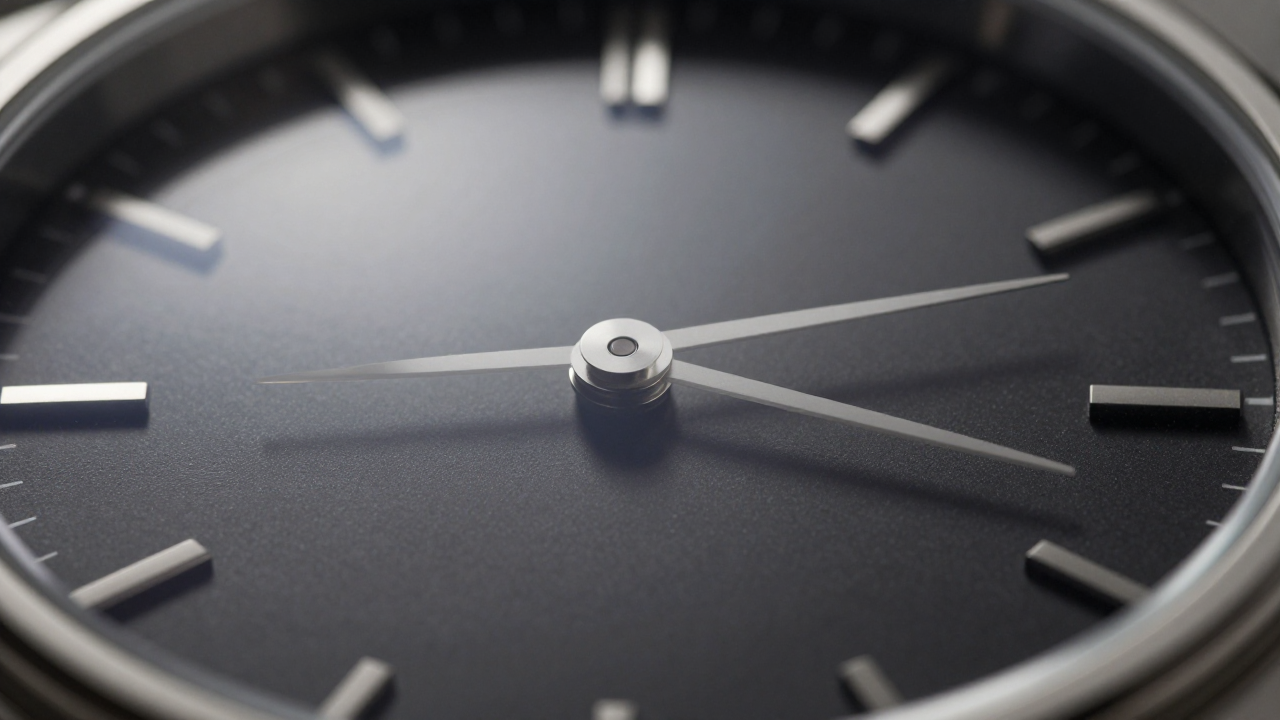
Buyers should judge a sapphire watch crystal on four things: verified surface hardness, anti-reflective coating quality, dimensional fit to the case, and traceable material origin.…
Price follows those four variables. It never leads them, and a $6 crystal that fits the case beats a $40 crystal that doesn't.
What Matters Most When You Buy a Sapphire Watch Crystal
That's the whole game in five lines. Everything below is how it gets applied on an actual inspection bench. We've been checking sapphire watch glass since Jadezone Optical started production in 2010, and a typical year still sees us reject 3% to 5% of incoming lots — almost never for the reason the supplier expects.
Why sapphire at all? Mineral glass sits at Mohs 5 to 5.5, acrylic around 2 to 3, and synthetic sapphire at Mohs 9. A sapphire watch crystal shrugs off desk edges and doorframes for a decade; mineral shows hairlines in 6 to 9 months of daily wear. Citizen's 2024 Tsuno chronograph relaunch ships with spherical mineral glass rather than sapphire, which says plenty about where the industry draws the price line. At roughly $250 retail, you get mineral.
The Four Dimensions We Score Every Batch On
We score sapphire watch crystal batches on four dimensions before price enters the conversation: surface hardness and edge integrity, optical performance including the AR coat, dimensional fit to the case, and material traceability. A lot that fails any one of them doesn't ship. Not negotiable, not discountable.
Scratch resistance and edge integrity
Mohs 9 is a scratch number, not a toughness number. Synthetic sapphire measures around 2,000 kgf/mm² on the Knoop scale under ASTM C1326 conventions, and its fracture toughness lands near 2 MPa·m^0.5. Hard and brittle. That combination is why we inspect edges at 10x magnification instead of admiring the face.
A 0.15 mm chip on a chamfer will propagate into a full crack the first time the watch clips a door frame. Suppliers who polish the face to a mirror and skip the edge break are the ones whose crystals come back on RMA.
Optical performance and the AR coating
Bare synthetic sapphire transmits about 85% of visible light. Soda-lime mineral glass transmits closer to 91% at the same thickness. Read that again, because it's the fact most buyers get wrong: uncoated sapphire is dimmer than cheap mineral. You almost never see it bare, since finished parts carry a coating.
Double-sided anti-reflective coatings push sapphire past 98% transmittance and kill the milky reflection that flattens a dial. Coating process matters more than the substrate. E-beam ion-assisted deposition holds up to MIL-C-48497A abrasion and humidity testing noticeably better than plain e-beam deposition, and magnetron-sputtered stacks hold up better still. We ran 200 rubs with a lint-free cloth and IPA across a 2023 lot of budget coated crystals; two of five samples went visibly cloudy. Same sapphire, different coater.
Dimensional fit and geometry
Get the diameter tolerance in writing before you approve a sample. Aftermarket sapphire typically runs ±0.02 mm; OE-grade runs ±0.01 mm. On a press fit with 0.05 to 0.10 mm of interference, an extra 0.1 mm on the diameter is the difference between a seated crystal and a spidered case lip.
Geometry is the other half. Flat, single-dome, double-dome, box-dome, and top-hat profiles change leg height and gasket compression. Put a double-dome crystal on a case designed for flat glass and it sits proud, catches every overhead light, and leaks once the gasket runs out of travel.
Traceability and the real price floor
Sapphire blanks come from a short list of growers: Monocrystal, Rubicon Technology, Saint-Gobain, Kyocera, plus a few Chinese producers running Kyropoulos furnaces. Below roughly $4 to $5 per piece for a 1.0 mm flat round at 1,000 units, someone is either losing money or selling you coated mineral. There's no third option.
What $6, $15, $35, and $80 Actually Buy You
Unit pricing on sapphire watch crystals tracks three variables: blank thickness, coating stack, and dimensional tolerance. Brand name on the box is worth almost nothing.
The jump from entry to mid tier buys you the coating, not the sapphire. That's the largest single quality gap on the table, and it's the one buyers most often skip past because the spec sheet says "sapphire" on both rows.
What Salespeople Won't Tell You About Sapphire Watch Crystals
Two things. Sapphire-coated mineral glass exists and gets invoiced as sapphire. And the coating on the underside of the crystal is where suppliers quietly shave cost, because you can't see it from the dial side.
In November 2022, a microbrand owner in Milwaukee placed a 3,000-piece order at $11.80 a unit. Incoming inspection told the story in nine minutes: 88% transmittance, refractive index of 1.52 instead of 1.76, and a tungsten carbide pick scratched the surface at Mohs 6. Coated mineral. The supplier's defense was that the paperwork said "sapphire coating," and technically they weren't lying. That buyer ate $35,400 plus a recall.
The second hidden parameter is blank thickness. A 1.5 mm crystal and a 1.2 mm crystal fit the same case opening and pass the same dimensional check. The thinner blank costs the factory about 15% less and takes roughly 40% less impact energy before it shatters. Nobody volunteers which one you got. Ask for the specified thickness on the PO, then measure it with a caliper at three points.
How Do You Tell a Real Sapphire Watch Crystal From a Coated One?
Four shop-floor tests separate real sapphire from coated mineral: refractive index, thermal response, birefringence, and a Mohs 6 scratch attempt. All four run in under 10 minutes with a refractometer, an ice cube, printed text, and a carbide scribe.
1. Refractive index. Sapphire reads 1.76 to 1.77; mineral glass reads 1.52. This is the single most reliable test and the one no substitution survives.
2. Thermal response. Sapphire conducts heat at 27 to 35 W/m·K, roughly 30 times soda-lime glass. An ice cube melts visibly faster on sapphire, and a warm fingertip clears fog from sapphire in a few seconds.
3. Birefringence. Lay the crystal over printed text and rotate it. Sapphire is birefringent, so a faint double image appears on one axis. Glass shows none.
4. Mohs 6 scratch. A carbide scribe leaves a mark on mineral and nothing on sapphire. Do this on a reject sample, never on a finished good.
Run test one and you're done. Run all four and you have documentation.
Picking Your Tier
Choose the entry or mid tier if you're building a sub-$300 field watch or a fashion line, your customers replace glass on a schedule anyway, and scratch resistance matters more than optical purity. Stick to the $9 to $22 band so you at least get a real double-sided coating, and budget for incoming inspection on the first two lots.
Choose the upper-mid or OE-spec tier if you're shipping above $500 retail, if your dial has polished indices and applied markers that need 98% transmittance to read properly, or if a returned watch costs you more than $60 in handling. At that price point the blank certificate and the per-lot coating report are worth the markup. They're also the only paper trail that holds up when a customer disputes a warranty claim.
Frequently Asked Questions
What is a sapphire watch crystal made of?
Synthetic sapphire, produced by melting and crystallizing aluminum oxide (Al2O3) in a furnace. It shares the same crystal structure and Mohs 9 hardness as natural sapphire but is grown in labs for optical uniformity. Lab-grown material is standard across the watch industry; natural sapphire is never used in watch crystals.
Why do some sapphire crystals look clearer than others?
Anti-reflective coating, not the sapphire itself. Uncoated sapphire transmits about 85% of visible light, while double-sided ion-assisted deposition or sputtered AR pushes it past 98%. Two crystals with identical blanks can differ by 13 percentage points of light transmission and look completely different on a dial.
How much should I pay for a sapphire watch crystal?
Expect $4 to $8 per piece at 1,000 units for entry-level flat crystals, $9 to $22 for double-dome with double-sided AR, and $50 or more for OE-grade with verified blank origin and per-lot coating reports. Anything under $4 usually means coated mineral glass.
How long does a sapphire watch crystal last?
The sapphire itself lasts decades because only diamond and cubic zirconia scratch it. The weak point is the anti-reflective coating, which typically degrades after 3 to 7 years of daily wear depending on the deposition process. Coating failure, not sapphire failure, drives most crystal replacements.
Can a sapphire watch crystal shatter?
Yes. Sapphire has a fracture toughness near 2 MPa·m^0.5, so it chips and cracks under sharp impact even though it resists scratching. A 1.5 mm blank absorbs roughly 40% more impact energy than a 1.2 mm blank, which is why thickness specifications matter as much as the material name.