
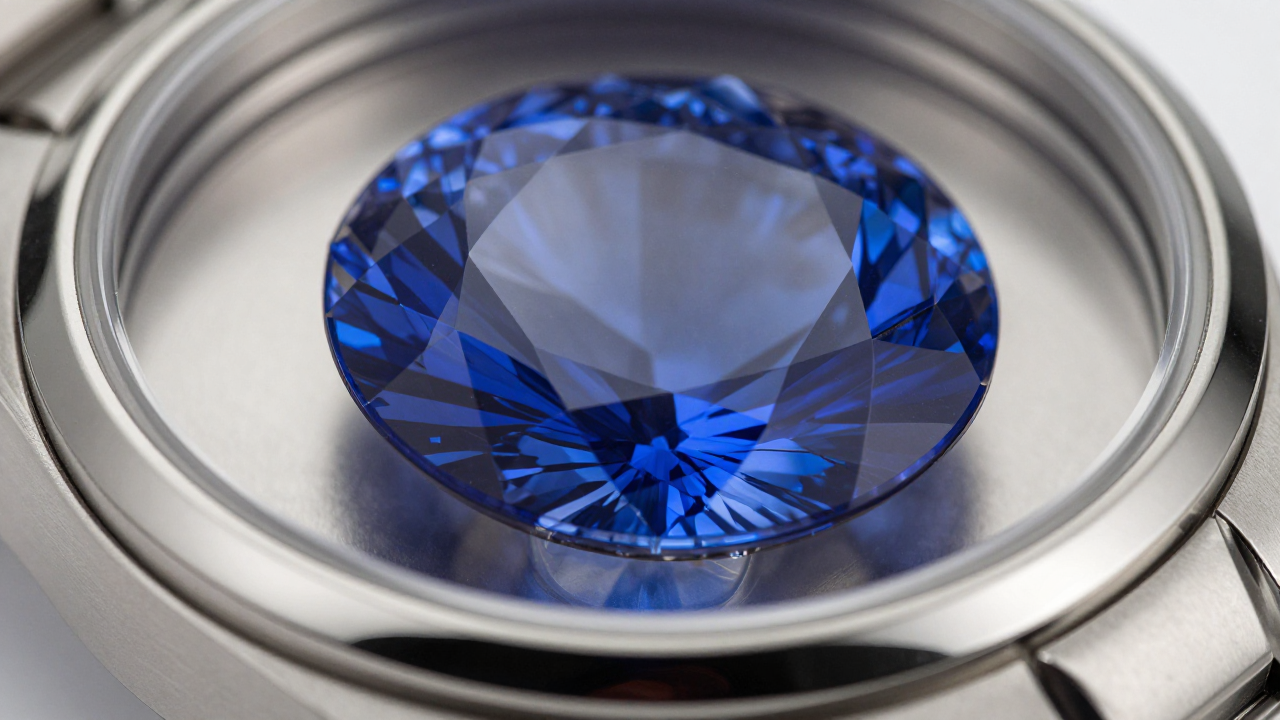
A sapphire watch crystal runs $100 to $500 installed at a US independent watchmaker in 2026, and the realistic payback window is 2 to 3 years if you keep the watch.…
Spend under $150 and you are buying flat, uncoated glass. Spend over $400 and you are mostly paying for a case that has to come apart.
That range is wide because almost nobody quotes the whole job. They quote the part. The rest of this is about the rest of the invoice.
What a Sapphire Watch Crystal Actually Costs in 2026
A sapphire watch crystal costs $38 to $290 as a bare part in 2026, and $100 to $500 once it is installed and pressure-tested. The variable is not the material. Synthetic sapphire boule pricing has been flat for three years. The variable is geometry, coating, and how much disassembly your case demands.Here is what the market actually clears at, based on quote sheets we see from service shops and micro-brands:
Two line items most buyers never see coming. First, import duty: sapphire watch glasses clear US customs under HTS 7015.90, and China-origin shipments have carried a 25% Section 301 surcharge since 2018. A $90 crystal from Shenzhen lands at $112.50 before freight. Second, the AR coating decision. Single-sided anti-reflective coating on the inside surface adds $12–$25 and is worth every cent. Coating on the *outside* is a different animal, and I will get to why that is the single most mispriced feature in this category.
The Costs You See and the Costs That Eat You
Explicit cost is the part plus the labor line. Hidden cost is gasket, pressure test, scrap, freight, and the hours your watch sits in a drawer. Across the jobs we supplied tooling and glass for in 2025, hidden costs averaged 34% of the final invoice. Budget for two-thirds of the sticker price and you will be short.The explicit stack is straightforward:
The hidden stack is where quotes break:
Press-fit scrap. In February 2024, a micro-brand in Los Angeles ordered 800 double-domed crystals for a dive watch line and specified 0.06mm of interference fit — a number they carried over from a flat crystal program. Edge-chip rate during press-fitting hit 6.4%. Fifty-one units died on the bench at $54 each, about $2,754 in glass, before you count the assembly line sitting idle. The correct figure for a 1.4mm domed crystal in a 316L case is 0.03mm to 0.04mm. Small number, expensive lesson. Second installs. When a crystal arrives 0.1mm off on diameter — and roughly one in twelve first-time orders does — you pay bench labor twice. That is $180 to $240 in labor for a $90 part. Downtime as a real cost. For a collector, downtime is annoyance. For a dealer with a watch in inventory, it is carrying cost. A $3,200 piece sitting at a service center for five weeks at a typical 8% annual inventory carrying rate burns about $24. Not fatal. Multiply it by forty pieces and it starts to matter. Outer AR coating wear. Here is the uncomfortable part. Exterior anti-reflective coating on a sapphire watch crystal degrades under daily desk wear in 18 to 24 months — you get fine hairlines in the coating layer, and the crystal never looks clean again. It cannot be polished off without a full re-coat. Outer AR is a wear item marketed as a feature, and it is the reason I tell most buyers to insist on inner-surface coating only.Running the ROI Numbers Without Fooling Yourself
ROI on a sapphire watch crystal = (resale value gained + replacement costs avoided − total cost of ownership) ÷ total cost of ownership × 100. Everything hinges on whether you actually sell, and whether you would genuinely have replaced the old crystal.Worked example, real numbers from a client job in October 2025:
A collector in Austin bought a 1998 dive watch for $2,450 with a badly scratched mineral crystal. Total cost of ownership for the swap:
Benefits over a five-year hold:
ROI = ($285 + $186 − $410) ÷ $410 × 100 = 14.9%
Five years, fifteen percent, on a discretionary upgrade. That is a decent return and a terrible get-rich plan. Which is exactly the point: this is a preservation decision that happens to pay, not an investment.
Now the part people miss in the math. The 15% only exists if you sell inside the window where the sapphire is still pristine. Hold eight years, take two crown-deep knocks, and the resale uplift compresses to maybe $140. Your ROI drops to single digits. The payback period is not a property of the crystal. It is a property of your holding period.
Where Almost Everyone Gets the Math Wrong
The biggest error is benchmarking against doing nothing instead of against the correct alternative. Doing nothing is not free — a mineral crystal at 5.5 Mohs on the Mohs scale picks up permanent scratches within 18 months of normal wear and needs replacement every three to five years at $60–$120 installed. Run that over six years and you are at $150 to $240 anyway. Your true incremental cost for sapphire is the difference, not the full invoice. Nobody's spreadsheet shows this line.Three more traps, in order of how much money they cost:
Double-counting the resale uplift. A dealer asked me in June 2025 why his ROI model showed 31% on a batch of twelve watches. He had booked the resale gain as an asset while also depreciating the crystal as a consumable. Pick one. Assuming hardness 9 means scratch-proof. Sapphire is 9 on Mohs, diamond is 10. A sapphire watch crystal will not scratch on a doorframe. It will absolutely chip on a granite countertop edge, and a chipped domed crystal cannot be polished back — it gets replaced, full cost, no credit. Ignoring thickness. A 1.0mm flat crystal and a 2.2mm domed crystal are not interchangeable in a thin dress watch. We have seen a 1.1mm crystal stack push a hand set into contact with the underside of the glass on a slim automatic. That repair is not $410. That repair is a new hand set and a very unhappy customer.(One caveat on all of the above: labor rates are national averages. Manhattan and Beverly Hills independents charge 40–60% more, and that pushes payback from 2–3 years toward 4.)
Is a Sapphire Watch Crystal Worth It on a Sub-$500 Watch?
No — below roughly $400 in watch value, or on any piece where originality drives the price, sapphire is the wrong call. The upgrade costs 25% to 100% of the watch and the resale uplift evaporates because the buyer pool for a $300 watch does not price crystals.The hard boundary conditions, from jobs we should have talked people out of:
Realistic alternatives: mineral glass with an inner AR coat at $55–$90 installed is the sane choice for sub-$500 pieces, and hardened mineral (sometimes sold as K1 or "glass hardened") sits around 6.5 on Mohs at $40–$80. It is not sapphire, but it is three times harder than standard mineral and priced where the math works.
The one thing I would tell any decision-maker: get the landed cost, the gasket, the pressure test, and the second-install risk onto one line before you approve the spend. The material has been solved for a decade. The accounting has not.
Frequently Asked Questions
How much does a sapphire watch crystal replacement cost in the US?
A typical sapphire watch crystal replacement in the US costs $100 to $500 installed in 2026, including the part, bench labor, case gasket, and pressure test. Flat uncoated crystals sit near the bottom of that range; double-domed crystals with inner anti-reflective coating sit near the top.
How long does a sapphire watch crystal actually last?
A sapphire watch crystal lasts 10 to 20 years under normal wear because sapphire rates 9 on the Mohs hardness scale. Chipping, not scratching, ends its life. Exterior anti-reflective coatings degrade in 18 to 24 months, so specify inner-surface coating only if you want the clarity to hold up.
What is the ROI of upgrading to a sapphire watch crystal?
ROI typically lands between 10% and 18% over a five-year hold, driven by resale uplift of 5% to 15% plus avoided mineral crystal replacements. The return only materializes if you sell while the crystal is still unmarked. Hold longer and take impact damage, and ROI compresses toward zero.
Is sapphire crystal worth it on a $300 watch?
No. On a $300 watch, a sapphire watch crystal swap costs 30% to 60% of the watch's total value and buyers at that price point do not pay for the upgrade. Hardened mineral glass at 6.5 Mohs, installed for $40 to $80, delivers most of the durability for a fraction of the outlay.