
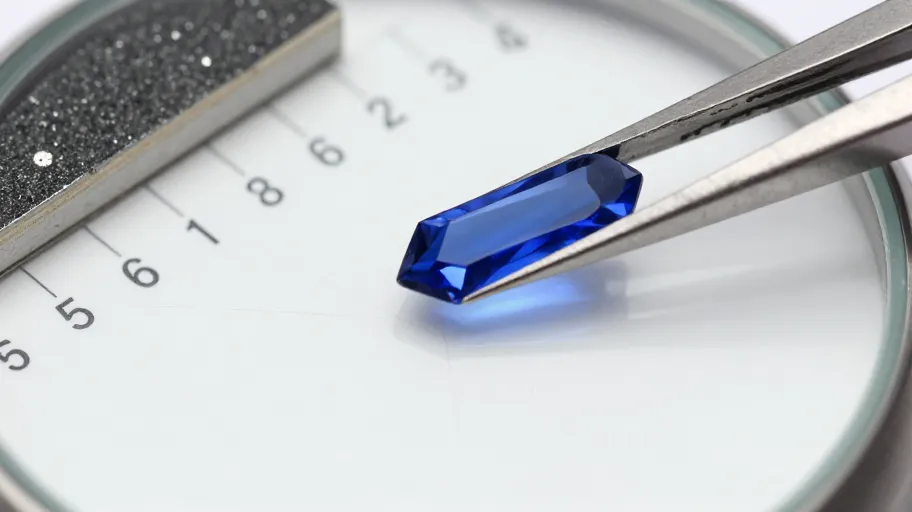
No — ordinary steel cannot scratch genuine sapphire glass under normal contact. Sapphire (synthetic corundum) sits near the top of the Mohs scale at 9, while hardened steels fall between roughly 5 and 8 depending on alloy and heat treatment. Only harder materials — such as diamond, silicon carbide or certain ceramics — scratch sapphire in practical use. What a buyer must verify is that the delivered crystal is genuinely sapphire and that its coatings and edges are specified correctly.
The physics, in buyer terms
Two hardness scales matter when you evaluate a scratch-resistance claim.
Mohs scale ranks materials by which one scratches another. Sapphire, as crystalline aluminium oxide (corundum), ranks 9. Window glass ranks around 5.5. Steel pocket-knife blades sit roughly between 5.5 and 6.5, and hardened tool steels can reach higher values. On this ordinal scale, a material cannot scratch a harder material — the softer point deforms first.
Vickers hardness (HV) gives a quantitative measure using a diamond indenter. Sapphire measures far above steel grades on this scale, which is why sapphire survives daily contact that would scuff a mineral glass or acrylic crystal. For sourcing purposes, the important point is not the exact figure but the ranking: sapphire and steel do not sit close together, so the scratch-resistance margin is wide.
Two practical caveats complete the picture. First, hardness is about scratching, not shattering — sapphire is brittle relative to steel, and impact performance depends on thickness, geometry and mounting design. Second, surface coatings can be softer than the sapphire beneath them, so a "scratch" on a delivered watch may be coating damage rather than sapphire damage. Both caveats belong in your specification and inspection documents, not just in a technical footnote.
The Hardness-to-Contact framework
When a brand or QC team reports a scratched "sapphire" crystal, one of four causes applies. The Hardness-to-Contact framework turns each cause into a specific verification step:
- Material authenticity. The part may not be sapphire at all. Glass or hardened-glass substitutes can look identical and scratch against steel. Verify with a hardness test or an independent lab check on random samples.
- Coating damage. An anti-reflective (AR) or decorative coating softer than steel can mark even though the sapphire beneath is intact. Specify coating type, coating location (one side or both) and how coating marks are judged in inspection.
- Contaminant contact. Dust containing quartz or harder particles can abrade any surface during grinding, polishing or abrasive cleaning. Ask how components are handled between polishing and packing, and inspect as-delivered parts before any wiping.
- Edge and mounting stress. Chips and edge damage from bezel insertion or press-fitting read as "scratches" in consumer complaints. Agree edge-finish criteria and mounting method with your movement/case team before approval.
The framework's value is that it converts a vague durability debate into four documentable questions — each with an owner, a test method and a pass/fail answer.
Decision table: contact scenario and buyer action
| Contact scenario | Scratch risk to sapphire body | Scratch risk to coatings | Buyer action before approval |
|---|---|---|---|
| Everyday contact with steel objects (keys, coins, tools) | Very low — steel is softer | Possible, depending on coating | Specify coating hardness or leave key surfaces uncoated by design |
| Abrasive dust and grinding environments | Low to moderate — harder particles can abrade | Elevated | Require packing and handling that avoids particle exposure; inspect as-delivered |
| Sharp hardened carbide or ceramic contact | Moderate — near or above sapphire hardness | Elevated | Set cosmetic acceptance limits for extreme-contact marks |
| Bending, twisting or impact loads | Not scratching — fracture risk | Possible | Review thickness, geometry and mounting specification with the supplier |
| Steel tweezers and tools during assembly | Very low if tips are clean | Possible on coated faces | Write an assembly handling note into your work instructions |
Sample approval checklist
- Written material declaration: synthetic sapphire (single-crystal corundum), with grade and orientation stated
- Hardness or material verification method agreed (in-house test or third-party confirmation)
- Coating specification: type, side(s) applied, and how coating marks are classified in inspection
- Surface finish specification: polish grade and acceptance method for both faces
- Edge finish and chamfer criteria documented
- Dimensional measurement plan agreed — ask the supplier how dimensions are measured and reported
- Cosmetic inspection criteria: lighting, magnification and acceptable-viewing-distance definitions
- Random-sample inspection procedure for production lots, with sampling rules you approve
- Marking and traceability of approved golden samples
- A documented change-notification requirement if material, coating or process changes after approval
Approval questions to put to your supplier
Bring these to the sample-review stage. The answers — and the supplier's willingness to put them in writing — are themselves a qualification signal.
- What material declaration and traceability documentation accompanies each production lot?
- How do you verify that incoming and outgoing parts are genuine single-crystal sapphire?
- What coating options do you offer, on which faces, and how should we inspect for coating marks?
- What is your documented process for handling parts between polishing and packing?
- How are dimensions measured and reported, and what documentation ships with the parts?
- What cosmetic inspection standard do you apply, and can we align our acceptance criteria before production?
- How are golden samples retained, and what is the change-notification process for material or process changes?
- What is your current policy on samples and pilot lots for new projects? Confirm the current policy directly.
FAQs
Can a steel knife scratch a sapphire watch crystal? No, not the sapphire itself. Steel is well below sapphire on both the Mohs and Vickers scales. If a mark appears after contact with steel, investigate coating damage, abrasive contamination or material authenticity using the Hardness-to-Contact framework.
Why does my "sapphire" crystal have scratches? Three documentable causes: the part may not be genuine sapphire; a softer coating may be marked; or harder particles (quartz dust, carbide debris) abraded the surface. Each cause has a distinct verification step, so classify before accepting or rejecting a lot.
Does an anti-reflective coating reduce scratch resistance? A coating can be softer than the sapphire underneath, so coated surfaces can show marks that the bare crystal would resist. Decide coating placement deliberately — for example, coating the inner face only — and write coating inspection criteria into your approval documents.
How do we confirm a delivered crystal is really sapphire? Agree a verification method in advance: a hardness-based test, material declaration with traceability, or third-party confirmation on random samples. Fix the method in your inspection plan rather than debating it after a dispute.
Is sapphire the right choice for every watch project? Sapphire offers strong scratch resistance but behaves differently from glass or acrylic under impact, and project economics differ by case design and target market. Compare material options against your case geometry, mounting method and warranty expectations before committing.
Next step
获取采购 Brief — request the sourcing brief to structure your next custom sapphire crystal project, from material declaration to golden-sample approval.
If you are not ready for that conversation, download the one-page sample approval checklist above and use it to audit your current specification documents first.