
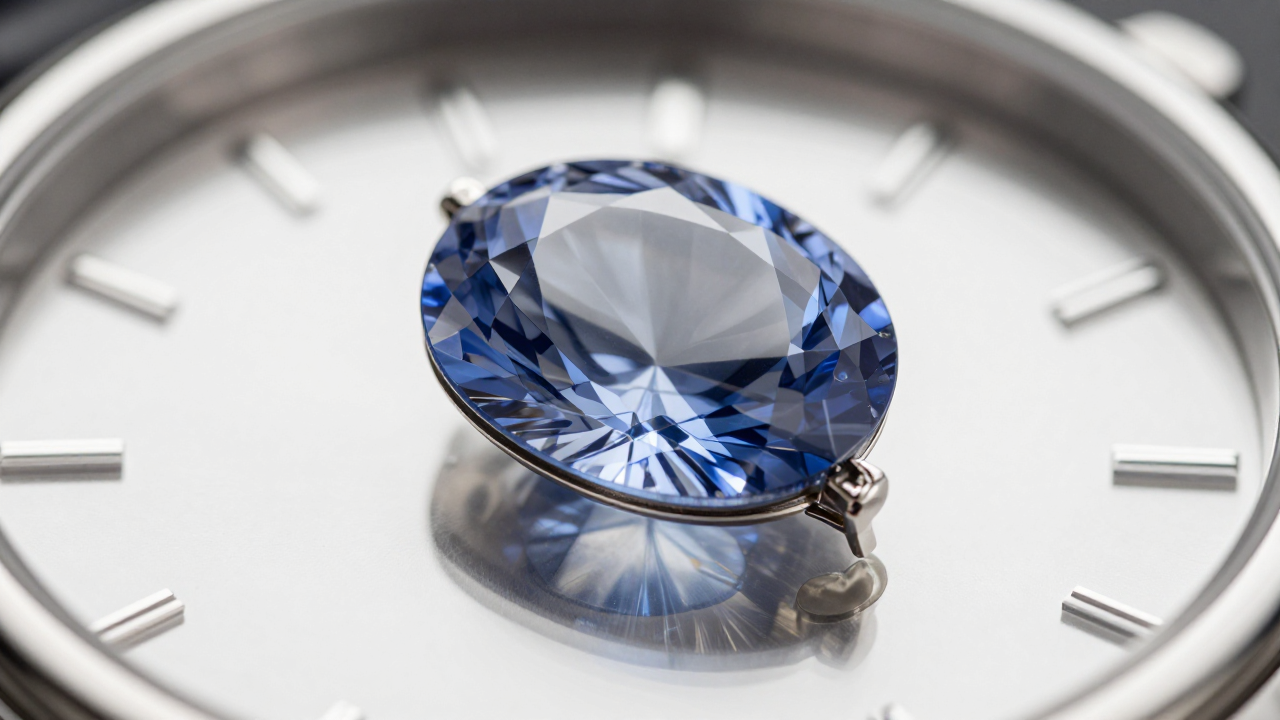
A sapphire watch crystal is a watch lens made from synthetic crystalline aluminum oxide (Al2O3), rated 9 on the Mohs scale.…
This material is crucial for 2026 buyers because it resists daily scratches better than mineral glass or acrylic and maintains optical clarity longer.
What Is a Sapphire Watch Crystal and Why Does It Matter for 2026 Buyers?
Sapphire’s hardness comes from crystalline aluminum oxide. Industry spec sheets rate sapphire at 9 on the Mohs scale, while mineral glass is 5–5.5, and acrylic is 2–3. This difference explains why a mineral-glass field watch can show hairline scratches after one ski season in Colorado, while a sapphire crystal on the same wrist often looks clean after three years. Sapphire is not shatterproof. A hard impact can chip the edge, and a chipped edge can spread into a crack.
Anti-reflective coating is where the third myth is debunked. Single-side AR can reduce surface reflection from about 8% to 1–2%; double-side AR can go below 1%, but the outer coating is softer than sapphire. A scuffed AR coat looks like a scratched crystal even when the sapphire body is intact. Under US Federal Trade Commission advertising rules, “scratch-resistant” is defensible; “scratchproof” invites a challenge.
In August 2022, a Chicago watchmaker sent 48 aftermarket sapphire crystals to Jadezone Optical (HK) Ltd’s Shenzhen lab for incoming inspection. Eleven pieces had visible surface marks after ultrasonic cleaning. The marks traced to storage face-down on a grit-covered bench, not to daily wear. Handling caused the marks; hardness had nothing to do with the marks. The fix was plain: keep crystals in lint-free trays, edge-up, and inspect under 10x magnification before casing.
How Do You Choose a Sapphire Watch Crystal Without Overpaying?
Select a sapphire watch crystal by matching thickness, dome shape, coating, and gasket specifications to the watch case, rather than by chasing the lowest price. In 2025, US independent watchmakers quoted $120–$280 for standard replacements; a $45 crystal often becomes a $300 problem when the bezel gasket fails.
The buying decision is a stack-height decision before a material decision. A 42 mm dive watch with a 1.5 mm domed sapphire and a 0.2 mm step seal is not interchangeable with a 1.0 mm flat lens, even if both are sold as “sapphire.” Edge polish also matters. A rough edge concentrates stress and chips faster than a chamfered edge.
Scenario: In February 2024, a Portland, Oregon microbrand ordered 600 flat sapphire crystals at 1.0 mm to hit a $399 retail target. What broke: The first 120 watches passed bench checks, but field testers reported fogging after swimming; the thinner lens changed case stack height and compressed the caseback gasket. Avoid: Prototype the full case stack, pressure-test 30 pieces at 10 ATM, and keep a 0.15–0.25 mm gasket margin.We produced the second run at our Shenzhen plant with a 1.5 mm double-domed lens and a revised gasket seat. The fogging claims stopped. The lesson cost about $18,000 in scrapped parts and freight, which is cheap compared with a warranty campaign.
In October 2024, a Tampa, Florida mall kiosk replaced a sapphire crystal on a $650 automatic dive watch without pressure testing. The watch fogged in a pool nine days later; the repair bill reached $410 because the movement needed drying and rust removal. The crystal survived; the missing pressure test caused the fogging. Ask for a pressure test printout, not just a clean look.
Why Do Some Watches Use Sapphire Crystals While Others Don’t?
Watch brands choose sapphire when the retail price supports a $25–$90 factory crystal cost and the design can tolerate a harder, more brittle lens. Brands opt for mineral glass or acrylic when target pricing sits under $200, impact risk is high, or the watch needs a domed profile that sapphire makes expensive to produce.
Factory crystal cost drives the choice more than marketing copy. In 2025, standard 1.2–1.5 mm sapphire blanks ran about $6–$18 at volume before coating and edge polishing. Finished, inspected sapphire assemblies for a US microbrand often landed at $25–$90 depending on dome, AR coating, and packaging. Acrylic remains attractive for vintage reissues because it can be polished with PolyWatch and keeps the original domed profile.
Scenario: In September 2021, a Texas promotional watch company moved a $129 field watch from mineral glass to a 2.2 mm domed sapphire. What broke: Return rate rose from 1.8% to 4.6% in six months; most returns were edge chips from dropped watches, not face scratches. Avoid: Recess the crystal 0.4 mm below the bezel, chamfer the edge, or keep mineral glass on sub-$150 impact-prone models. The design created the chip risk.Apple’s Watch Ultra 4 pairs a titanium case with sapphire crystal; the raised bezel protects the crystal edge, and that case design is why the material works on a sports watch. Remove the bezel protection, and the same sapphire becomes a chip-prone part on a gym floor.
Frequently Asked Questions
These are the questions US service partners and watch brand buyers ask most often about sapphire watch crystals. The answers use 2024–2025 repair quotes, standard material specs, and field data from aftermarket replacements; each answer stands alone so a buyer can cite the number directly.
How Much Does It Cost to Replace a Sapphire Watch Crystal in the US?
In the US in 2025, an independent watchmaker typically charges $120–$280 to replace a standard sapphire watch crystal before gasket and labor; authorized service centers for Swiss brands often quote $300–$600. AR-coated or branded crystals sit at the high end.
How to Clean and Maintain a Sapphire Watch Crystal?
Clean a sapphire watch crystal with lukewarm water, a drop of dish soap, and a microfiber cloth; avoid paper towels because wood pulp can leave fine haze on anti-reflective coating. Rinse and dry the crystal every two weeks in humid US climates, and never use acetone near the gasket.
What Should You Do If a Sapphire Watch Crystal Gets Scratched or Chipped?
A scratched sapphire watch crystal usually has a damaged anti-reflective coating, not a scratched sapphire body; polish the coating only if the watchmaker confirms the coating type. A chipped edge needs replacement because impact cracks can spread. Stop swimming immediately if a chip reaches the gasket.
When Should You Upgrade to a Sapphire Crystal?
Upgrade to a sapphire watch crystal when the existing mineral glass shows two or more visible scratches within 12 months, or when the watch case has a raised bezel that protects the edge. Skip the upgrade on vintage acrylic domes where the original profile matters to resale.