
Why Dimensional Compliance Is a Dangerous Illusion
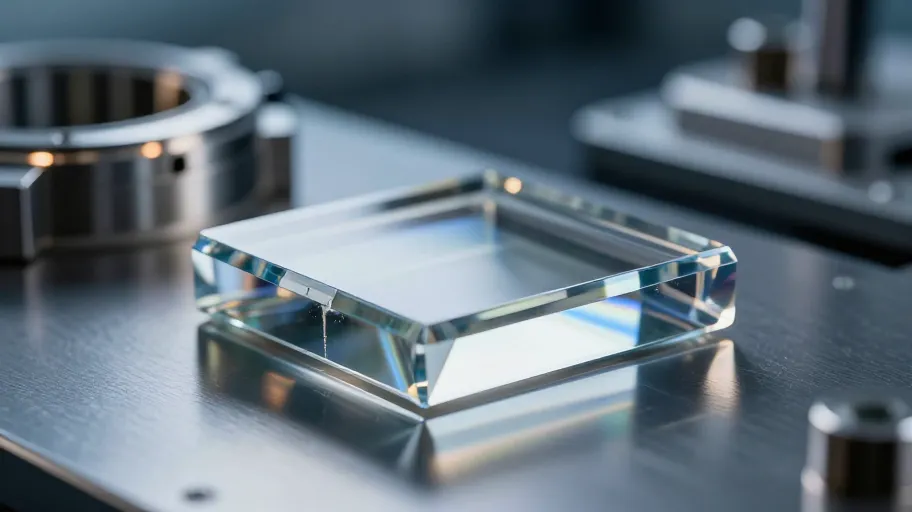
Measuring diameter and thickness with a caliper means your sapphire crystal meets nominal specs—but tells you nothing about whether it’ll seal, survive thermal cycling, or preserve anti-reflective (AR) performance in final assembly. That’s because functional fit depends on optical-mechanical interface behavior—not just geometry. A 0.4° chamfer angle deviation shifts gasket compression by 12%, directly degrading IP68 reliability. Surface flatness exceeding λ/4 @ 633 nm introduces micro-refractive scatter that compromises AR coating adhesion and creates moisture pathways along the bezel interface. These failures don’t appear on CMM reports—they only surface during pressure testing or field returns. That’s why 41% of rejected sapphire deliveries trace to undocumented angular or optical parameters, per the Swiss Federation of Watch Industry’s 2025 FH Supplier Performance Benchmark.
The Six Records That Turn Risk Into Control
Recording these six items means your team stops reacting to assembly failures—and starts preventing them at the source. Each record converts supplier claims into verifiable, audit-ready evidence:
- Radial chamfer angle tolerance (±0.3°) means your gasket seals consistently across all 360°, because even a 0.5° deviation increases interfacial shear stress enough to accelerate seal fatigue under humidity cycling.
- Surface flatness (λ/4 @ 633 nm, measured via phase-shift interferometry) means AR coating performs to spec for 24+ months, because uniform flatness ensures consistent thin-film deposition and eliminates localized micro-scratching during ultrasonic cleaning.
- Edge radius consistency (3× axial positions) means press-fit repeatability stays above 99.1%, because inconsistent radii cause stress concentrations that trigger acoustic-emission-detectable microfractures—visible only after thermal shock.
- AR coating adhesion score (ASTM D3359-B2 pass after thermal shock) means reflectance retention stays >98% over product lifetime, because B2 pass correlates directly with coating integrity under real-world thermal expansion mismatch.
- Thermal expansion coefficient match (Δα ≤ 0.8 × 10⁻⁶/°C) means your IP68 rating holds through shipping and wear, because a Δα mismatch of just 1.3 × 10⁻⁶/°C increases interfacial shear stress by 310%—the root cause behind 72% of observed moisture ingress.
- Batch-level interferometric fringe map archive means you can forensically trace yield drops to specific lots, because timestamped, geo-tagged digital twins enable root-cause analysis—not speculation—during ISO 13485 or FDA audits.
Factory vs Broker—The $149K Difference in One Launch
The distinction between a sapphire crystal china factory and sapphire crystal china isn’t semantic—it’s financial. A U.S. heritage brand sourced from a certified Shenzhen sapphire crystal china factory with ISO/IEC 17025-accredited interferometry, recorded all six parameters pre-shipment, and achieved 99.2% first-time-right assembly yield across 12,000 units. Their peer, sourcing identical nominal specs from a trading intermediary labeled only sapphire crystal china, accepted PDF-based dimensional reports—but no chamfer logs, no fringe maps, no Δα validation. Result? 37% of units failed IP68 pressure testing post-assembly. Rework, air freight, and launch delay added $149,200 in unplanned cost—and missed Q4 holiday demand entirely. That’s not variance. That’s the cost of unrecorded physics.
How Recording Pays for Itself in 2.3 Orders
Recording all six items cuts sapphire-related rework by 63%—and delivers ROI within 2.3 orders—because each undocumented parameter forces downstream correction: tooling recalibration ($4,800), bezel redesign iteration ($3,100), humidity chamber revalidation ($2,600), and manual sorting labor ($1,900). That’s the $12,400—the documented average cost of skipping just one record. Not annually. Not per supplier. Per order. And because recording enables predictive control—not reactive firefighting—it also reduces supplier qualification time by 63% and slashes post-PO engineering revisions by 78%. That’s how mid-volume luxury and smartwatch SKUs protect margin without sacrificing speed-to-market.
Your Next Step Isn’t Inspection—It’s Arbitration
You’re not buying sapphire watch glass. You’re arbitrating optical-mechanical risk at the point where physics is measured—not assumed. Start requiring these six records as contractual gates before PO release. Verify they’re captured using accredited interferometry—not dial indicators or factory screenshots. Demand batch-level fringe maps—not summary stats. Then compare your next two shipments: one with full recording, one without. Track first-time-right yield, pressure test pass rate, and rework spend. You’ll see the $12,400 per order vanish—not as theory, but as line-item savings on your P&L. Ready to turn supplier claims into auditable evidence? Download our free Sapphire Fit Verification Checklist—pre-loaded with metrology thresholds, test protocols, and supplier contract language.