
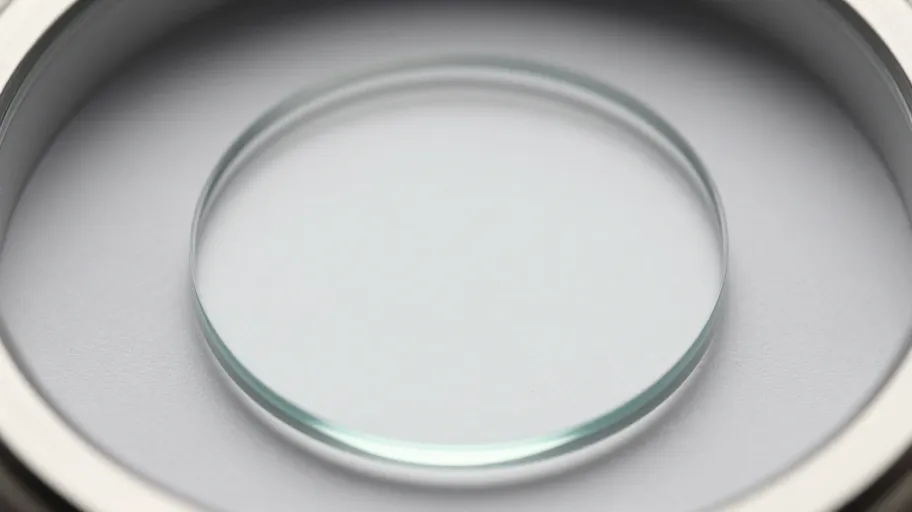
A sapphire crystal on a watch is a transparent cover made from synthetic sapphire — laboratory-grown crystalline aluminium oxide — shaped and polished to sit over the dial. For buyers, it is not one product but a specified component: substrate, geometry, coating and inspection criteria must each be defined, sampled and approved before production.
What a sapphire crystal actually is — and what you are actually buying
Synthetic sapphire is grown as a boule, sliced, ground, lapped and polished into a crystal blank. Unlike natural sapphire, it contains no gemstone value; it is an engineered material chosen for hardness and scratch resistance. But when you ask "what is a sapphire crystal on a watch?", the procurement answer goes further: you are buying a machined optical component with a defined form, finish and coating specification — and the quality of your program depends on how precisely that specification is written.
The buyer's job is not to evaluate the material in the abstract. It is to control four specification layers:
- Substrate — synthetic sapphire, with the growth method and blank quality confirmed with the supplier in writing.
- Geometry — shape (flat, domed, box-form), profile, and dimensional callouts on a controlled drawing.
- Surface enhancement — polish quality and any anti-reflective (AR) coating, including which faces are coated.
- Verification — inspection method, acceptance criteria and an approval gate before production.
The SPEC-A framework for sapphire crystal sourcing
Use SPEC-A — Substrate, Profile, Enhancement, Confirmation, Approval — to structure every enquiry:
| Stage | What you control | What to document |
|---|---|---|
| S — Substrate | Material identity and blank quality | Written confirmation of synthetic sapphire and blank grade from the supplier |
| P — Profile | Shape, thickness behaviour, edge detail | A numbered drawing; all tolerances agreed per project — do not assume a default |
| E — Enhancement | Polish and AR coating scope | Which side(s) are coated, tint expectations, adhesion and durability test criteria agreed in writing |
| C — Confirmation | Sample evaluation | Sample review against the drawing, with observed results recorded and deviations flagged |
| A — Approval | Production release | A signed or written approval referencing the approved sample and drawing revision |
The framework's value is that it converts a vague request ("sapphire crystal, AR coated, for a 40mm watch") into a documented, auditable specification — the difference between approving a component and hoping for one.
Supplier and specification decision table
| Evaluation axis | Weak response | Strong response |
|---|---|---|
| Material definition | "Sapphire glass" with no qualification | Written confirmation of synthetic sapphire composition and blank handling |
| Dimensional control | Verbal dimensions, no drawing | Numbered drawing with project-agreed tolerances and revision control |
| Coating scope | "AR coating" unspecified | Coated side(s), visual effect and test criteria stated in the quotation |
| Sample process | No defined sample loop | Sample stage with defined review criteria and documented feedback round |
| Inspection terms | "We check quality" | Named inspection method and acceptance criteria for polish, coating and dimensions |
| Change control | Silent on revisions | Drawing revisions and re-approval triggers documented |
This table is deliberately supplier-neutral: use it to compare any two quotations on equal footing, including JadeZone Sapphire against alternatives.
Samples and approval: questions to ask before any PO
AR coating is where most specification ambiguity hides. An "AR coated crystal" can mean coating on the inner face, both faces, or different layer stacks with different visual tints. Define it — and everything else — with these questions:
- Can you confirm in writing the current sample policy, including any fees, shipping responsibility and whether fees are credited toward orders? (Confirm current policy directly; do not rely on assumptions.)
- Which side or sides will receive AR coating, and what residual tint should we expect on the approved sample?
- What dimensional tolerances can you hold for this specific geometry, and how will they be reported on the sample?
- What inspection method and acceptance criteria apply to polish defects and coating adhesion?
- What is your process for drawing revisions between sample approval and production, and what re-approval is required?
- What information do you need from us to quote accurately — case drawing, crystal seat detail, gasket interface, target volume?
Every answer should land in writing and attach to the approved drawing revision. If an answer cannot be documented, treat it as unresolved.
Approval checklist (low-friction CTA)
Run this gate before releasing production:
- Material identity and blank grade confirmed in writing
- Numbered drawing issued with all tolerances agreed per project
- AR coating side(s), tint and test criteria defined in the quotation
- Physical sample received and reviewed against the drawing
- Deviations recorded and dispositioned (accept / rework / reject)
- Approval documented against a named drawing revision
- Change-control and re-approval triggers agreed
- Current sample, pricing and production policies confirmed directly with the supplier in writing
FAQ
Is a sapphire crystal the same as sapphire glass? Buyers should avoid the term "sapphire glass" in specifications. Confirm in writing that the component is synthetic sapphire (crystalline aluminium oxide), and have the supplier state the material identity on the drawing or quotation.
Does AR coating affect how I should evaluate samples? Yes. Coating side, residual tint and durability criteria must be defined before sampling, or sample review becomes subjective. Include coating acceptance criteria in the written specification.
How should I specify dimensions for a custom crystal? Through a numbered drawing covering form, thickness behaviour, edge detail and the case/gasket interface, with tolerances agreed per project with your supplier. Ask the supplier what it can verify and how each dimension will be inspected.
What should sample approval cover before production? Material confirmation, dimensional review against the drawing, coating evaluation, defect disposition and a written approval tied to a drawing revision. Any change after approval should trigger a defined re-approval step.
How do I compare sapphire crystal suppliers fairly? Use a fixed evaluation table — material definition, drawing control, coating scope, sample process, inspection terms, change control — and score every supplier against the same axes.
Get the sourcing brief. Download the JadeZone Sapphire sourcing brief to structure your next custom sapphire crystal enquiry — or start with the approval checklist above and bring it to your first supplier call.