
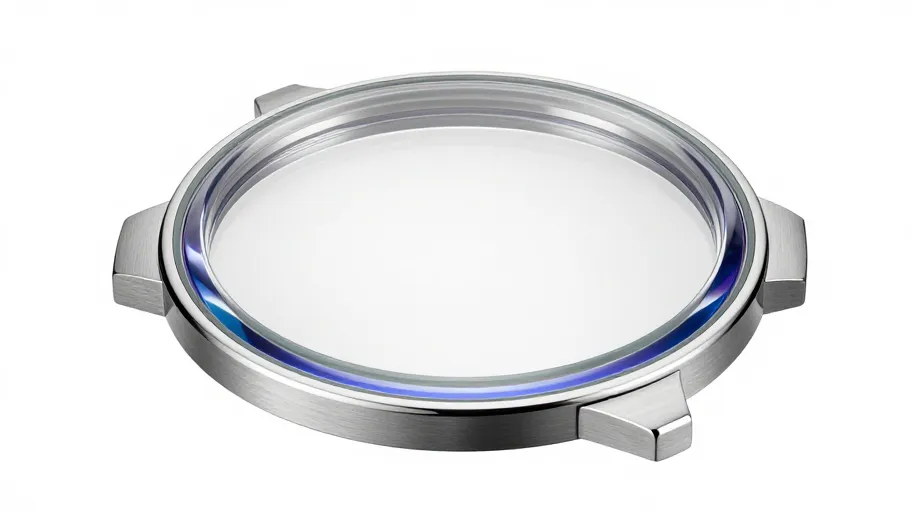
Sourcing a men custom sapphire watch crystal is less about choosing a material than about running a disciplined specification, sampling and approval process — the Spec–Sample–Approval path. Buyers who define drawing details, settle coating and edge-finish questions, and document acceptance criteria before production consistently avoid the rework, disputed samples and fit problems that stall custom crystal projects.
What "custom" actually means for a men's sapphire crystal
For a men's watch, the crystal is one of the most visible components and one of the least forgiving to get wrong. When we say a custom sapphire watch crystal, we mean a crystal manufactured to your drawing: dome profile, diameter and edge geometry, thickness, coating specification, and any printing or shaping features your design requires. Every one of those parameters is a decision you make with your supplier before a single sample exists.
That is why the first stage of the Spec–Sample–Approval path matters more than anything else in the project. A crystal that arrives beautifully polished but 0.2 mm out on your case seat, or with an edge that fights your gasket, is a specification failure, not a manufacturing failure — and it is a failure you can prevent on paper.
Stage 1 — Define the specification
Treat your crystal drawing as a contract. Before you request a quotation, settle the parameters in the table below with your internal team, then confirm with the supplier that they can quote against exactly what you have written.
| Specification parameter | What you must decide | Questions to put to the supplier |
|---|---|---|
| Dome profile | Flat, boxed, domed, or double-domed to match your case design | Can you manufacture this profile from my drawing? What drawing detail do you need to quote it? |
| Diameter and edge geometry | Outer diameter, edge angle, and whether the edge is stepped or flat | Which dimensions on my drawing are critical for case fit? How will you verify them? |
| Thickness | Driven by case design and water-resistance targets for the model | What thickness range suits this case seat? How is thickness inspected? |
| Coating | Single-side or double-side anti-reflective treatment, or none | What is your current coating specification and how is it documented? How should we validate the result on our side? |
| Edge and surface finish | Polishing standard on edges and faces | What finish can you commit to in writing? What inspection method supports it? |
| Printing or special features | Logo printing, laser marking, shaped or drilled features, if required | What artwork files do you need? How is printing positioned and verified? |
Two practical notes from the sourcing side. First, do not quote "sapphire crystal" as a line item — quote a drawing. Suppliers can only be held to what is dimensioned and annotated. Second, ask each supplier to confirm, in writing, which parameters they consider firm and which they consider indicative. This single question prevents most sample-round disputes.
Stage 2 — Verify through samples
Sampling is where a custom crystal project earns or loses your confidence. But a sample is only as useful as the questions you bring to it. Before you request a sample, write down what the sample must prove.
A structured sample review should verify:
- Fit. The crystal seats into your actual case — not a fixture, not a photograph. Trial-fit with your production gasket and case parts.
- Profile and dome accuracy. Compare against your drawing, using the same measurement method your supplier used. If you measure differently, agree on one method before the sample round.
- Coating behaviour. Inspect the anti-reflective treatment under the lighting conditions your customers will actually encounter — daylight, indoor lighting and flash photography all reveal different things.
- Edge quality. Check edge polish and any step or flange detail under magnification, because edge defects are invisible in product photography but visible on the wrist.
- Print registration, if applicable. Verify position, colour and durability requirements with your supplier's stated method.
Stage 3 — Approve against documented criteria
The approval stage is where careful buyers protect themselves. Approval should never be a nod and a signature; it should be a documented comparison between the sample, the drawing and agreed criteria.
Before you sign off a sample round, put these questions to the supplier and record the answers:
- Which drawing revision does this sample correspond to, and is that revision the one we will produce against?
- How were the critical dimensions verified, and can you provide the measurement record with the sample?
- What acceptance criteria apply to coating appearance, edge finish and surface quality — and who inspects against them?
- What happens if a production batch differs from the approved sample — what is the resolution process?
- What documentation accompanies production batches, so incoming inspection at our end checks the same things you checked?
Buyers who can answer these five questions in writing before production approval are, in our experience, the buyers who do not reopen tooling or renegotiate mid-project. Document, compare, approve — in that order.
How to compare suppliers fairly
If you are sourcing a men custom sapphire watch crystal from more than one supplier, standardise the enquiry. Send every supplier the identical drawing, identical coating specification and identical questions. Then compare on:
- Whether they quoted against your full specification or asked clarifying questions — the supplier who asks is the one who read the drawing.
- What each quotation treats as firm versus indicative.
- How each supplier proposes to verify the parameters that matter to your case design.
- The clarity of their sample and approval documentation.
A quotation that is lower because it excludes a coating step, omits an inspection record or assumes a different edge geometry is not comparable. The sourcing Brief behind this article is designed to help you structure exactly this comparison.
Frequently asked questions
What information does a supplier need to quote a custom men's sapphire crystal? At minimum: a dimensioned drawing with dome profile, outer diameter, edge geometry and thickness; the coating specification; any printing or special features; and your target case fit details. If you do not yet have a full drawing, provide the case seat dimensions and reference design, and confirm with the supplier what additional detail they need to quote.
How many sample rounds should I expect before production? There is no fixed number, and it depends on how complete your specification is at the start. A project with a fully dimensioned drawing and a settled coating spec may converge faster than one where the dome profile is still being evaluated. Ask each supplier how they structure sample rounds for a project like yours and confirm the current policy directly.
Can anti-reflective coating be applied on one side only? That depends on your design requirements and the supplier's current capability. State the requirement in your specification and ask the supplier to confirm what they can offer and how the result should be verified on both sides during inspection.
What should I check when the production batch arrives? Inspect against the same criteria you used at sample approval: fit into the case with the production gasket, dimensional verification using the agreed method, coating appearance under agreed lighting, and edge finish under magnification. Agree the incoming-inspection method with the supplier before production so both parties check the same things.
What if my case design changes after sample approval? Treat it as a new specification. Any change to case seat, gasket or dome interface means the drawing revision changes, and the approved sample no longer applies. Reconfirm fit with a revised sample rather than assuming the previous approval carries over — and confirm with the supplier how revision changes affect the project schedule.
Before you request your next quotation
Run through this checklist before sending any custom crystal enquiry:
- Drawing is dimensioned, revision-numbered and includes dome profile, diameter, edge geometry and thickness
- Coating specification is stated (side(s), or explicitly "none")
- Printing or special features are specified with artwork files attached
- Critical-to-fit dimensions are marked and an inspection method is agreed
- Sample review criteria are written down before the sample is requested
- Current sample policy, costs and schedule confirmed directly with the supplier
- The five approval questions above are answered in writing
Request the sourcing Brief. If you are preparing a men custom sapphire watch crystal project, request our sourcing Brief — a structured template covering the drawing elements, sample criteria and approval questions in this guide, ready to send to any supplier, including us. Use it to brief JadeZone Sapphire on your project, or simply to sharpen your enquiry.