
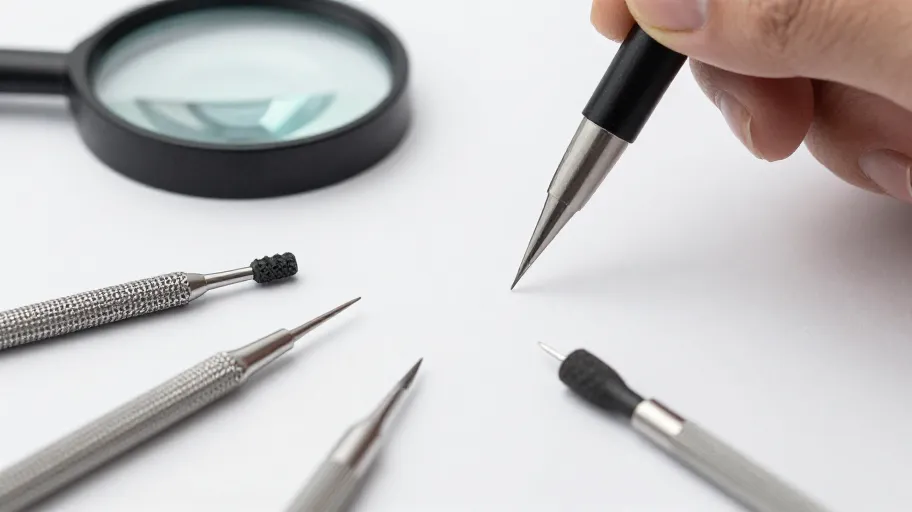
Sapphire crystal is an exceptionally hard watch material, so everyday contact with steel, glass or dust will not scratch an authentic, properly finished sapphire crystal — but the practical question for a buyer is not the claim itself; it is how you verify hardness, coating status and finish on your specific custom part before you approve it. This guide gives watch brands, sourcing managers and watchmakers a four-step Scratch-Verification Framework — Material, Test, Specification, Sample approval — plus the exact questions to put to a supplier.
Why "can you scratch sapphire crystal watch" is a sourcing question, not just a trivia question
Buyers rarely search this out of curiosity. The question surfaces during specification reviews, sample evaluations and customer-service planning: if a brand promises scratch resistance in marketing, that promise becomes a commercial commitment. A single unverified claim can create warranty disputes, returns and reputational cost.
The honest position for a sourcing adviser is this: sapphire (corundum) sits near the top of conventional hardness scales, which is why it is chosen for watch crystals and precision components. But hardness claims printed on a datasheet are not the same as verified performance on your part, with your edge geometry, your anti-reflective coating (if any), and your finishing. The difference between those two things is documentation — and documentation is something you request, review and approve.
The Scratch-Verification Framework
Use four steps to move from marketing claim to approved part:
1. Material. Confirm the crystal is manufactured from synthetic sapphire and ask the supplier how the material is identified and documented for your order. Do not accept "sapphire" as a label; ask what evidence accompanies it.
2. Test. Agree in advance what scratch or hardness verification will be performed, by whom, and what documentation you will receive. Ask what test methods the supplier can support for your project and what results can be shared as written records.
3. Specification. Translate the material decision into a written specification: crystal shape, thickness, edge treatment, coatings, and the acceptance criteria a sample must meet. A specification is what protects you; a conversation is not.
4. Sample approval. Evaluate physical samples against the written specification before production. Confirm in writing what the sample process involves for your project — including any fees, shipping arrangements and timelines — directly with the supplier, because these terms are project-specific and must be verified rather than assumed.
Decision table: contact materials and what to confirm
The table below reflects widely understood material characteristics; treat it as a starting point for your own verification, not as a substitute for supplier documentation.
| Contact material | Practical expectation vs. sapphire | What you should confirm with the supplier |
|---|---|---|
| Stainless steel (case, bracelet, tools) | Steel is softer than sapphire; rubbing contact is unlikely to scratch an uncoated sapphire surface | That your crystal is genuine sapphire; whether coated surfaces (e.g. anti-reflective layers) have different scratch behaviour than the sapphire itself, and how this is documented |
| Quartz (sand, dust) | Quartz is softer than sapphire but harder than many other crystal materials; sapphire is selected precisely for this environment | The intended use environment for your model and whether the specification notes it |
| Hardened tools or abrasives containing harder grit | Some abrasives and engineered materials can affect any surface; no surface should be described as unscratchable in marketing | Whether the supplier offers written hardness documentation suitable for your product claims |
| Coated surfaces (anti-reflective layers) | Coatings are a separate layer with their own properties; the crystal beneath and the coating above are not the same material | Which surfaces are coated, coating composition and any care instructions the supplier can provide in writing |
Note the recurring theme: the sapphire itself is one material question; coatings, edges and finishes are separate questions, and each needs its own documentation line in your specification.
Approval questions to put to any sapphire crystal supplier
Before you approve any custom crystal — whether from JadeZone Sapphire or another manufacturer — put these questions in writing:
- What documentation accompanies the material claim for this specific part number?
- Which scratch or hardness verification methods can you support for this project, and what written results will we receive?
- Which faces, if any, carry coatings, and how is coating status documented per batch or per order?
- What does the sample evaluation process involve for this project, and what are the current sample terms, including any fees and shipping arrangements? (Confirm these directly; they are project-specific.)
- What acceptance criteria will the pre-production sample be checked against, and who signs off?
- How are dimensional requirements, edge treatments and tolerances for this part specified and confirmed?
- What happens if the delivered parts deviate from the approved specification — what is the agreed process for review and resolution?
A supplier who answers these clearly and in writing is easier to build a long-term relationship with than one who answers quickly. Speed is not the same as clarity.
Working with a manufacturer such as JadeZone Sapphire
JadeZone Sapphire is a B2B manufacturer of custom sapphire watch crystals and precision sapphire components operating from Shenzhen and Hong Kong. For a buyer, what matters is not the geography but the process: whether the manufacturer can support your specification, provide material and coating documentation, and take a project through sample evaluation to approved production. Those capabilities and the associated terms should be verified directly for your specific project — volumes, costs, lead times and sample policies are all things to confirm in writing rather than infer from any article.
Request the sourcing Brief to receive a structured document covering the specification questions, sample-approval steps and verification points outlined above, ready to adapt for your next custom crystal project.
FAQ
Can steel scratch a sapphire crystal watch? Steel is softer than sapphire, so ordinary contact between steel and an uncoated sapphire surface is unlikely to cause scratching. However, any coatings applied to the crystal are separate layers with their own properties. Ask your supplier to document which surfaces are coated and what care guidance applies, and verify the material claim for your specific part rather than relying on a general statement.
Can a sapphire crystal be scratched at all? No watch crystal material should be marketed as unscratchable. Sapphire is a very hard material, which is why it is selected for watch crystals, but certain abrasives and engineered materials can affect any surface. The sourcing answer is to agree written acceptance criteria and verification methods with your manufacturer instead of relying on absolute claims in your own marketing.
Does an anti-reflective coating change scratch behaviour? The sapphire substrate and the coating on top of it are different materials with different properties. Whether a coating alters surface behaviour in practice depends on the coating itself and where it is applied. Request written information on coating composition, which faces are coated, and any recommended handling or care, and reflect this in your specification.
What should a pre-production sample approval include? At minimum: comparison of the physical sample against your written specification (shape, thickness, edge treatment, coatings, tolerances), confirmation of material and coating documentation, and an agreed sign-off record before production begins. Confirm with your supplier what their sample process covers for your project, including any fees or shipping arrangements, as these terms must be verified directly.
How do I specify scratch verification in a purchase order? Reference the agreed test or verification method, the documentation to be delivered with the parts, and the acceptance criteria the parts must meet. If you are unsure which methods suit your part, raise it during the sampling stage and record whatever is agreed.
Before you approve any crystal: a quick checklist
- Material claim documented for the specific part number
- Verification method agreed and results deliverable in writing
- Coating status (which surfaces, which composition) documented
- Full written specification: shape, thickness, edge treatment, tolerances
- Physical sample received and compared against the specification
- Sample terms — fees, shipping, timelines — confirmed directly with the supplier
- Sign-off process and deviation-resolution process agreed in writing