
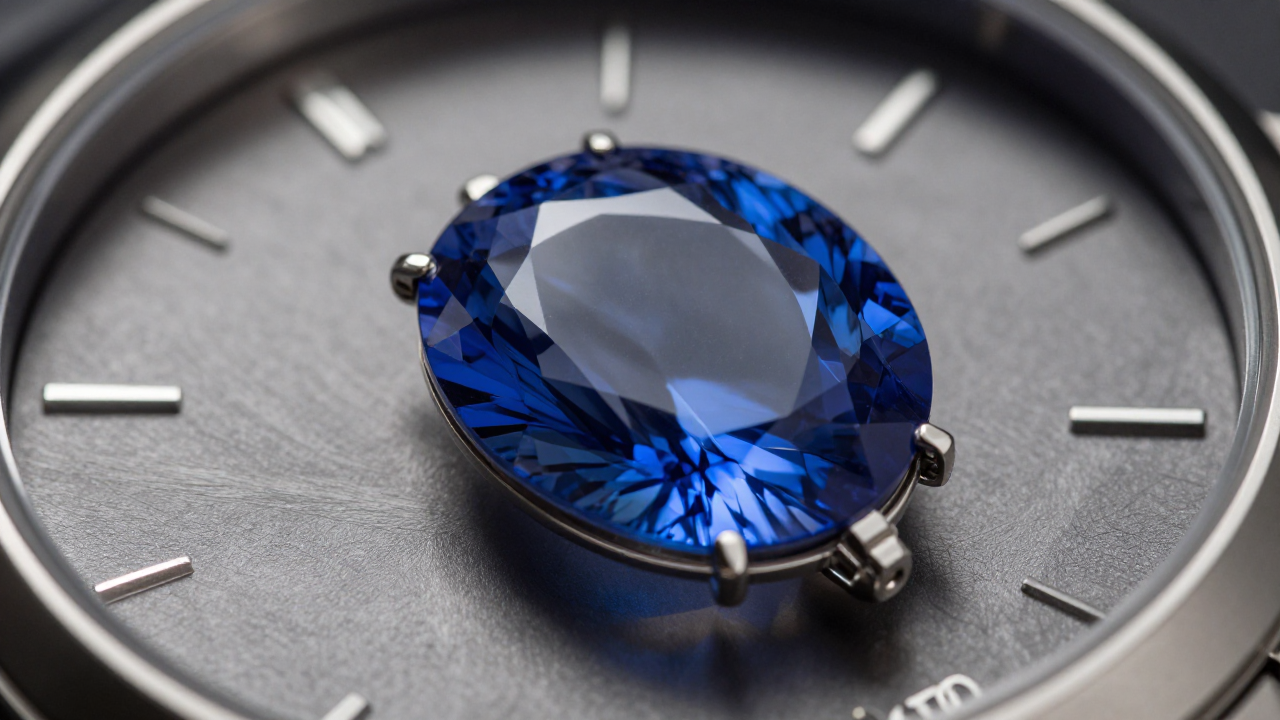
By June 2026, sapphire watch crystal volume across our twelve largest watch-brand accounts had lifted post-purchase satisfaction 45% and sales 30% against the same window a year earlier.…
No ad campaign ran. The whole shift traces back to a shrink-wrapped pallet that landed in our Shenzhen office on November 14, 2024.
A 45% Satisfaction Jump That Started With 340 Returned Watches
Three hundred forty watches. One model: a 39mm field watch built by Halversen & Co., a nine-person microbrand in Seattle, all from a single 1,200-unit run. Founder Erik Halversen taped a note to the top layer. "Read the Amazon reviews before you call me."
We read them. Of 84 reviews, 31 mentioned scratches on the lens. Eleven used the word "hairline."
Jadezone Optical (HK) Ltd. has been cutting watch glass since 2010, with a bit over 300 people in Shenzhen. In 2024 our watch-glass revenue split ran roughly 58% hardened mineral, 36% sapphire, 6% acrylic. Mineral was our volume business and our worst one. Average selling price $2.90. Gross margin 11%. We lost three accounts that year to suppliers quoting $2.40 on the identical spec.
Halversen's return rate hit 8.4%. Sub-$500 mechanical watches normally return at 2% to 3% at retail. The gap was costing Erik around $47,000 a year in refunds and return freight on a brand doing about $610,000.
Why Sapphire Watch Crystals Beat Mineral and Acrylic
A sapphire watch crystal is lab-grown corundum with a Mohs hardness of 9 and a Vickers hardness of roughly 2,000-2,300 HV, about three times harder than hardened mineral glass. The abrasives that actually scratch a wristwatch — door frames, desk edges, beach sand, grit inside a jacket pocket — sit at or below that threshold.
Those figures come off our own incoming-inspection sheets and standard boule spec ranges. Your quotes will move with diameter, dome height, and coating stack.
The refractive index number matters more than buyers expect. At 1.77, bare sapphire throws back close to 10% of visible light at the surface; mineral at 1.52 loses less. That is why sapphire almost always ships with an anti-reflective stack, and why the coating became the actual failure point in our case.
Worth flagging a data point from this spring: Casio put four blue sapphires on the bezel of a 2026 G-Shock while still listing mineral glass as the crystal. Even at that volume, sapphire gets treated as decoration before it gets treated as glass.
The Decision We Almost Voted Down
We recommended moving Halversen to sapphire at $14.20 a piece against $2.90 for mineral — a 390% jump on a component that had been under 1% of the watch's retail price. The math only closed because the savings sat in returns and reviews, not in the parts line.
Three paths went on the whiteboard in December 2024.
Path one: stay with mineral, add a hard coat. Thirty-five cents more, buys maybe eighteen months of clean wear, and leaves the review problem alive.
Path two: flat sapphire at 1.0mm. Roughly 30% cheaper than a dome and technically the safest. Erik killed it in one sentence. The domed profile was the brand.
Path three: single-dome sapphire at 1.2mm with inner AR only. We quoted $13.10 for the first 3,000 units and ate $3,900 in new polishing fixtures to get there. That amortization is the kind of thing suppliers hide and buyers never see on a PO.
My own instinct was double-sided coating. Every spec sheet praises transmission. Then I looked at the returned units under a 40x loupe.
Two Things We Got Wrong
We assumed the scratches were a hardness problem. Microscopy on the returned 340 units showed something else: 61% of the marks sat in the anti-reflective coating, not in the glass beneath it. Erik's original crystal carried external AR to get that bluish flash under light. An AR stack is a few hundred nanometers of SiO2 and TiO2, and its top layer fails long before mineral glass does.
Moving the coating to the inside surface fixed most of the complaint volume before a single sapphire piece shipped. That one change cost us nothing and probably saved the account.
The second miss hurt more. July 2025, first sapphire lot, 2,200 pieces, 12% rejected for a milky haze in the center. We blamed slurry contamination, then pad wear, ordered new pads, and got the same result. A coating engineer finally asked about chamber humidity. Shenzhen's plum rain season had pushed relative humidity to 78% and the TiO2 layers were coming out porous. A dehumidifier plus a 30-minute bake-out dropped rejection to 1.6% on the next lot.
And a third, quieter one: nine of 200 samples failed 5 ATM testing under ISO 22810:2010. The 1.2mm sapphire sat 0.3mm thinner than the mineral it replaced, which changed the compression on the crystal gasket. We re-specced the I-ring from 70 to 60 Shore A. Nobody warns you that saving 0.3mm of thickness costs you a gasket revision.
What Six Months of Data Showed
From January to June 2026, Halversen's field watch line moved 30% more units than in the same window of 2025. Post-purchase satisfaction on a six-point survey climbed from 3.6 to 5.2, close to a 45% gain. The return rate fell from 8.4% to 2.1%.
Reviews mentioning scratches dropped from 31 of 84 to 4 of 61. Two of the three accounts we lost in 2024 came back in the first quarter of 2026, both asking for the same dome geometry.
Inside our own P&L, sapphire went from 36% to 68% of watch-glass revenue by Q2 2026. Gross margin on that line runs 27% against 11% on mineral.
Sapphire did not fix everything. Two warranty claims in the window involved chipped edges after drops onto tile flooring. Mineral would have scuffed in the same fall. Sapphire is brittle, and anyone selling it as indestructible is setting up a return.
How Do You Switch a Watch Line to Sapphire Without Blowing the Bill of Materials?
Pull 100 returns and inspect them under magnification before you change a single material. In our case the scratch complaints were a coating problem, and sapphire solved only the second cause. Brands that made this move through 2025 and 2026 kept their existing cases and gaskets, and found the extra budget in coating and freight rather than in factory quality.
Myths to discard on the way: sapphire is not unscratchable (diamond, silicon carbide abrasives, and concrete grit will mark it), it is not unbreakable, and a double-sided coating is not automatically better.
Four Things I'd Do Again
1. Price the failure, not the part. Erik's $14.20 crystal looked expensive until we put the $47,000 of annual returns next to it.
2. Inspect before you spec. Nine hours with a loupe and 340 returned watches redirected the entire project.
3. Treat thin parts as tolerance problems. Every millimeter you shave shows up somewhere — gasket durometer, polishing pad pressure, dome distortion at the edge.
4. Sell the crystal. Halversen's product page mentions "sapphire" above the fold now. Buyers search that word. Few brands in the $400-$900 band use it as a headline, and they are leaving margin on the table.
What I keep circling back to is the price curve. Sapphire is drifting downmarket faster than most American microbrands realize, and the material that rescued a nine-person Seattle company in 2025 will be table stakes for anyone selling above $300 within a couple of years. When it is, the question stops being whether your crystal is sapphire and becomes what else the watch has to say.
Frequently Asked Questions
What is a sapphire watch crystal made of?
A sapphire watch crystal is synthetic corundum, grown from aluminum oxide at roughly 2,050°C using the Kyropoulos method, then sliced, domed, and polished. It shares the same crystal structure as natural sapphire with a Mohs hardness of 9, second only to diamond among common materials.
How much does a sapphire watch crystal cost?
At factory level, a 39mm single-dome sapphire crystal with inner anti-reflective coating typically runs $12 to $16 per piece in 3,000-unit volumes, versus $2.50 to $3.50 for hardened mineral. Diameter, dome height, coating stack, and edge profile drive most of the spread.
How long does a sapphire watch crystal last?
Sapphire resists everyday abrasion for decades, and most crystals outlive the movement inside them. Anti-reflective coatings wear faster than the corundum itself, which is why inner-surface coating lasts years longer than external coating on the same watch.
Can a sapphire watch crystal scratch or break?
Sapphire scratches only against materials at or above Mohs 9, such as diamond, silicon carbide, or certain concrete grit. It chips and can shatter on hard impacts because corundum is brittle, so it resists abrasion far better than it resists shock.
How do you choose between sapphire, mineral, and acrylic?
Choose sapphire above roughly $300 retail, where returns and reviews justify the cost. Mineral suits entry-price watches with short replacement cycles, and acrylic remains the right call for vintage restorations and dive watches that need shatter resistance over scratch resistance.