
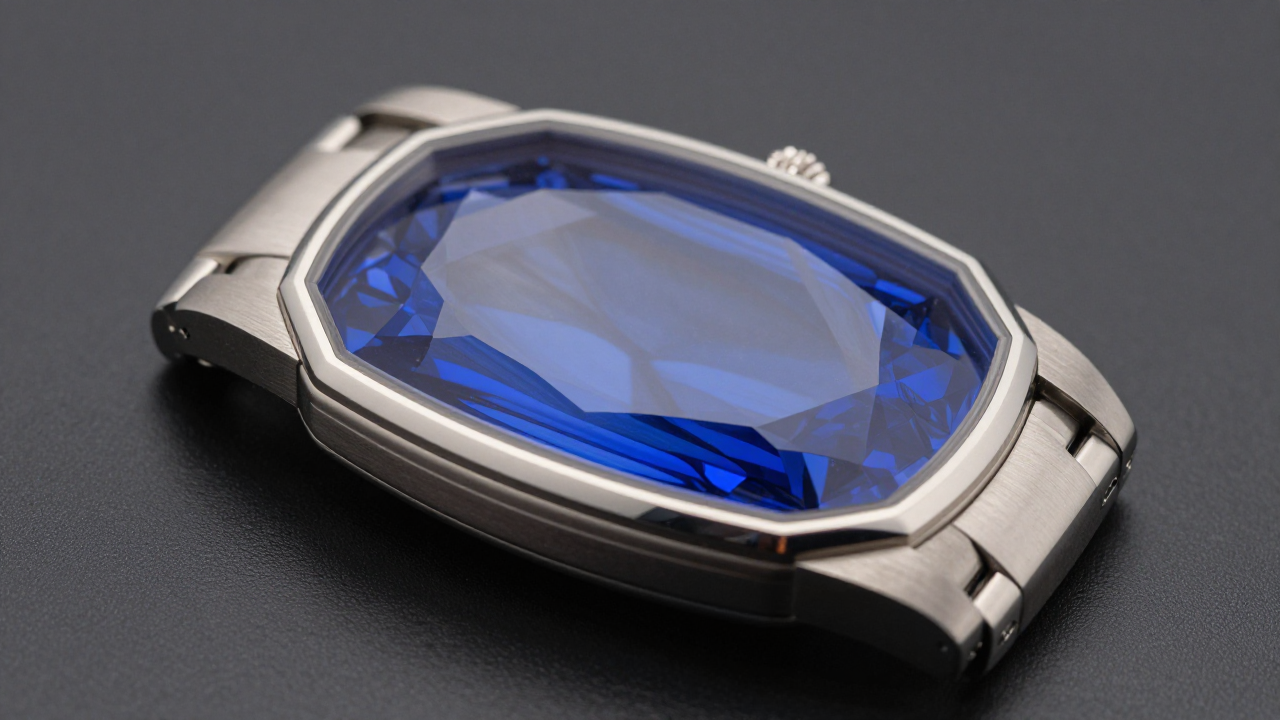
The most crucial factor when buying a sapphire watch crystal is verifying true material authenticity and scratch resistance (Mohs 9), not just the label.…
In February 2022, a procurement manager for a Texas-based microbrand ordered 2,000 “sapphire” watch crystals from an online marketplace at $7.50 each. The spec sheet claimed Mohs 9 hardness. When the shipment arrived, a quick diamond tester scratch revealed the truth: the crystals were mineral glass with a thin sapphire coating. The coating wore off on 300 watches within three months, and the brand had to issue a recall. Total cost: $12,000 in shipping, refunds, and lost wholesale accounts.
Why Sapphire Watch Crystals Fail Buyers (And How to Spot the Fakes)
Real sapphire is synthetic corundum with a refractive index around 1.77 and density of 3.98 g/cm³. A diamond tester (under $100) will scratch coated glass but not true sapphire. Demand a Certificate of Analysis (CoA) from the supplier, and test a sample before committing to a production run. Avoid any listing that says “sapphire-coated” or “sapphire glass” — those are not solid sapphire. All watch crystals marketed as sapphire are synthetic. Natural sapphire would be prohibitively expensive and not optically pure, so don’t be fooled by “genuine sapphire” claims.
The Four-Point Buyer’s Framework for Sapphire Watch Crystals
A reliable sapphire watch crystal purchase rests on four checks: material verification, cut and finish precision, watch compatibility, and supplier support. Skip any one and you invite a costly failure.
1. Quality and Authenticity Verification
Always ask for a CoA that lists refractive index and hardness. Use a diamond tester on a sample. If the supplier hesitates, walk away. Some buyers accept a “certificate of compliance” that only states the product meets “industry standards” — that’s worthless. You want specific measured values.
2. Cut and Finish Precision
Edge bevel radius should be 0.2–0.5mm; surface flatness should be ≤0.01mm. For anti-reflective (AR) coating, specify single-side vs double-side and thickness in nanometers (200–400nm per side is typical). Ask for an adhesion test per ASTM D3359 (tape test). A supplier who can’t provide that data is cutting corners.
3. Compatibility with Your Watch
Diameter tolerance should be ±0.05mm; thickness tolerance ±0.1mm. In July 2023, a buyer in Illinois ordered 1.5mm thick crystals but received 1.35mm. The watches failed water resistance tests (ISO 22810) and 200 units had to be re-cased. Specify tolerances in your purchase order and require a first-article inspection with a micrometer.
4. Brand Reputation and Customer Support
Check for ISO 9001 certification and ask for a written warranty on AR coating (1–2 years is standard for premium suppliers). A supplier with no warranty refused to replace a batch with 10% AR peeling in 2021. Start with a small trial order and test before scaling.
Budget vs. Premium: A Comparison Table With Real Trade-Offs
Budget sapphire watch crystals ($5–$15) often cut corners on AR coating and edge finishing, while premium options ($25–$60) deliver consistent thickness and double-sided AR. The table below shows what you actually get.
In March 2023, a California-based distributor saved $4 per unit by choosing budget crystals for a 5,000-unit order. Eight months later, 12% of the crystals showed AR delamination, and the distributor had to replace 600 units at full cost plus labor. The $20,000 savings turned into a $45,000 loss. For any order above 1,000 units, always test a 50-piece sample for AR adhesion (ASTM D3359) and edge chipping. Even value-oriented Swiss brands like Tissot’s PRX (2025) specify sapphire crystal with tight tolerances that budget aftermarket suppliers often miss.
Hidden Parameters Salespeople Won't Mention
Two hidden parameters are AR coating thickness (measured in nanometers) and edge bevel radius; both determine how long the crystal survives daily wear, yet neither appears on most spec sheets.
AR coating thickness: Most suppliers quote “AR coated” but not the thickness. A 150nm coating wears through in 12–18 months of daily cleaning; a 300–400nm coating lasts 3–5 years. Ask for a cross-section measurement or a spectrophotometer reading. In 2022, a batch from a low-cost supplier had 120nm coating; after 14 months, 30% of users reported haze.
Edge bevel radius: A sharp edge (0.1mm or less) chips easily during installation or when the watch is dropped. A 0.3–0.5mm radius distributes stress. In August 2023, a buyer in New York received crystals with a 0.1mm bevel; 7% broke during case pressing. The supplier blamed installation, but the spec didn’t specify a bevel. Specify a minimum 0.3mm bevel radius in your PO.
How to Avoid the Most Common Sourcing Mistakes
The biggest mistake is skipping a pre-production sample inspection; the second is ignoring thickness tolerance. Both are cheap to fix and expensive to ignore.
Making the Final Decision: Choose A or B
Choose a mid-range supplier with a CoA and single-side AR if you value durability and budget; choose a premium supplier with double-side AR and tight tolerances if you prioritize premium quality and aesthetic appeal.
Choose Option A if you run a microbrand or repair shop with volumes under 1,000 units per year, need reliable scratch resistance, and can tolerate a faint AR reflection. Choose Option B if you produce watches retailing above $500, require double-side AR for clarity, and need documented thickness tolerances to meet water-resistance standards.
Frequently Asked Questions
What is the difference between sapphire crystal and sapphire-coated glass?
Sapphire crystal is solid synthetic corundum (Mohs 9), while sapphire-coated glass is mineral glass with a thin sapphire film that wears off. A diamond tester will scratch sapphire-coated glass but not true sapphire. Always ask for a Certificate of Analysis.
How much does a sapphire watch crystal cost in 2026?
In 2026, wholesale prices range from $5 to $15 for budget crystals, $15 to $30 for mid-range with CoA, and $30 to $60 for premium double-side AR. Retail replacement can cost $50 to $200, including labor. Volume and custom shapes affect the final price.
How can I test if a watch crystal is real sapphire?
Use a diamond tester (under $100). A true sapphire crystal will not scratch; coated glass will show scratches. You can also check the refractive index (sapphire is ~1.77) with a gemological refractometer. Request a Certificate of Analysis from the supplier before ordering.
What thickness tolerance should I expect for sapphire watch crystals?
For production watches, expect ±0.05mm on thickness and ±0.05mm on diameter. Budget suppliers often deliver ±0.15mm, which can cause water resistance failures. Always specify tolerances in your purchase order and inspect the first article with a micrometer.
Why does my sapphire crystal have a blue tint?
The blue tint comes from anti-reflective (AR) coating, which reduces glare. A single-side AR coating gives a faint blue or green reflection. Double-side AR is more effective but can show a stronger tint. The tint is normal and does not affect clarity.