
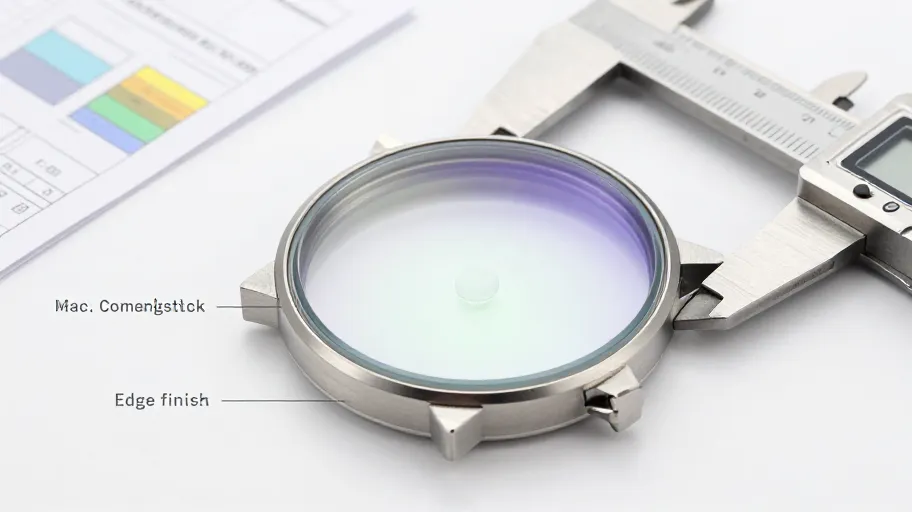
There is no fixed answer to "how much is a sapphire crystal worth?" because value is set by specification, not by category. Shape complexity, dome profile, coating stack, edge finishing, mounting geometry and documentation requirements each change what a supplier must quote — so the honest figure is a range that only a written spec can pin down. This guide gives buyers a framework for defining that spec, qualifying samples and approving production with confidence.
Why the question needs reframing
A buyer who emails ten suppliers asking "how much for a sapphire crystal?" will receive ten numbers that cannot be compared, because each supplier fills the missing specification with its own assumptions. The useful question is not what a sapphire crystal is worth in the abstract, but what your crystal is worth once its variables are locked.
Treat price as an output of the specification, never an input to it. When you control the variables, quotes become comparable, samples become testable, and production becomes auditable.
The Spec–Sample–Approval (SSA) Path
We recommend buyers manage sapphire crystal sourcing through three gates:
Gate 1 — Spec. Translate the design into a written, dimensioned, unambiguous requirement sheet. Until this exists, any quote is provisional.
Gate 2 — Sample. Request samples against that same spec sheet and evaluate them with agreed criteria, not impressions.
Gate 3 — Approval. Sign off a first-article or golden sample as the reference against which production is checked, and record what was approved, in writing.
Each gate turns an unknown into a documented decision. Skipping a gate is where sourcing projects lose money.
Gate 1: the spec variables that determine value
Use this table to brief any supplier — including JadeZone Sapphire — so that quotations rest on the same assumptions:
| Spec variable | Why it drives worth | Question to resolve before quoting |
|---|---|---|
| Shape and cutting complexity | Round, rectangular, barrel and free-form profiles differ in cutting yield and machining route | "What profile exactly, and at what drawing revision?" |
| Dome profile | A domed sapphire crystal adds curvature, grinding and polishing stages versus a flat crystal | "Is the dome single- or double-sided, and what radius is specified?" |
| Thickness and edge geometry | Thickness, edge break and step geometry affect grinding time and mounting fit | "Which drawing dimensions are toleranced, and to what limits?" |
| Coating (AR) requirement | Single- versus double-side anti-reflective stacks change processing steps | "Is AR coating required, on which surfaces, and verified how?" |
| Printing / date window | Logo printing, lume slots or apertures add process steps | "Is printing included, and what artwork is supplied?" |
| Mounting method | Press-fit, gasketed or adhesive mounting changes tolerances at the seat | "How does the crystal seat into the case, per which drawing?" |
| Material grade and documentation | Sapphire composition, inspection records and traceability paperwork are part of what you buy | "What inspection and documentation accompany each batch?" |
| Order structure | Quantity breakdown, packaging, and repeat-order expectations shape the commercial terms | "What order structure is being quoted?" |
Two notes for the reader's diligence. First, confirm with each supplier how they verify sapphire authenticity and hardness in their process — do not assume. Second, when comparing domed versus flat options, ask each supplier to price both against your drawing so the dome premium is measured, not guessed.
Gate 2: what to confirm about samples
What you can control is the evaluation. Before samples arrive, write down:
- The acceptance criteria per drawing dimension and coating requirement.
- The inspection method and equipment you will use, and where relevant, agree the method with the supplier so measurements are comparable.
- Who signs off, and on what record.
A sample evaluated without criteria is a souvenir, not evidence.
Gate 3: approval questions to put to any supplier
Send these questions in writing before committing to production:
- Which drawing revision does the quotation reference?
- What inspection points exist during production, and what record is issued with the shipment?
- What is the golden-sample procedure: who holds the approved sample, and how are reorders checked against it?
- How are out-of-spec findings handled — what is the process for notification, containment and corrective action?
- What packaging and transit arrangements are proposed, and who confirms them?
- What documentation accompanies each delivery — inspection reports, coating verification, material statements?
- What is the process and timing for a repeat order, and what could change it?
The answers become part of your approval record. A supplier's willingness to put these in writing is itself signal.
A worked comparison: two buyers, two outcomes
Buyer A asks for "a domed sapphire crystal for a 40 mm watch" and receives a quote against unspecified assumptions. When the sample arrives, the dome is shallower than intended, the AR coating is on one side only, and the seat does not fit the case. Everything must be re-quoted.
Buyer B sends a drawing, a spec sheet built from the table above, and the seven approval questions. The quote references a revision, the sample is measured against agreed criteria, and the approval record is signed before production. When a reorder is placed, the same document set governs it.
Same component category, different worth — because worth follows specification and process, not the noun "sapphire crystal."
FAQ
Is a domed sapphire crystal worth more than a flat one? A domed crystal involves additional curvature, grinding and polishing work relative to a flat crystal of the same footprint, so its value profile differs. The precise difference for your part depends on dome geometry, thickness and finishing — ask suppliers to quote both variants against your drawing rather than relying on general impressions.
What information should a quotation request contain? At minimum: a dimensioned drawing with revision number, dome and edge geometry, thickness and tolerances, coating requirement, printing or aperture details, mounting method, documentation needs and intended order structure. Our Spec–Sample–Approval brief template covers all of these.
How should I evaluate a sapphire crystal sample? Agree acceptance criteria before the sample is made: dimensional checks against the drawing, coating verification method, optical clarity criteria, edge and seat fit against your case. Confirm with the supplier how its inspection will align with yours. Sample terms, including any fee or shipping arrangement, are matters to confirm directly with the supplier under its current policy.
What documentation should come with production batches? That is precisely what to specify rather than assume. Ask each supplier what inspection records, coating verification and material statements accompany a shipment, and write the agreed list into the approval record.
Can I compare quotes from different suppliers fairly? Only if every quote references the same drawing revision and the same spec sheet. If a supplier will not quote against your documents, or will not state its assumptions in writing, treat the gap as a risk to resolve before proceeding.
Primary CTA
获取采购 Brief. Send us your drawing and requirement set — or request our sourcing brief template — and we will respond with a quotation structured on the Spec–Sample–Approval path, referencing your spec rather than our assumptions. Contact JadeZone Sapphire in Shenzhen or Hong Kong to start the brief.
Low-friction checklist CTA
Before you request any quote, complete this five-minute check:
- Drawing with revision number attached
- Dome profile, thickness and tolerances specified
- Coating requirement stated (which surfaces, verified how)
- Printing, apertures and mounting method described
- Documentation and inspection-record expectations listed
- Approval questions sent to the supplier in writing
Tick all six, and every quote you receive becomes comparable — and every sample becomes testable.