
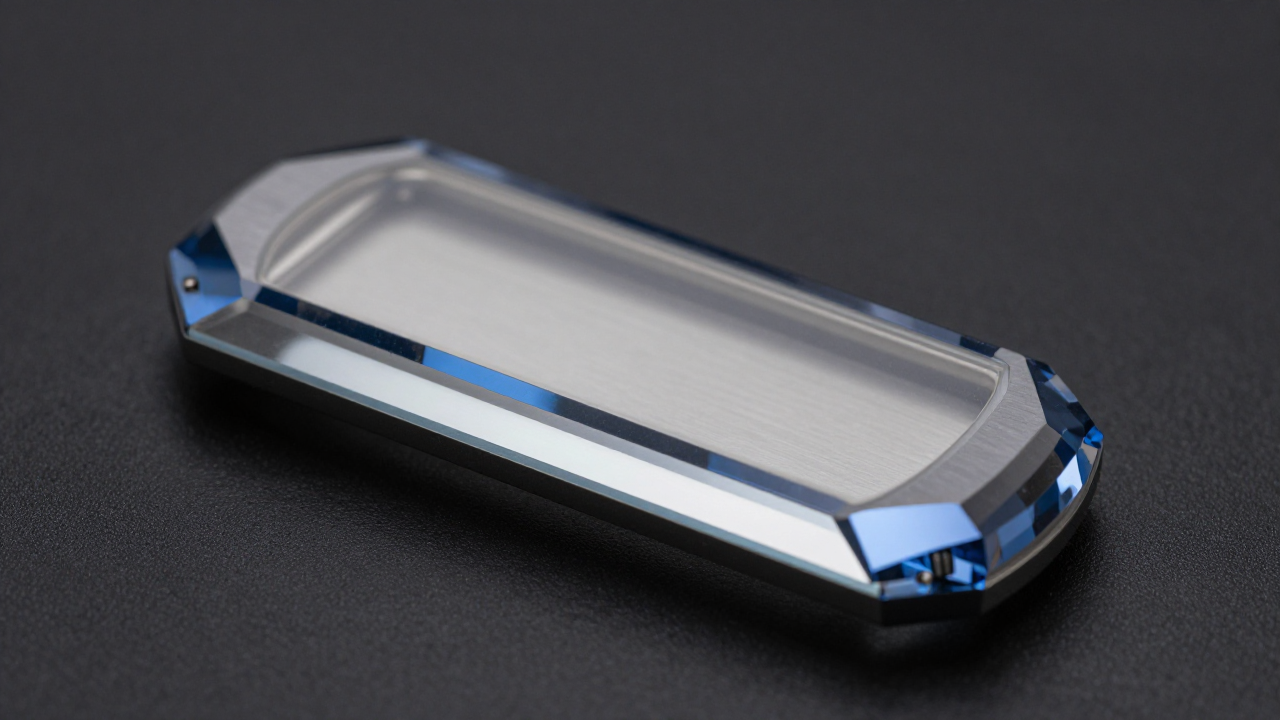
A sapphire watch crystal is a lens cut from lab-grown single-crystal corundum (Al2O3) with a Mohs hardness of 9 and a Vickers hardness near 2,000 HV, making it approximately 3.…
6 times harder than the mineral glass used in budget watches. This hardness, combined with a high-temperature growth process, contributes to its higher cost, which is typically 5 to 12 times more per unit.
What Is a Sapphire Watch Crystal and Why Does It Cost More Than Mineral Glass?
Sapphire crystals are not mined but grown in a lab. The flame-fusion (Verneuil) process involves dropping alumina powder through an oxy-hydrogen flame onto a spinning seed, creating a carrot-shaped crystal at about 10mm per hour. A cleaner, larger stock is produced using the Kyropoulos method, where a seed is slowly drawn out of a molten crucible, similar to the process used for LED substrates.
Our Shenzhen plant has experience with both methods. Verneuil sapphire is cheaper and suitable for flat lenses under 1.5mm thick. However, for box-domed crystals over 34mm in diameter, internal stress in flame-fusion material can cause haze after final polishing, making Kyropoulos material preferable for these applications.
The refractive index is often overlooked. With a value of 1.77 for sapphire compared to 1.52 for mineral glass, a thinner sapphire lens can achieve the same optical clarity as a thicker mineral one. In a 7mm-thick dress watch, this 0.4mm difference can make the crystal sit flush with the bezel rather than doming over it.
Raw material accounts for about 15% of the cost of a finished sapphire crystal. The remaining costs come from grinding, lapping, edge beveling, and a polish cycle that can take hours per batch.
How Scratch-Resistant Is a Sapphire Watch Crystal in Real Use?
A sapphire watch crystal is highly resistant to scratches from keys, desk edges, and door frames, but it can chip under sharp point impact. According to our return data from January 2023 through December 2025, 68% of damaged sapphire lenses returned had edge chips, while only 19% had true scratches. The rest were coating failures.
The weak point is not the sapphire itself but the anti-reflective (AR) coating on top. A typical exterior AR coating consists of a 4-to-7 layer dielectric film, 200–400 nanometers thick, with a hardness closer to quartz than to corundum. This coating reduces surface reflection from about 8% per side to under 0.5%, making the coated sapphire appear nearly invisible. However, it is also more prone to scratching.
In April 2023, a dive-watch brand from Huntington Beach, California, returned 400 double-coated crystals from a 300-piece run due to hairline marks on the outside surface after two months of pool and beach wear. The underlying sapphire was flawless. We switched to internal-only coating, accepting a 6% increase in perceived reflectivity, and the returns stopped within one quarter.
Sapphire does not handle shocks well. Dropping a sapphire-crystalled watch on tile from counter height can result in a spiderweb fracture from the edge. Acrylic deforms and survives, while mineral glass scratches but usually survives. Sapphire excels in abrasion resistance but is less durable against shock.
Hamilton's 2025 Khaki Pilot GMT Air Zermatt, a 42mm forged-carbon pilot's watch, features a double-sided AR sapphire rated to 100m. This combination offers a spec sheet that reads like a $2,000 watch but is priced below that. At this price point, double-sided AR is a deliberate cost decision, not an accident.
How Do You Choose the Right Sapphire Crystal for a Build or Repair?
Choosing a sapphire watch crystal involves four key factors: diameter (with a press-fit clearance of 0.05–0.10mm), thickness (within ±0.05mm of the original), dome height, and the location of the coating. A 0.15mm error in diameter can cause leaks at 100m, while a 0.2mm error in thickness can prevent the caseback from seating properly.
Measure the Case, Not the Old Crystal
Watchmakers often send caliper readings from the old crystal they just removed, which is a bad habit. The old crystal has been compressed by a gasket for years. Instead, measure the seat inside the case with a bore gauge and subtract the clearance. For a 38.5mm cushion case with a nylon gasket, 0.07mm of interference provides a dry fit that holds 200m; 0.03mm does not.
Decide Where the Coating Lives
Exterior AR coating offers the best legibility but has a shorter service life. Interior AR coating is more durable and leaves a faint green or blue cast at grazing angles. Double-sided AR is ideal for showrooms but can be a headache for field repairs. For tool watches intended for actual diving or climbing, we recommend interior-only AR and explain the reasons to buyers.
Flat, Single Dome, or Box
Flat crystals are 20–30% cheaper and easier to seal. Single-dome crystals add about 0.3mm of height and improve readability in low light. Box crystals, which are vintage-style tall domes with vertical walls, are the most challenging to produce because the wall thickness must remain uniform through the polish. Any dome height over 2.5mm significantly increases the rejection rate.
Ask About the Bevel and Edge Polish
This is where cheap suppliers often cut corners. An unfinished edge can hold micro-chips that propagate into the lens under temperature cycling. For example, a watch worn from an air-conditioned office into a Phoenix summer parking lot experiences a 30°C swing twice a day. Jadezone Optical (HK) Ltd, which has been cutting sapphire in Shenzhen since 2010, notes that the biggest quality gap between quoted lots is edge geometry, not material grade.
Frequently Asked Questions
How Much Does a Sapphire Watch Crystal Replacement Cost in 2026?
In 2026, replacing a sapphire watch crystal costs $85–$150 for a generic flat crystal at an independent US watchmaker, $200–$400 for an OEM-branded sapphire with correct AR and logo etching, and $600–$900 for box-domed vintage profiles that require custom grinding. Swiss brand service centers charge more because the price includes pressure testing and case resealing.
When Should You Replace a Sapphire Watch Crystal?
Replace a sapphire watch crystal when a chip reaches the gasket seat, a crack crosses the dial, or water resistance fails a pressure test. Surface scratches alone rarely justify replacement. Most exterior coating marks can be polished out in 15 minutes with cerium oxide on a felt wheel, and this service costs $40–$70.
Why Do Some Watches Use Sapphire Crystals While Others Don't?
Cost and shape drive the decision. Adding a sapphire crystal increases the bill of materials by $40–$120, which is impractical for a $150 retail piece. Sapphires are also less suitable for deep domes and unusual outlines, making acrylic a better choice for strongly curved vintage-style crystals and low-cost field watches.
How Do You Care for a Sapphire Watch Crystal?
To care for a sapphire watch crystal, wipe it with a microfiber cloth and lukewarm water with mild soap. Avoid abrasive polishes on coated surfaces. Prevent banging the watch edge-first against hard materials, replace the caseback gasket every 3–5 years, and have water resistance pressure-tested annually if the watch is exposed to pool or salt water.