
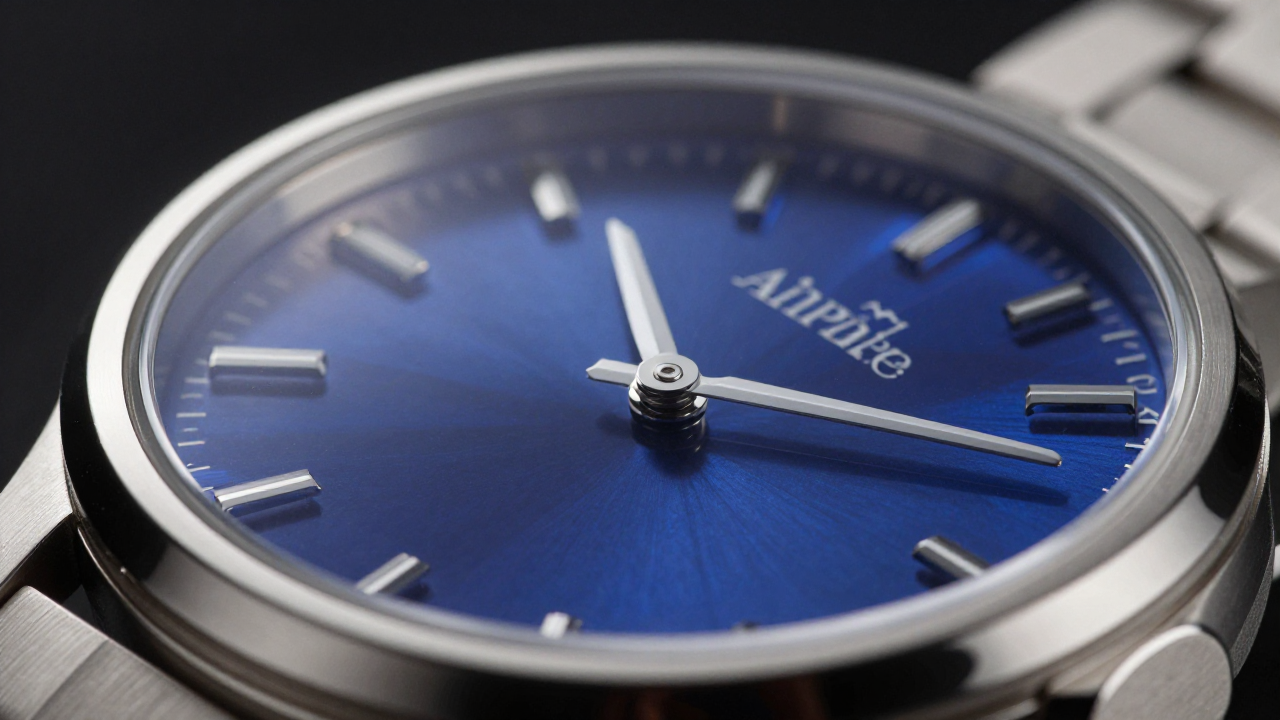
The first thing purchasing teams should judge in a sapphire watch crystal is repeatable optical clarity and coating durability after real-world wear, not a hardness badge on the spec sheet.…
Scratch resistance is table stakes; haze, edge chips, gasket leaks, and coating wear are what turn a cheap crystal into an expensive warranty event.
What Purchasing Teams Should Judge First in a Sapphire Watch Crystal
The 2026 supplier pool is wider than it was in 2020. New trading companies repackage the same blanks with different coating claims. We run four filters before a purchase order:
How Do You Compare Sapphire Watch Crystal Quotes Without Getting Burned?
Compare quotes on a landed, test-inclusive basis: crystal blank, coating stack, dimensional inspection, packaging, freight, duty, and warranty replacement. The lowest FOB price usually excludes coating durability testing or lot reports. We ask every supplier to quote the same 1.2 mm flat crystal, double-sided anti-reflective (AR) coating, 1,000 pieces, with ASTM D3359 adhesion data and ±0.03 mm thickness tolerance.
Double-sided AR is now normal in sub-$1,000 pilot watches. Hamilton’s Khaki Pilot GMT Air Zermatt pairs a 42 mm forged-carbon case with double-sided AR sapphire and 100 m water resistance—one sign that buyers should treat double-sided AR as a baseline expectation, not a luxury extra. (The Hamilton spec does not tell you coating durability; it tells you the market baseline.)
When a Thickness Variance Sank a 100 m Launch
Thickness tolerance is a sealing parameter, not a cosmetic one. A crystal 0.06 mm under nominal can reduce gasket compression enough to fail a 100 m pressure test, even when the sample passed. Buyers should treat lot-level thickness data as mandatory for any dive or pilot watch.
In September 2024, a 27-person outdoor watch brand in Boise, Idaho, approved a 1.50 mm crystal sample for a 100 m pilot watch. The first production lot arrived at 1.44-1.46 mm. The brand assembled 3,500 watches before internal pressure testing; 9 of 50 pieces failed at 5 ATM. Launch slipped six weeks. Air freight for 1,800 replacement crystals cost $18,900, and a specialty retailer pushed the brand out of its holiday window.
The root cause was not the factory’s polishing skill. The purchase order (PO) said “1.5 mm” with no tolerance. The factory shipped inside its own ±0.05 mm band. Lesson: write ±0.03 mm on the PO, require a CMM report per lot, and test assembled cases above the rated pressure before packing. ISO 22810 covers the claim, but the purchase order controls the part.
The Coating Failure That Cost a Colorado Brand $41,600
Coating failures are usually adhesion failures, and they rarely show up in a 10-piece sample. A sapphire watch crystal can pass initial transmission checks and still haze at the edge after 72 hours of humidity. The test that matters is tape adhesion plus salt fog, not a sales photo under office light.
In April 2023, a 19-person direct-to-consumer brand in Portland, Oregon, booked 2,400 watches for a September drop. The factory quoted “double-sided AR, 9H hardness” at $8.40 per crystal. The brand approved 10 samples. By November 2023, 387 customers had sent photos of a purple-blue film failure around the crystal edge; 112 requested refunds. Replacement crystals, air freight, refurbishment, and chargebacks reached $41,600.
I first thought the cleaning solvent was the problem. A tape test per ASTM D3359 and 96-hour salt fog per ASTM B117 showed the coating stack had poor adhesion on the inner surface. (The sample had passed a transmission check at 92%; that number told us nothing about adhesion.) The PO had no coating test clause.
How to avoid: specify the coating stack by layer and require a 10-piece pre-production test plus lot sampling. Put the replacement warranty in writing, including labor credit. If a supplier cannot name its coating source, assume you are the quality department.
What Budget Bands Actually Buy in 2026
Budget buys yield and process control, not just material. At 500-2,000 pieces, the $8-$20 band is the sweet spot for most new watch brands because it allows double-sided AR and lot inspection without paying for Swiss branding. Below $8, expect stock shapes and single-side coating unless volume is high.
Indicative 2026 FOB Shenzhen/Hong Kong for 500-2,000 pieces; add freight, duty, and sorting for US delivery.
Hidden Parameters Sales Teams Leave Out
Two hidden parameters drive most warranty claims: coating adhesion after humidity and thickness tolerance at the gasket seat. Neither appears on a typical one-page quotation, and both are cheaper to test before production than to fix after launch. Ask for both in writing before you approve the first article.
One quote trick is “9H hardness.” Synthetic sapphire is Mohs 9; a vendor quoting 9H is copying phone-screen marketing. Ask for substrate grade, inclusion size, stress birefringence, and a polariscope image. The other blind spot is double-sided AR. A poor inner coating can fail after humidity, while a good single-side coating on a dress watch may last longer. Salt-fog performance matters more for a Florida dive brand than a Denver dress watch.
At Jadezone Optical (HK) Ltd., we started quoting coating adhesion as a separate line item in 2021 because buyers kept finding it after launch. The quote got longer. The warranty claims got shorter.
How Do You Vet Smaller and Newer Sapphire Watch Crystal Brands?
Vet smaller suppliers on process evidence, not brochure photos: ask for lot-level CMM reports, coating test data, a named quality contact, and a factory audit before scaling. A newer brand with in-house polishing and coating usually beats a trading company with a polished website.
In October 2023, a six-person watch brand in Chicago placed 450 pieces with a smaller Shenzhen factory. The factory’s CMM report caught a 0.04 mm diameter drift before shipment. The brand fixed the case tool before its 2024 run and scaled to 4,000 pieces. That is the value of a supplier that sends data before you ask.
Start with 300-500 stock-shape pieces. Test communication, packing, lot consistency, and replacement response. Ask who owns the coating line. A trading company that cannot answer will forward your email to a factory you never meet. If the factory can show a polariscope station and a coating thickness gauge, you have something to audit.
Choose A, a stock-shape single-side AR crystal, if you are validating a sub-$250 watch with a standard case and can accept stock shapes, single-side AR, ±0.05 mm thickness, and a sample-based QC process. Choose B, a custom double-sided AR crystal with lot-level data, if your watch claims 100 m water resistance, carries a $400+ retail price, or depends on a preorder date; pay for double-sided AR, ±0.03 mm lot data, written coating warranty, and lot CMM reports.
Frequently Asked Questions
The short answer is that substrate evidence, coating durability, dimensional tolerance, and written warranty terms decide whether a new sapphire crystal supplier is safe to approve. The questions below cover the comparisons buyers ask most often before a 2026 launch.
What is the difference between sapphire and mineral glass watch crystals?
Sapphire crystals are made from synthetic corundum with Mohs 9 hardness. Mineral glass sits near 5.5, and acrylic near 3. A genuine sapphire crystal resists most daily scratches but can chip on sharp impact. Mineral glass costs less and scratches more easily. Buyers should verify the substrate with a supplier test report, not a hardness sticker.
How much should a sapphire crystal cost in 2026?
For 500-2,000 pieces, standard 1.2-1.6 mm flat sapphire with single-side AR typically lands at $6-$12 FOB. Double-sided AR and custom shapes run $15-$35. Small lots and branded aftermarket parts can reach $60-$150. Price should include coating and dimensional reports, not just the blank.
How can you tell if a sapphire crystal is low quality?
Look for visible bubbles, wave distortion, uneven AR color, and sharp unpolished edges. Ask for inclusion limits, thickness tolerance, coating adhesion results, and edge polish. A low-quality sapphire crystal often passes unboxing but fails after humidity, salt fog, or case assembly. Sample photos are not enough; request lot-level inspection data.
How long does a sapphire crystal last?
A quality sapphire crystal can last 10+ years in normal wear, but coating life is shorter than the substrate. AR coating may fail in 18-36 months under heavy salt or abrasion if adhesion is poor. Crystal life depends on edge quality, gasket fit, impact exposure, and coating condition more than Mohs hardness.
How do you choose a sapphire crystal supplier for a new watch brand?
Start with 300-500 stock-shape pieces to test communication and lot consistency. Require first-article inspection, thickness and diameter CMM reports, coating adhesion data, and a clear warranty. Audit the factory before scaling to 3,000+ units. A supplier that cannot explain its coating stack will struggle with warranty claims.