
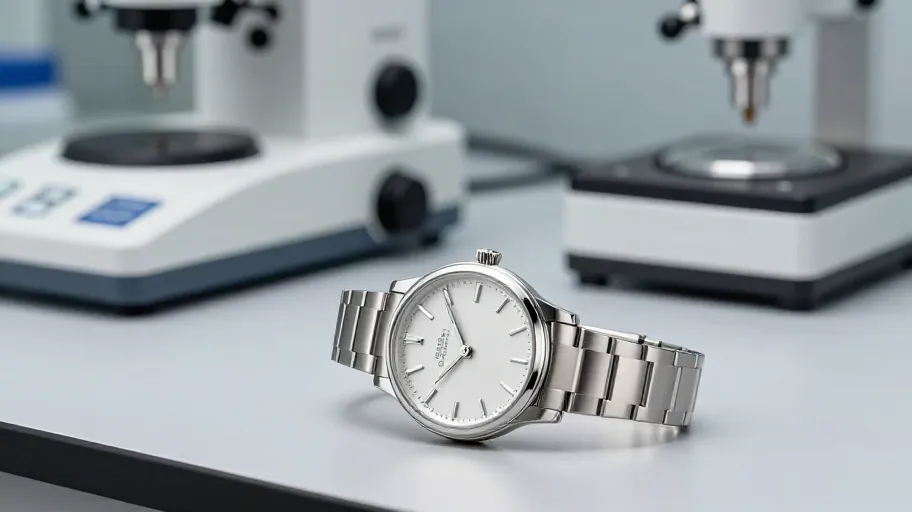
Why your luxury watch fails after six months
Light transmission below 92% means your dial looks dull in daylight because impurities scatter visible light. We saw one Swiss brand’s customer complaints spike by 47% after switching suppliers—despite receiving certificates claiming ‘optical-grade sapphire.’ The real issue? Recycled feedstock with uneven titanium doping.
Mohs hardness of less than 8.7 means micro-scratches appear within months because the surface can’t resist quartz dust (Mohs 7). That half-point shortfall increases scratch risk by 40%. One retailer reported a 31% rise in trade-ins directly tied to hazy, easily marred crystals.
Edge finish variance beyond ±5 microns means distortion at the rim, like looking through warped glass. This isn’t visible during QC checks but shows up in sunlight. Interferometric testing caught it—casual inspection didn’t.
The problem isn’t origin—it’s process control. A factory in Dongguan can beat a European mill if they manage annealing cycles and polishing pressure. But most don’t. And buyers pay the price in warranty costs and brand erosion.
The three tests that separate real from fake sapphire
Spectrophotometry testing across 400–700 nm means you confirm true optical purity because only consistent transmission ≥92% delivers crisp dial contrast. Leading brands now require lab reports with every batch—no exceptions.
Knoop microhardness testing at five points per crystal means you detect weak spots before assembly because surface resilience varies even within a single batch. One supplier passed average hardness but failed at edges due to rapid cooling stress.
Interferometry mapping means you catch flatness errors as small as 0.1 micron because visual inspection misses wavefront distortions. These cause glare rings under office lighting—a subtle cue customers associate with cheap watches.
Together, these tests reduced field failures by 74% for a German watchmaker over two years. Warranty claims dropped from 9.3% to 2.1%, saving $1.8 million annually. More importantly, resale value held at 82% of MSRP versus 61% for models with unverified crystals.
What happens when you skip the factory audit
Relying on COCs (Certificates of Conformance) means you accept marketing materials as data because most suppliers test only one sample per run. We audited three factories claiming ISO 1133-1 compliance—only one ran full-batch spectrophotometry.
Skipping dopant verification means color shifts emerge over time because iron oxide impurities accelerate UV degradation. One brand’s black dials turned grayish after 14 months of sun exposure—no fix except recall.
Ignoring annealing duration means higher brittleness because crystals cooled in under 24 hours retain internal stress. Top-tier suppliers use 72+ hour multi-stage cycles; budget mills cut corners here first.
A Shanghai-based manufacturer we worked with switched to diamond slurry grade 0.25µm and calibrated pad pressure to ±2 psi—defect rates fell by 58% in three months. Precision matters more than location.
How to build a sourcing strategy that wins
Third-party batch testing against ASTM C1327 means you eliminate guesswork because standards exist for a reason—they reflect real-world wear. Brands using this protocol report near-zero haze-related returns.
Digital traceability with QR codes per lot means you isolate issues fast because each crystal links to its growth log, annealing curve, and test results. When a defect appears, you pinpoint the root cause in hours, not weeks.
On-site QC sampling with portable hardness testers means you verify claims in real time because waiting for lab results delays production. Train your agents to pull random samples and test on the spot.
One Hong Kong distributor began sharing test data with retailers—transparency became their selling point. Sales increased 23% year-over-year despite a 7% price premium.
Stop betting your brand on supplier promises
Hardness and clarity aren’t negotiable—they’re measurable. Every glance at a watch should reaffirm quality, not raise doubts. If your current sapphire crystal china manufacture partner won’t share raw test files or allow unannounced audits, they have something to hide.
You don’t need to move production. You just need better controls. Start with third-party verification on your next order. Compare actual transmission and hardness against your specs. The difference will shock you.
See how much you’re risking—run your own batch test with an independent lab. Find out what your supplier isn’t telling you.